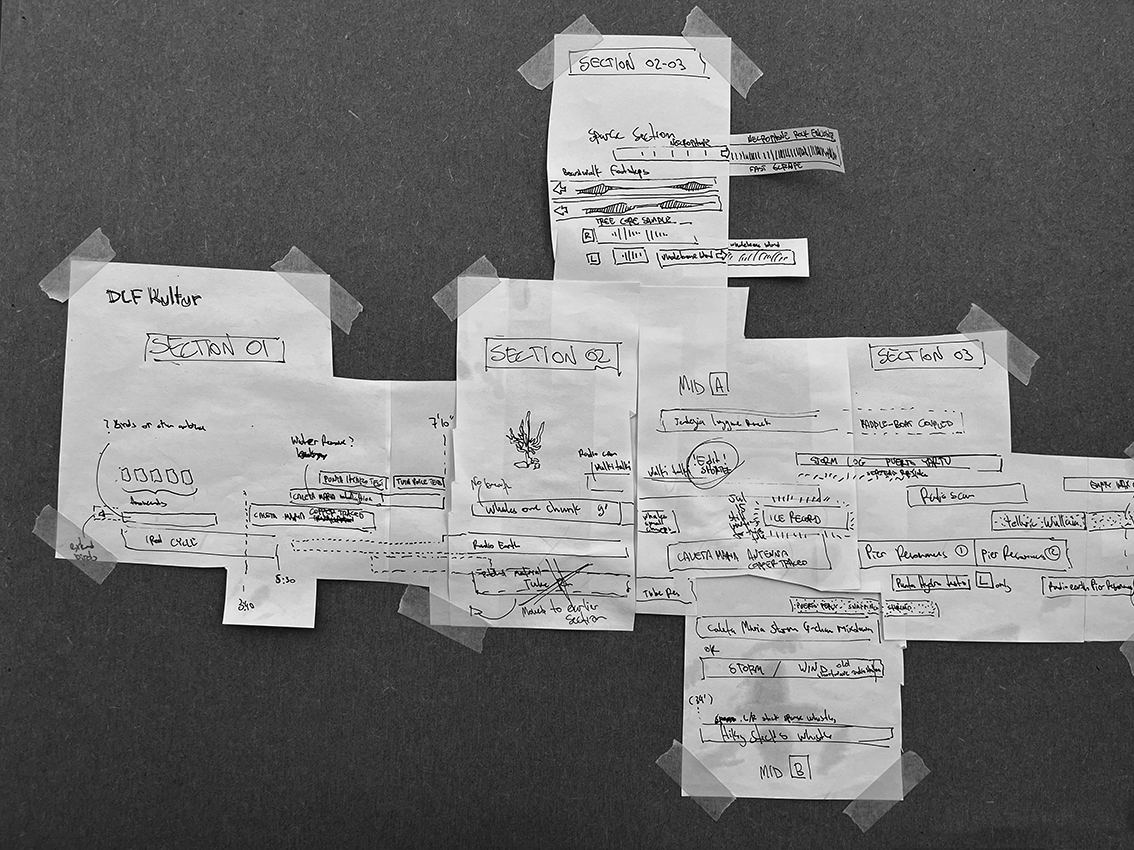
by Raviv Ganchrow + Carsten Stabenow
broadcast premiere, August 29, 2025, Deutschlandradio Kultur
This audio montage consists of raw location recordings, with no added audio effects, tracing a research journey through Chile’s southernmost regions (Tierra del Fuego and Navarino Island) to the decommissioned radio station at Wulaia Bay.
Category archives: publications
DAP revista 2025-2026
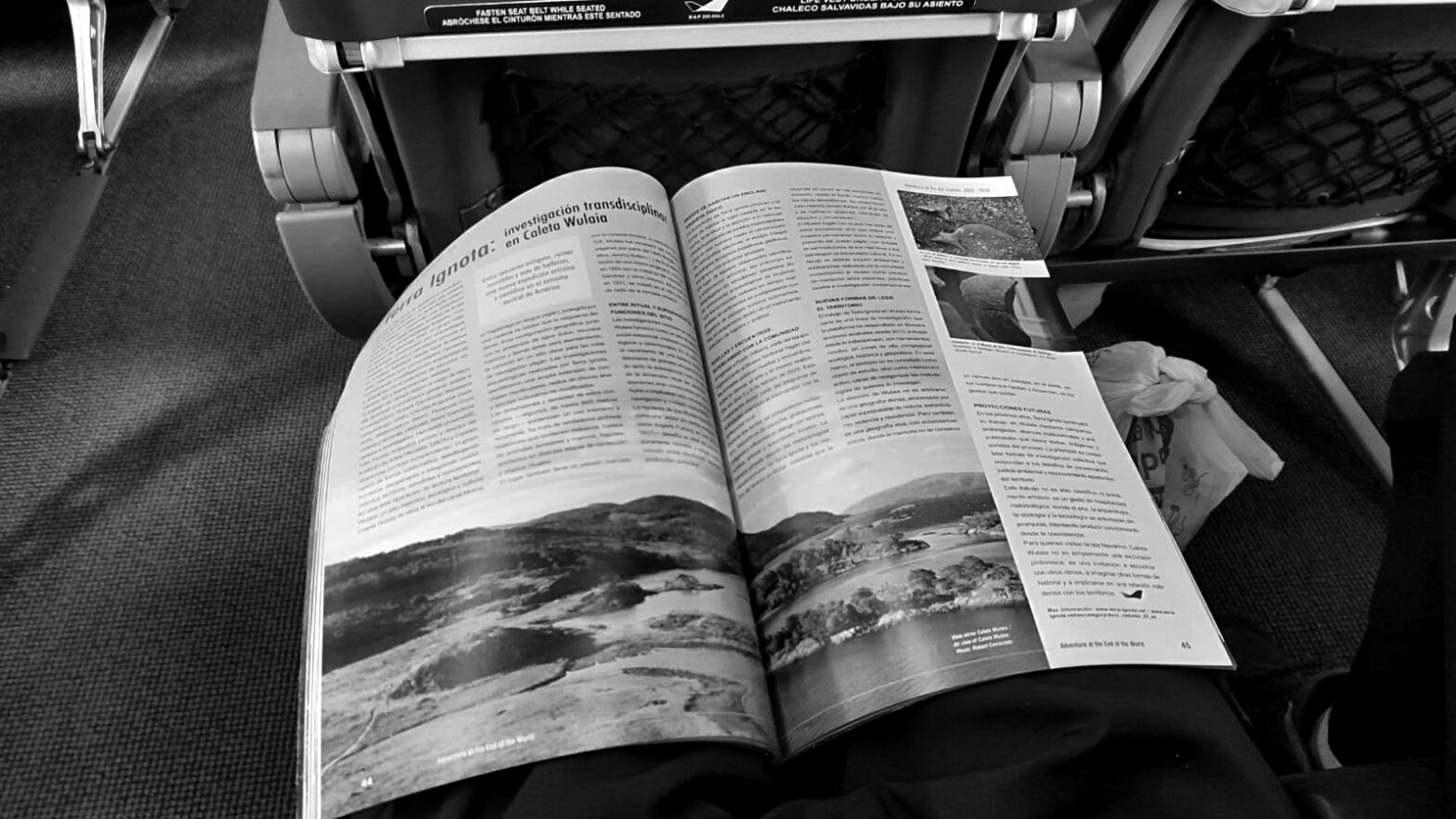
DAP Airlines is supporting Terra Ignota since quite some time.
This year the project is featured in their annual magazine. (page 44 )
Antarctic Congresses 2025
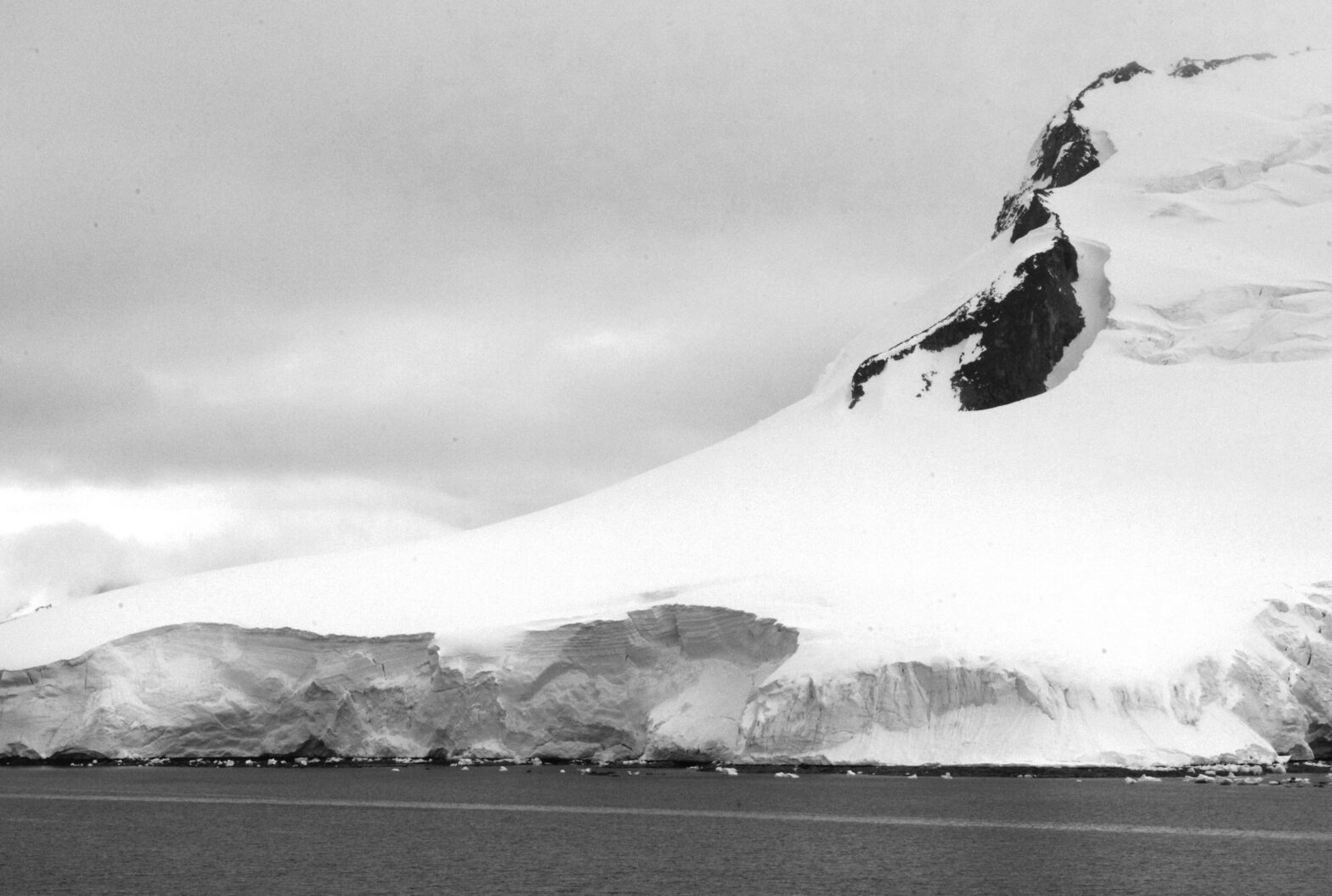
X Latin American Congress of Antarctic Science +
XII Chilean Congress of Antarctic Research
From 28 July to 1 August 2025
During the last week of July, Valdivia will host the X Latin American Congress of Antarctic Science (CLCA) and the XII Chilean Congress of Antarctic Research (CCIA), two key events for scientific knowledge about the white continent. Both will be held at the Nahmías building on the Isla Teja Campus of the Universidad Austral de Chile and are organised by the IDEAL Centre, the Chilean Antarctic Institute (INACH) and the National Antarctic Research Council. The official inauguration will take place on Monday 28 July at 7pm at the Cervantes Theatre, and will bring together representatives from the academic, scientific and cultural world interested in the environmental dynamics of the southernmost part of the planet.
On this occasion, the transdisciplinary platform Terra Ignota has been invited to participate with an audiovisual intervention during the opening ceremony.
Continue reading “Antarctic Congresses 2025”EM GUIDE: TERRA IGNOTA – Walking, Listening and Mapping the Unknown in Southern Chile
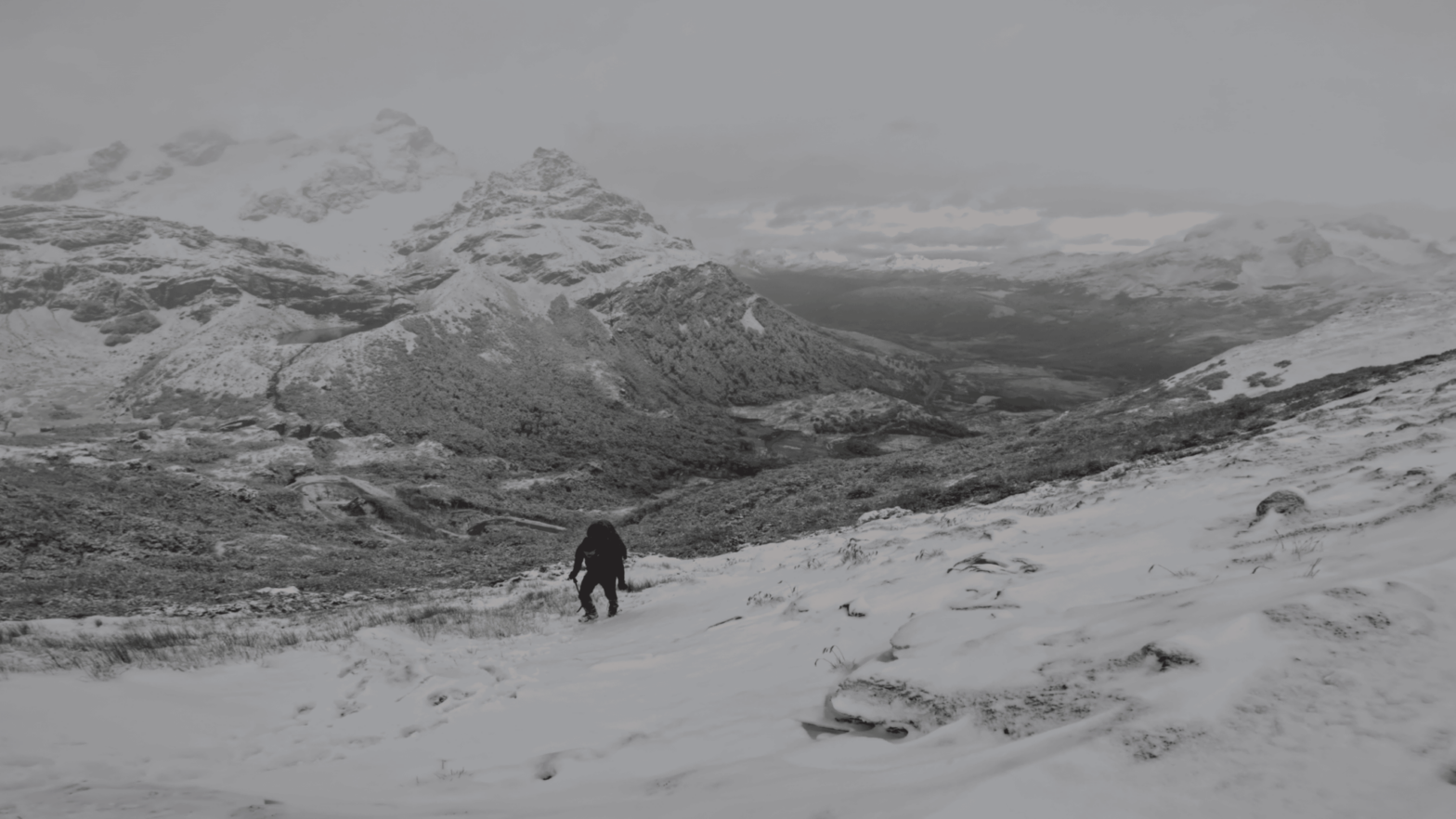
In the southernmost territories of South America, the nomadic platform Terra Ignota offers a new approach to exploration through radical listening and collective unlearning. For over a decade, Terra Ignota has challenged conventional methodologies, replacing fixed questions with the fluid act of walking, listening, and engaging with the landscape. In this space, rocks, wind, and found objects become living archives, carrying untold stories and traces of memory.
This interview is part of the southernests series, which explores how certain artistic gestures – through listening, drifting and publishing – activate community or affective bonds across South America. Each piece begins by revisiting personal materials from the interviewee’s archive. These are not private keepsakes, but forms of inscription. Fragments that can blur the line between the intimate and the public, condensing ways of life, embodied knowledge and situated modes of transmission. In this sense, publishing becomes a way of making that blurs the visible and reorganising the common.
Text by Florerncia Curci
Videogam 144
Raviv Ganchrow – Tierra del Fuego Oceanic Reverb
7.5.2025, 19:00, https://videogram.favu.vut.cz/raviv-ganchrow
How do shifting relations between mammals, climate and geology refract through whale sounds and what interlinks those sounds with seabed topographies and ocean structure? How is human involvement with piezoelectric and oxide minerals conductive of underwater listening and how does such hearing alter maritime and coastal techniques? This talk sets these questions in dialogue with recent insights from the Whale Refractions research project, following experimental hydrophone recordings in the sub-Antarctic archipelago of Tierra del Fuego.
Videogram is a lecture series on contemporary modes of art, curatorial and artistic practice and theory.
Media echo Whale Refractions

The first stage of research project Whale Refractions in the Francisco Coloane Marine Park and in colaboration with WhaleSound Foundation generated some media echos.
Particular recognition was given to its significance in the context of international and national efforts to protect the oceans: “This research, […] plays a crucial role in raising public awareness of these species, many of which are at risk. Furthermore, they provide the necessary impetus for the creation of laws and policies to address the serious threats they face, such as plastic pollution, shipping traffic and oil and gas extraction. A recent study published in the journal Marine Policy revealed that Chile has the highest whale mortality rate due to collisions with vessels worldwide, particularly in the Magallanes region.
In light of this alarming regional situation, Carlos Valladares (from WhaleSound Foundation) emphasised: “We are at a crucial juncture for the environment in our country, particularly with the creation of the SBAP. The local Regional Ministerial Secretariat for the Environment is working to bring together the various stakeholders in the southern maritime region to develop better planning policies – something that is currently virtually non-existent.”
Valladares emphasises the importance of collaboration in this endeavour, stating that ‘every contribution helps to achieve the common goal, not only that of international scientists, but also that of local professionals and citizen scientists.” (Austerra Society)
Videogram 138
Nicolas Spencer – Terra Ignota: Art, nature, and research through clouds
6.11.2024, 19:00 – https://videogram.favu.vut.cz/terra-ignota
Nicolás Spencer will share the creation and research processes of Terra Ignota, a transdisciplinary research platform that explores the relationships between culture, nature, knowledge, and their different forms of representation. Terra Ignota began in 2015, emerging from the practices of gatherings and meetings of a dynamic group of artists, scientists, curators, and producers, based on a recurring nomadic laboratory in the southernmost territory of the Americas.
Videogram is a lecture series on contemporary modes of art, curatorial and artistic practice and theory.
Resonace FM – Sonic Darts # Terra Ignota

Resonance Extra – Sonic Darts with Gwaith Swn is presenting Terra Ignota Monday 6th November 2023 22:00 – 23:00 GMT. Edited by Victor Mazon.
Journey in the great archipelago

Journey in the Great Archipelago is a map by Dr. Alfredo Prieto, Cristian Espinoza, and the production of Nicolás Spencer, based on John Bartholomew’s Atlantic map tracing a journey of early humanity from the centre of Africa to Tierra del Fuego during the Würm glaciation.
Continue reading “Journey in the great archipelago”Conversation between Fernanda Olivares, Nicolás Spencer, Nora Haas, and Claudia Augustat
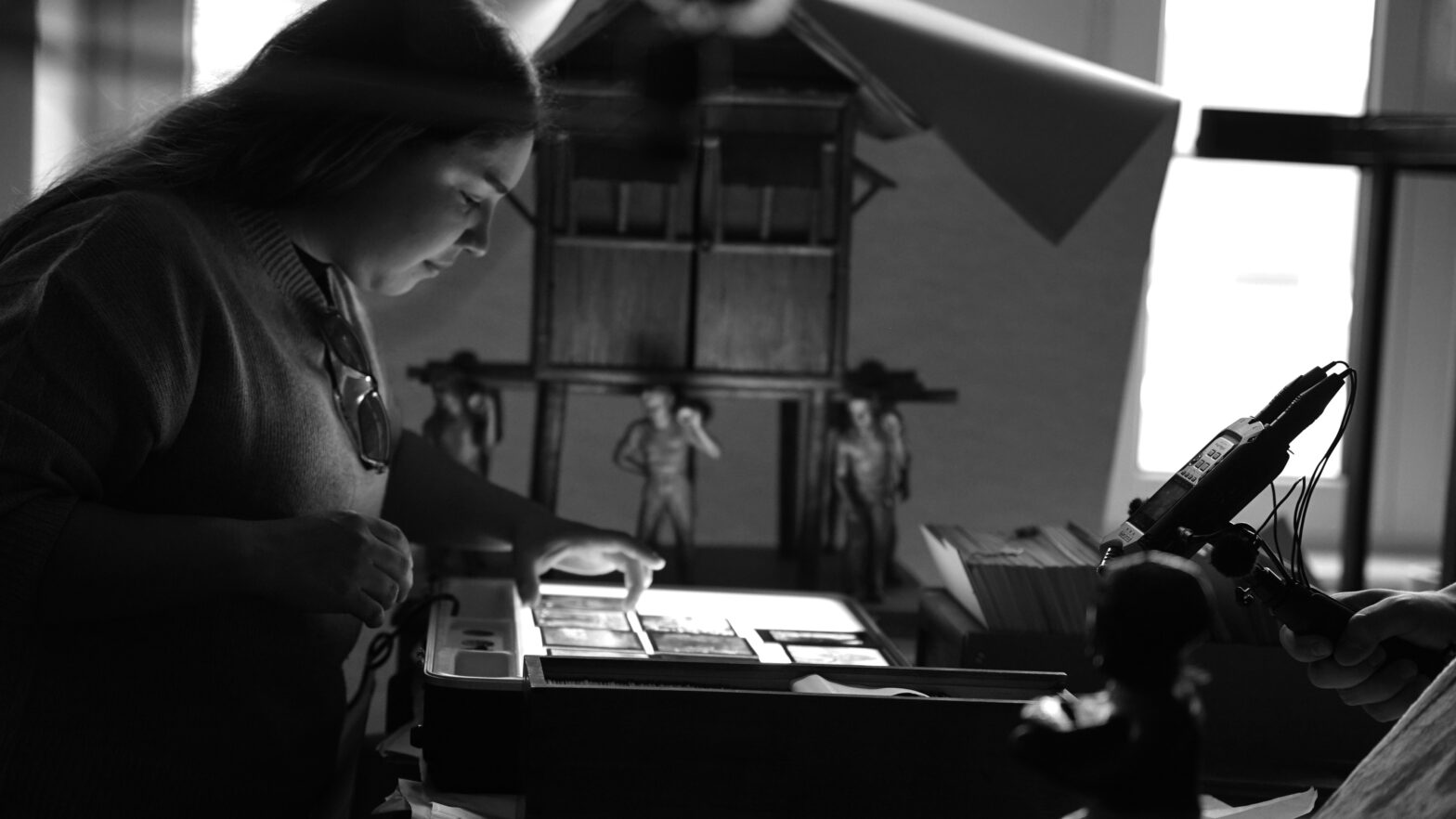
In September and October 2022, Fernanda Olivares, an activist, and Nicolás Spencer,
an artist, both from Chile, came to Vienna for two weeks to conduct research at the
Weltmuseum Wien. The aim of their visit was to develop work for Extinctions!?, an
experimental exhibition, which opened at Weltmuseum Wien in February 2023, as
part of the TAKING CARE project. Olivares and Spencer worked with objects from
the Selk’nam, an Indigenous group, living in the Argentinean and Chilean Tierra del
Fuego. The Selk’nam, which is the group to which Olivares belongs, are a recognized
minority in Argentina, while in Chile they are considered extinct. The Selk’nam objects
that Olivares and Spencer would engage with were collected by the missionary
Martin Gusinde between 1923 and 1927.
This project forms part of the wider efforts for an analysis of the relation between objects
and their environment in the context of extinction that is made in the works of
Olivares and Spencer. For example, Olivares’ community, the Covadonga Ona, are currently
campaigning to be recognized under Chile’s Indigenous Development and Protection
Law. The aim of their work with the museum was to re-establish a relationship
between the objects of the past and the people in the present, while intervening in the
discourse of extinction that surrounds the group.
The following text is based on a conversation between Fernanda Olivares and Nicolás
Spencer and the TAKING CARE team that took place during their stay in Vienna. While
remaining close to what was said in the course of the conversation, the text has been
edited for clarity.
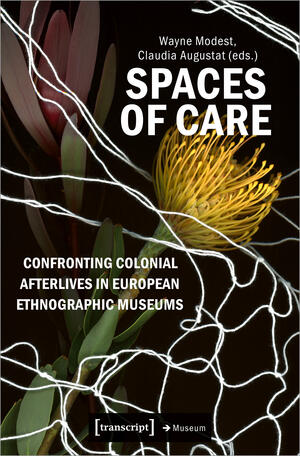
Spaces of Care – Confronting Colonial Afterlives in European Ethnographic Museums
DOI: 10.14361/9783839468487