Songing Thalassic

Raviv Ganchrow presenting Whale Refractions at default#26 – 21.10.2026, Den Haag

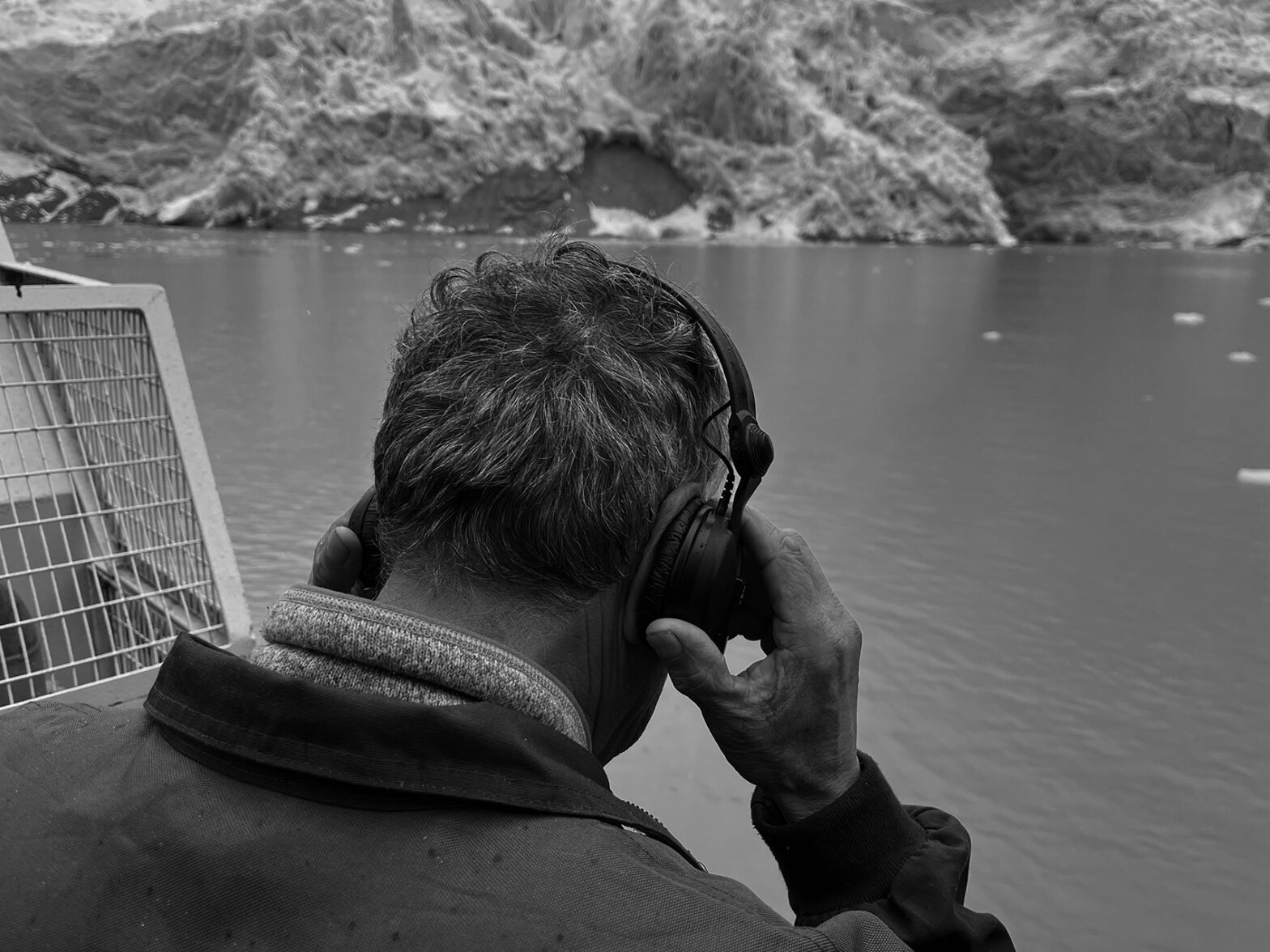
Ganchrow’s presentation will provide an occasion for delving into various iterations of hearing whale songs – opening geological dimensions of vocalization as well as links to 1970s environmentalism, Cold War ocean surveillance, and emerging interspecies cultural imaginations. ‘Songing Thalassic’ is an invitation to explore the spaces of situated vocalization, following entwined dynamics across biological, geological, and technological domains.

The Familiar and the Remote

A Day of Audio Streams and Soundwalks
02.05.26 / 4pm – 6pm & 7.30 – 10pm @ Liebig12, Berlin

On May 2nd Liebig 12 presents a day devoted to hearing and exploring our sound environment in very different ways. There will be a soundwalk around the streets, parks and pathways of Friedrichshain, followed by an evening of listening, discussion and talks devoted to the fast-growing practice of audio streaming. Artist and researchers Peter Cusack, Kerstin Ergenzinger, Michiel Huijsman, Udo Noll, Carsten Stabenow and others will outline projects in which they are involved, including radio.aporee, radio.earth, Soundtrackcity, Terra Ignota.

Continue reading “The Familiar and the Remote”

Magallanes Signaling @ Festival Tsonami 2026

Magallanes Signaling by Carsten Stabenow and Raviv Ganchrow was presented at this years Tsonami Festival.

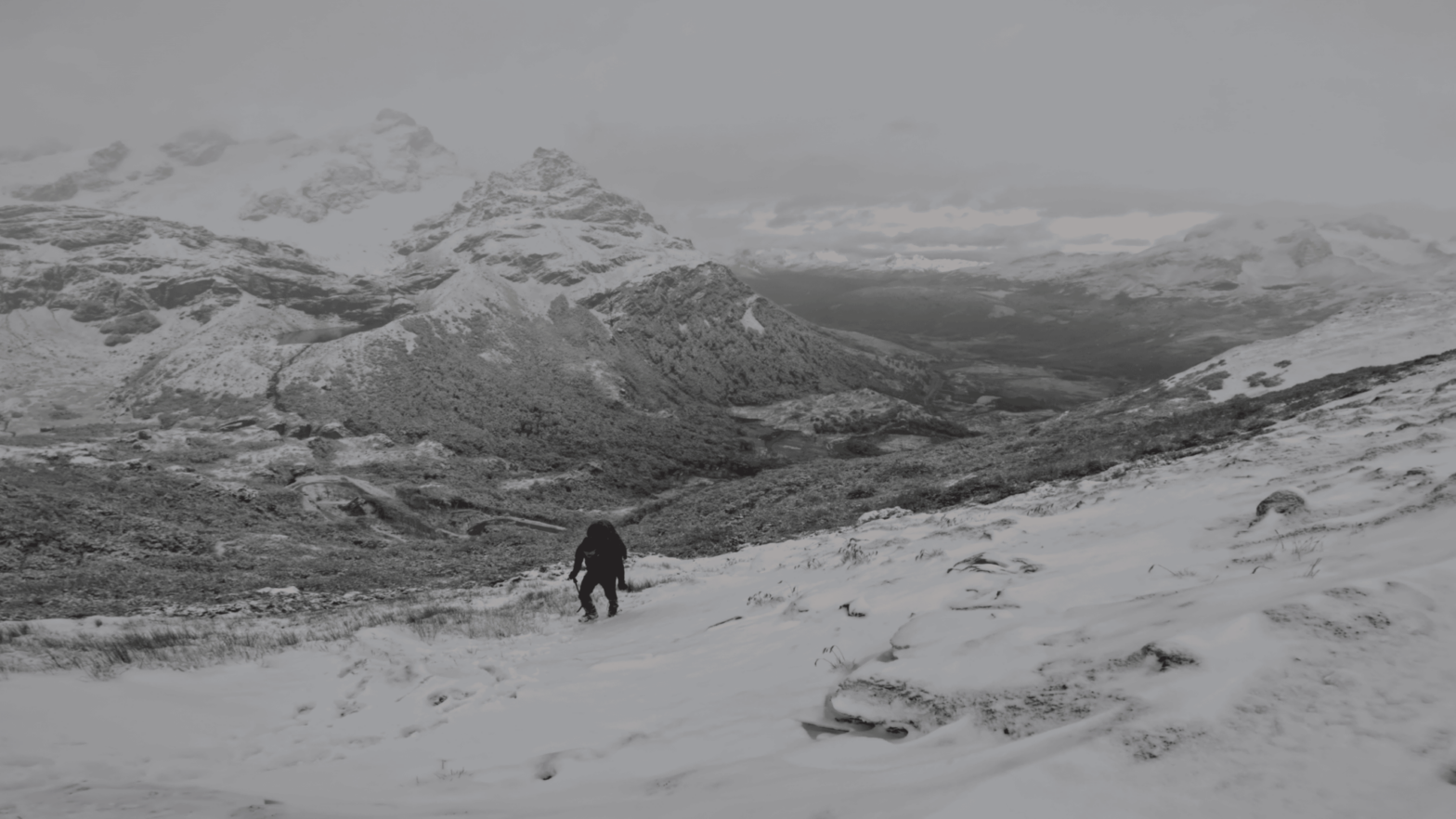
Perfromative spatial-sound configurations, culled from unedited location recordings of a research journey through Chile’s southernmost regions (Tierra del Fuego and Navarino Island) to the decommissioned radio station at Wulaia Bay. 

Continue reading “Magallanes Signaling @ Festival Tsonami 2026”

New research programme for 2026

The Cultural Agglomeration Zone (CAZ) project investigates the accumulation of cultural, historical, and environmental layers in Bahía Wulaia and Seno Ponsonby (in the Cape Horn archipelago), considering more than 7,000 years of occupation by seafaring nomads. In collaboration with the Austral University of Chile, the project will carry out an extensive study in the Ponsonby area during January and February 2026, with the aim of rethinking the current conception of human settlement in this territory and its historical interaction with the environment. Read more about the project here >>>

Antarctic Congresses 2025

X Latin American Congress of Antarctic Science +
XII Chilean Congress of Antarctic Research
From 28 July to 1 August 2025

During the last week of July, Valdivia will host the X Latin American Congress of Antarctic Science (CLCA) and the XII Chilean Congress of Antarctic Research (CCIA), two key events for scientific knowledge about the white continent. Both will be held at the Nahmías building on the Isla Teja Campus of the Universidad Austral de Chile and are organised by the IDEAL Centre, the Chilean Antarctic Institute (INACH) and the National Antarctic Research Council. The official inauguration will take place on Monday 28 July at 7pm at the Cervantes Theatre, and will bring together representatives from the academic, scientific and cultural world interested in the environmental dynamics of the southernmost part of the planet.

On this occasion, the transdisciplinary platform Terra Ignota has been invited to participate with an audiovisual intervention during the opening ceremony.

Continue reading “Antarctic Congresses 2025”

EM GUIDE: TERRA IGNOTA – Walking, Listening and Mapping the Unknown in Southern Chile

In the southernmost territories of South America, the nomadic platform Terra Ignota offers a new approach to exploration through radical listening and collective unlearning. For over a decade, Terra Ignota has challenged conventional methodologies, replacing fixed questions with the fluid act of walking, listening, and engaging with the landscape. In this space, rocks, wind, and found objects become living archives, carrying untold stories and traces of memory.
This interview is part of the southernests series, which explores how certain artistic gestures – through listening, drifting and publishing – activate community or affective bonds across South America. Each piece begins by revisiting personal materials from the interviewee’s archive. These are not private keepsakes, but forms of inscription. Fragments that can blur the line between the intimate and the public, condensing ways of life, embodied knowledge and situated modes of transmission. In this sense, publishing becomes a way of making that blurs the visible and reorganising the common.
Text by Florerncia Curci