Cultural Agglomeration Zone (CAZ) 2026

> projects / 2026 / caz / Projects / Participants

Research in Bahía Wulaia and Seno Ponsonby

The Cultural Agglomeration Zone project investigates the accumulation of cultural, historical, and environmental layers in Bahía Wulaia and Seno Ponsonby (in the Cape Horn archipelago).
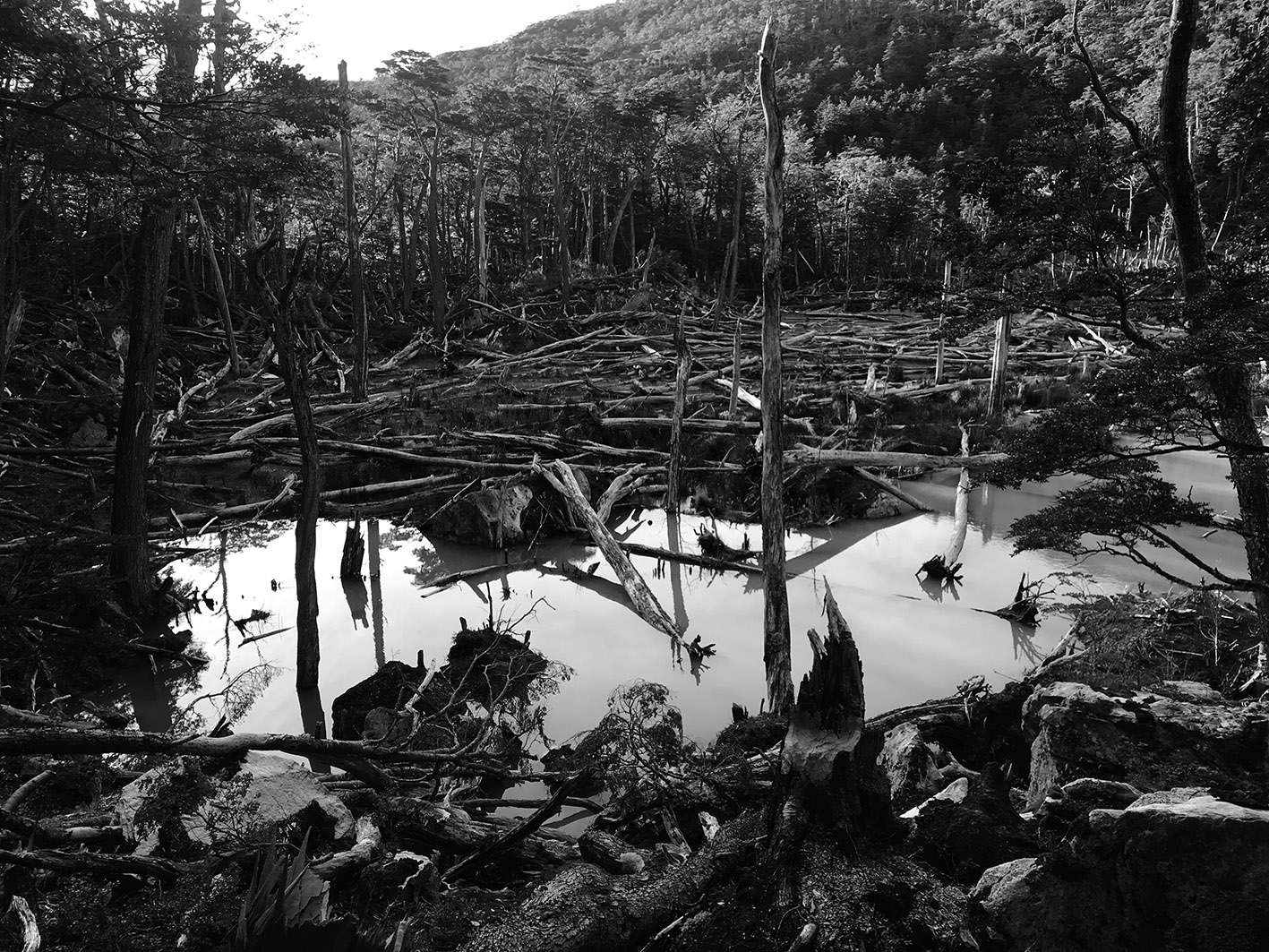
Indigenous habitation, over prolonged periods of time, is also understood as a sustainable model from which to gauge current transformations in the region. The effects of climate change in Ponsonby can be observed in real-time through precipitation patterns and vegetation as well as the rapid growth in maritime logistics and expanding Antarctic route linked with the politics and economics of the thawing polar region. This increasing global pressure threatens the fragile local heritage and its uniquely rich sub-Antarctic oceanic ecosystem. Ancient forests, lichen cultures, peat- and wetlands, rivers, and marine habitats and migration channels become increasingly vulnerable in a geopolitical zone that has long been shaped by territorial disputes that ignores this ecological fragility.

Non-invasive analysis of landscape

The Terra Ignota team will apply non-invasive, experimental survey methods to document the place (see Caleta Wulaia, Historical and Archaeological Evidence for more information on possible traces) as well as a preliminary analysis of underwater ecosystems, morphologies and ambience. Collected data will be cross-referenced with local narratives, historical accounts, maritime practices, and ecological records to generate a vector map uncovering long-term human–environment interactions. Particular emphasis will be placed on agencies of sound in the region, reflecting both the central role of oral tradition in preserving heritage and the importance of voiced communication in environmental navigation as well as specific acoustic conditions of the site facilitating bird and marine mammal communication. Close consideration will also be given to the relationship between humans and marine mammals (see Whale Refractions: Heritage in the Age of Mammals for more details on that aspect of the research) —to decipher the manners in which human/marine mammal encounters informed strategies of subsistence, mobility, and social organization in the Ponsonby coastal region.

Wulaia as a nomadic “megalopolis”

The project conceives of Wulaia not only as a zone of transit, but also as a zone of social aggregation–anomadic “megalopolis”, a center of complex activity where knowledge, remains, and cultural practices from different epochs overlap. It is understood as a center of complex activity where knowledge, material remains, and cultural practices from different epochs converge.

Two dimensions: science and digital art in co-creation

This research consists of two complementary dimensions. On the one hand, a scientific line that, through alternative, collective, and non-invasive methodologies, fokus on the forms of sub-Antarctic settlement within the broader human project. On the other, an artistic dimension that employs digital tools to layer and visualize cartographic data, generating devices for critical analysis and cultural mediation. This second aspect is oriented toward processes of artistic-scientific and community co-creation, fostering knowledge exchange and the development of open resources and platforms that transcend the academic sphere to engage with diverse audiences in the international arena.

Cultural Agglomeration Zone: heritage and Antarctic future

The Cultural Agglomeration Zone is a space for reflecting on the ways of inhabiting, where past and present layers overlap, promoting the integral preservation of tangible and intangible heritage —as well as a platform for projecting into the future — deepening the understanding of settlement and ecosystem relations. The timely urgency of this concerted effort, with focussed attention to a fragile ecosystem with little international visibility, cannot be understated in the face of transitions and pressures currently underway redefining Ponsinby as a critical passage en-rout to Antarctica. Please refer to this video for an overview of Terra Ignota’s commitment and approach to this unique corner of the globe https://terra-ignota.net/2025/07/24/antarctic-congresses-2025/
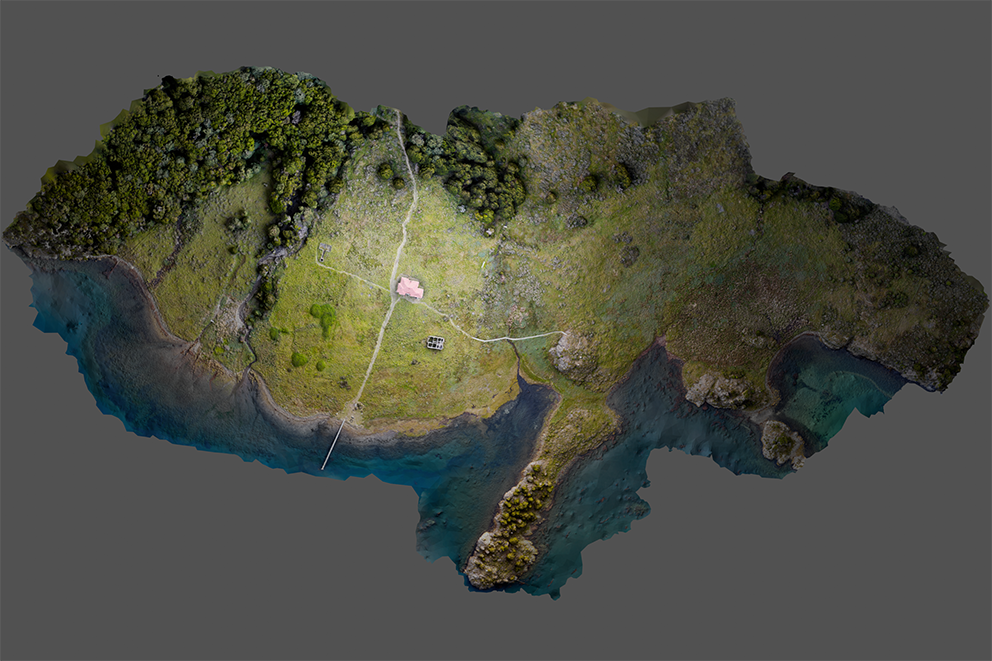
Drone mapping, DJI FC2103, February 2025 © Robert Carracedo Recasens

Radiales 2025

> projects / 2025 / radiales / Preliminary Visit / Emerging Archive / Historic Background / Forum / Documentation / Participants

Radiales is the name of the new project by Terra Ignota, extending the geological research “Intercultural Contact Zone” conducted between 2017 and 2024 in Yendegaia National Park. This project continues the transdisciplinary study as a way to understand this territory and its different forms of interpretation.

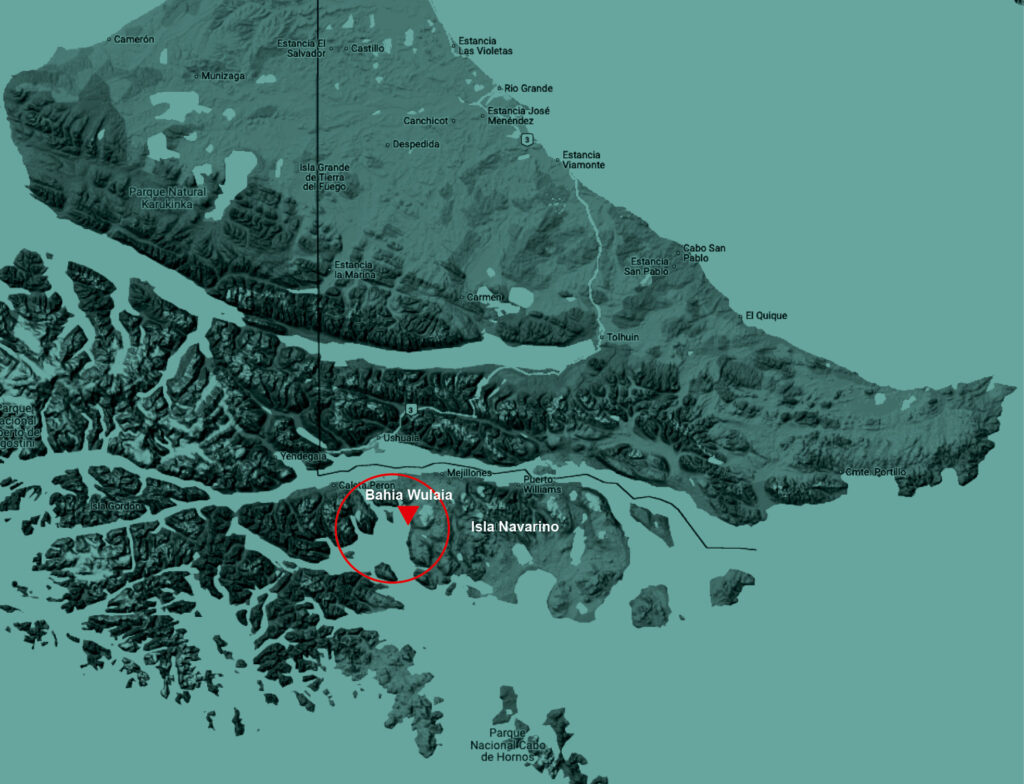
The study area focuses on the geological continuity of Yendegaia Bay, specifically the Murray Channel. This maritime passage is located latitudinally between Hoste Island and Navarino Island, and longitudinally between the Beagle Channel and Nassau Bay at Cape Horn, at coordinates 55°00’00.0″S 68°19’49.7″W. As a base camp, we will use the former navy radio station located in Bahía Wulaia.

Bahia Wulaia and area of Murray Channel (Yagashaga)

The central idea of Radiales is to rethink the function and scope of the contemporary museum beyond revitalizing a former radio station as a heritage space. We want to reflect on the mechanisms that act as a bridge for the museum to connect meaningfully with the community it serves, considering the inclusion of the otherness that cohabits it. It’s about understanding this space, which has functioned as a place of repeated and natural convergence since prehistoric times, emitting signals toward the future, inscribed in its oceans, rocks, and wind.

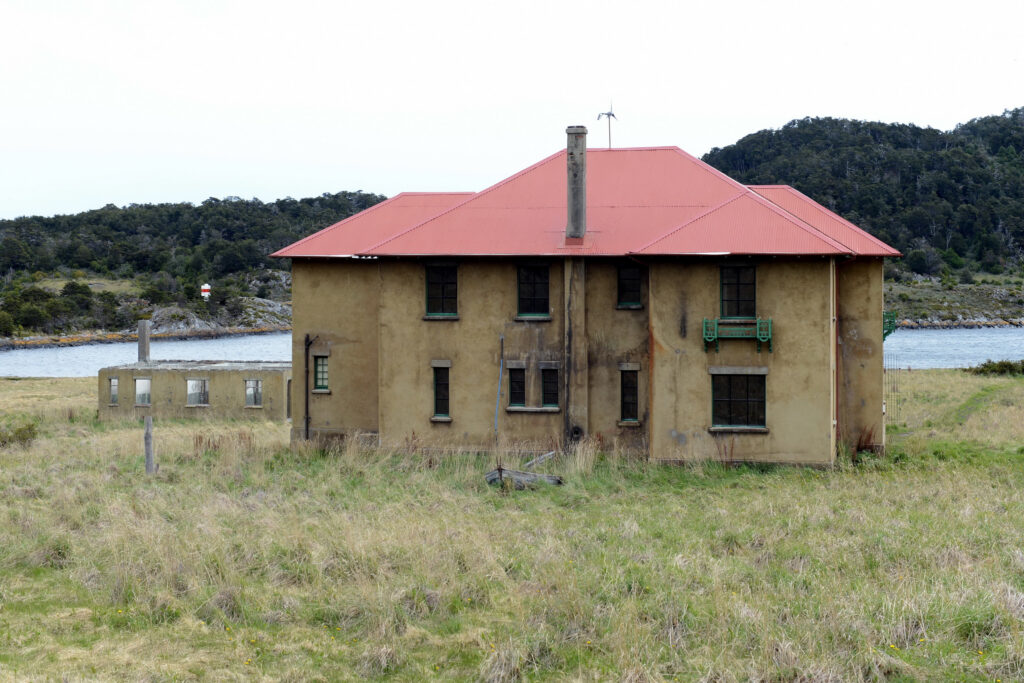
Vieja Radio estación de la armada.

The main objective of this exploration is to establish a framework, research, and experimentation with clear questions and objectives, understanding the potential and limitations for further explorations. The fieldwork will be focused on creating a curatorial line, forming work teams, and developing production methods that align with the geography, climate, and the various social actors already present. It’s about finding the right questions and identifying the appropriate methods, tools, and specialists to address them effectively.

Museums as Transmission Technologies

An antenna, both in the natural world and the electromagnetic realm, can be defined as a sensory organ that acts as a bridge between two realities. In insects and other animals, antennas are sensory structures that capture chemical and physical signals from the environment, translating them into vital information for survival. In the field of science and technology, electromagnetic antennas play a similar role, capturing radio waves and other types of electromagnetic radiation, converting them into data that enable communication and the transfer of significant information.

The museum-antenna adopts the fundamental mechanism of a museum: taking something from the present to construct a past. The difference is that the museum-antenna views heritage as a continuous and collective construction that develops, transmits, and evolves over time. Its goal is to reflect the richness and complexity that make up heritage in a living, constantly mutating process.

By basing its practice on invisible energies, the museum-antenna transcends the traditional idea of a museum as a preserver of the past, moving instead between preservation and transmission. The conservation strategy of this museum is to transmit, to externalize and liberate heritage to the potential multitude of its resonance.

We aim to perceive the Murray Channel as a living archive, an in-situ museum piece understood through the constant aggregation of abstractions and subjectivities. The museum-antenna will serve as the transceiver of experiences, viewpoints, and interpretations inscribed in this archive, stored in the form of matter, energy, and information that transcends human comprehension and temporal scales.

In Radiales, we start from the premise that we can only preserve what is transformed, and that we only truly possess what is shared. The museum-antenna intensifies this idea by using radio signals to create a listening network and an acoustic community that transcends the physical barriers of the island.

Taces and encounters

Open forum – February 5 and 6, 18:00 – 20:00
@ Museo Territorial Yagán Usi – Martín González Calderón
Aragay esquina Gusinde, Puerto Williams, Chile

organized by Museo Martín González + Terra Ignota

supported by:

Sonic Islands 2023

> projects / 2023 / Sonic Islands / documentation / participants

Mirrored perceptions between Tierra del Fuego + Rügen
March and September 2023

Objects in mirror are closer than they appear

(unknown automobile producer)

Important for the Terra Ignota project is the aspect of mediation. How can this artistic-scientific knowledge production be translated for a wider audience? What are suitable formats for public presentation? How can results be transported to other geographical locations or in other cultural contexts without themselves being extractivist?

For us, this can only be sustainably developed through an intensive exchange between the international partners and, above all, through a constant critically adjusted practice on both sides. While we were thinking about scenarios and how to develop manifestations of that approach, we noticed some striking similarities between our different places of origin.

If you mirror the globe, you will find Germany’s largest island, Rügen, at almost exactly the opposite position of Tierra del Fuego. Both lie at precisely the same latitude. (54°36’20.5 “S Tierra del Fuego / 54°36’20.5 “N Rügen). A closer look reveals many similarities in geography and landscape, climate, flora and fauna, history and archaeology, culture and even recent social and demographic dynamics.

The Fuegians, indigenous groups of Selk’nam, Yagan, Kawesqar and Haush, settled Tierra del Fuego. Coming from the north with the great global migratory movements, they inhabited the southern cone for more than 10.000 years as nomadic hunter-gatherer communities. The colonization (settlements, sheep farming, wood cutting, local gold rush), and the systematic displacement and genocide didn’t occur until the second half of the nineteenth century. Early ethnographers were still able to observe their pre-colonial culture before the entire population nearly became extinct. The dramatic ecological, demographic and cultural effects of civilisational developments over the last 100 years are clearly visible throughout Tierra del Fuego.

On Rügen, similar historical developments can be observed with a time difference of a few centuries. Numerous megalithic tombs and a wealth of archaeological findings attest to settlement since the Stone Age. Owing to rich flint deposits, Rügen was an important centre for the production and trade in stone tools. Due to very rich Terminal Mesolithic (5000-4000BC) artifact findings in the area around Lietzow-Buddelin, the term Lietzow Culture was coined.This culture was related to the Ertebølle Culture of the Scandinavian region which is similar to the Shell Midden Culture in Tierra del Fuego. During the 1st century, Rügen was inhabited by the tribe of the Rugii or Rygir (Rye Eaters), who had most likely migrated from the Scandinavian region. From the 7th century onwards, Slavic immigrants from the Rani (or Rujani) tribe settled on Rügen and remained there until the Danes landed in 1168 and christianised the islanders. The more recent changes, from a former calm and remote island with local agriculture to a busy seasonal touristic hotspot, feels uncannily like what one might expect to unfold on Tierra del Fuego in the near future.

Apart from the historical and cultural dimensions, there are great similarities in the geological development and formation by glacial periods – again with a time difference. The retreat of glacier formations in Tierra del Fuego today is a very precise indicator of global warming in recent decades, the erosion caused by persistent drought and soil depletion on Rügen is yet another sign of human activity fast tracking ecological change. Although the Baltic and Southern Seas differ, they are also both home to porpoises and seals, and forced to address similar problems: increased littering, eutrophication, lack of phytoplankton, overfishing, pollution from concentrated fish farming or the direct effects of fossil fuel extraction and transit.

Both places face rapid changes in the near future due to current global developments and shifts in geo-political dynamics. (The race to Antarctica in Tierra del Fuego or the New Silk Road connection and long term LNG terminal infrastructure developments on Rügen)

SONIC ISLANDS focuses on the various auditory aspects of the TERRA IGNOTA project and is part of TIF 2023/24.
We are interested in the meaning of sound as a semantic system and as a form of artistic articulation. Questions about origin, identity, intercultural understanding but also about perception, legibility and interaction with the environment, social processes and structures beyond visually connoted reference systems are the subject of our joint research. Listening and making audible to stimulate changes of perspective in the process of artistic research and knowledge production as well as in communicating to an audience.

The research process started in Tierra del Fuego (March 2023) was continued on the geographically and culturally mirrored island of Rügen (September 2023). The results are presented on the opposite sides in the different local contexts – literally drawing a straight connecting line through the globe.

The reflection proved to be extremely productive. Beyond the similarities mentioned above, the residency process brought to light some very surprising connections that we had not anticipated – connecting once again with the pressing questions of our time. The project blog is documenting some of the findings, new connections and observations and shows some concrete site-specific sound installations, interventions, performances and activities.


Presentations:
Friday September 15th presentations at different locations on Rügen (Kap Arkona, Binz and Neukamp)

Tuesday September 19th open studio at liebig12 in Berlin 4 – 10pm

March 2024 final exhibition of the TERRA IGNOTA FORUM at UMAG, Punta Arenas

The project was funded by the Goethe Institut International Coproduction Funds and Musikfonds e.V. and support by Universidad Nacional de San Martin.

Terra Ignota Forum 2023

> projects / 2023 / Terra Ignota Forum / background / documentation / participants

Terra Ignota Forum (TIF) is a field laboratory that seeks to develop and implement a contemporary archive on the so-called “intercultural contact zone” (Selk’nam, Kawesqar and Yagán) located in Yendegaia National Park (YNP). The project is deployed in two stages, the first is the continuation of our interdisciplinary research in the territory and field forum (2023). The process and research will be documented and published in different media, individual artistic projects developed further and presented in the second stage to the public beginning of 2024 at the Universidad de Magallanes, Punta Arenas.

The first stage – Field Trip #04 and forum – builds on the results and archaeological findings of the previous Field Trip #3 in 2021 and approaches the territory in 3 transdisciplinary groups from 3 different directions. We will continue the search for cultural traces as well the work on individual project objectives. For the Forum, an extended group of artists, scientists, curators and the local communities will gather on site and reflect about the findings and results of the Field Trips and their implications. You can read more about the background, participants and objectives here.
The Field Trip #04 is taking place in joint partnership with the Terra Ignota – Sonic Islands project, enabled by the Goethe Institut International Coproduction Funds and from Musikfonds e.V.

Extinction!? 2022

> projects / 2022 / Extinction!? / background / documentation / participants

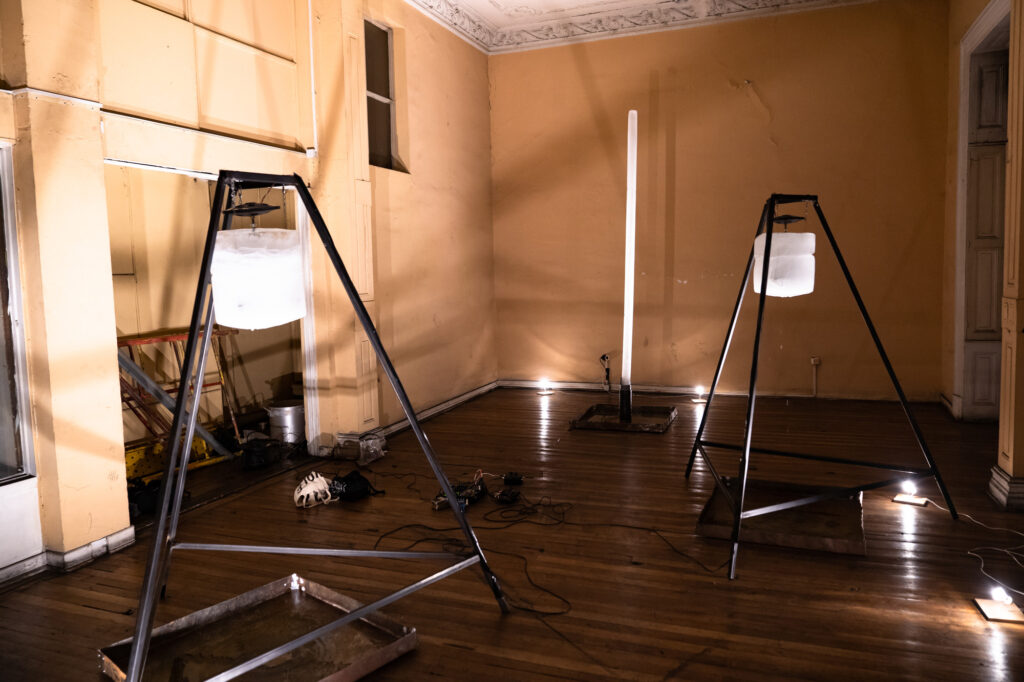
In 2022, Fernanda Olivares and Nicolás Spencer were invited to participate in a residency at Weltmuseum to be part of the exhibition “Extinction!?” as part of the TAKING CARE project. The idea of this residency was to work with the objects belonging to the collections obtained by Martin Gusinde and Carl Hagenbeck and explore new museographic forms based on perception, feelings, the discussion around extinction, and the recognition of the Selk’nam community in Chile as a living community. >> see background

For this, we set out to investigate the objects of the Selk’nam collection, aiming to display the results for a year in the exhibition halls of this former anthropological museum. To achieve this, we approached these objects slowly and carefully, understanding that they have their own position and agency independent of the observer, a place as a consequence of a long history, with multiple meanings and ways of being interpreted. We began by understanding their ecosystem, from the periphery of the city to the elemental particles that constitute these artifacts. >> see documentation

Polar 2018

Artistic vision 

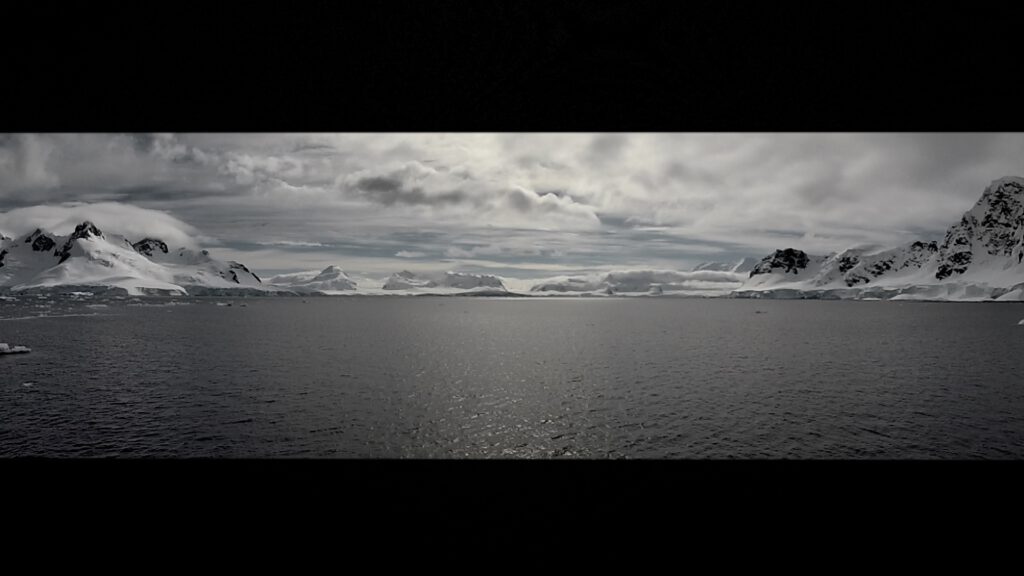
The Antarctic continent is the one continent that is still seemingly secluded from the rest of the world. It was the last great land mass discovered by humans and uninhabited until the beginning of its colonization in the early 1820s. For decennia, it has served as a collaborative research territory, governed and safeguarded by the Antarctic Treaty. 

The remoteness and specific conditions found on the Antarctic continent are often essential factors for making scientific work possible. As one of the ‘final frontiers’ the continent is now slowly discovered by tourism, which brings new challenges to this scarcely populated continent, and will result in increased human traces on the continent. 

In the short time remaining during which the Antarctic region will still be relatively undisturbed, it is urgent to gather the knowledge that can only emerge from an integrated and comprehensive approach towards science, technology and the arts. 

Is the Antarctic still truly an isolated continent, a blank canvas? Will the Antarctic remain a place for sustainable geo-political viability, while preserving its characteristics of today? How does this isolated position contribute to imagining alternative realities and futures? Will Antarctic resources be used and extracted in a responsible way and what tools and parameters can or should be used to index and measure this? 

These are the questions that motivate the artists and curators of the POLAR project to start their three year exploration. A project supported by the Ministry of Culture, Arts and Heritage, the Chilean Navy and a group of international governmental organizations 

POLAR wants to contribute to ideas about future Arctic settlement and the sustainable use of natural resources. We want to imagine what Antarctica, and an Antarctic society can become – beyond the populations of extraterrestrial research stations and the increasing touristic trend. We aim to propose a diversity of artistic projects, which can contribute to the further development of technologies and scientific scopes relating to the Antarctic territory. The idea will be to provide research and results from these explorations so the Chilean Government can also benefit from the technologies and methods created for the expedition. The main objective is to contribute to and foster narratives towards sustainable technologies, local perspectives for development, as well as discussing the cultural implications and potentials. 

Our artistic visioninforms the goals for polar building on previous investments

Members of the POLAR group have been supported by the Chilean Arts Council in the past, and this has resulted in works be- ing presented in the Magallanes and Chilean Antarctic. POLAR stems from these initial investments by the Chilean Navy (First Naval Zone), the Government of Chile through the Ministry of Culture and the National Council of Culture and the Arts and the Government of Austria through its chancellery and Embassy. POLAR is a continuation and constitutes a next dimension through its engagement of a wider group of internationally renowned artists and curators. 

Envision an antarctic culture 

A main goal of this mission is to understand and envision an Antarctic culture; a culture that has developed as a result of the diverse groups of actors, scientists and professionals, driven by various needs, backgrounds and politics that come to this part of the Earth for (scientific) research. This leads into speculation about what the future and potentials of such an Antarctic Culture could look and sound like (beyond mass tourism). 

To achieve this, POLAR will explore human and non-human traces in various ways: we will record non-audible signals, research image and resolution in what is seemingly ‘empty’ space, question and speculate about human and non-human relations in situations of vacuum and isolation, and examine what lies beyond human perception. 

Contribute to a dialogue between arts and science 

With this mission, we want to strengthen the potential of artistic research in the Antarctic. All artists and curators involved in the project have a research-driven approach, and POLAR wants to contribute to a larger scientific dialogue by offering new connections and by proposing alternative perspectives. 

Explore alternative antarctic futures 

Artistic research and exploration can not only create alter- native perspectives, but build (unexpected) connections and dialogue – and in doing so, provide directions for alternative futures. We envision that POLAR will create space for speculation and fiction that relates to the Antarctica as ‘free zone’. The research and work undertaken during POLAR will feed into the wider practice of the participating artists and contribute to the global awareness about isolated and endangered environments in a continent that will be increasingly affected by civilization. 

Increasing awareness on antarctic issues 

From this mission, several artistic propositions will emerge. The final result of the trip will consist on a publication, world- wide talks and exhibitions, and a series of outreach events such as community engagement workshops, radio broadcast and podcasts, including in the conversation other scientists and artists working on the subject; all this with the aim of drawing the public’s attention, arise awareness and a call for action towards a continent that is gradually changing from un- touched to scared by the human mark. 

To finalize 

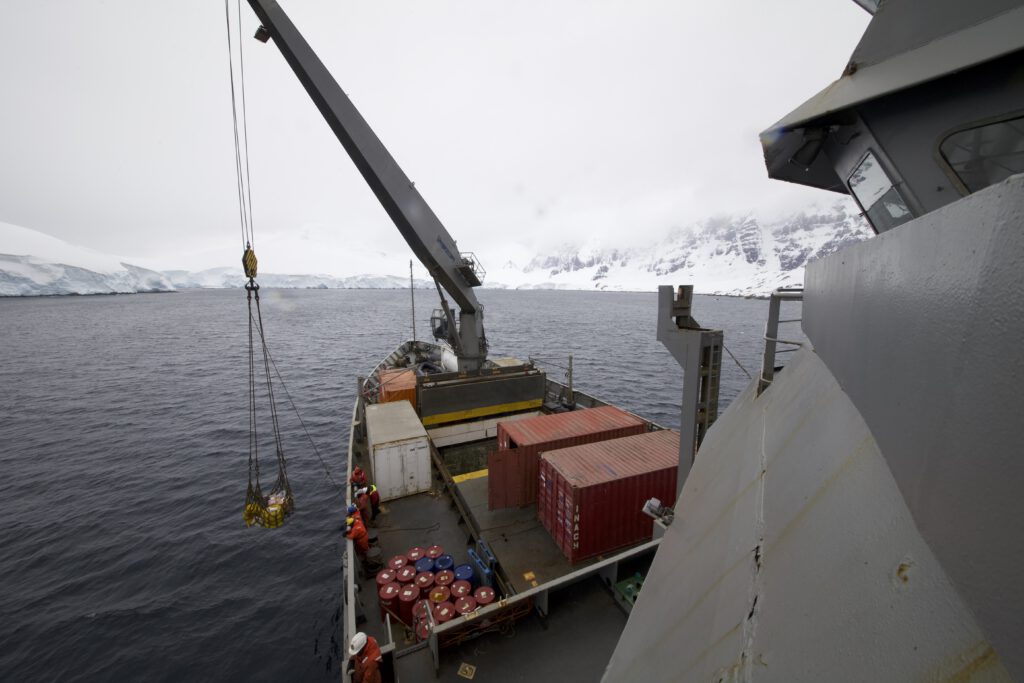
Chile is acting as the international gateway to the Arctic; and the Chilean Navy specifically provides essential services such as – but not limited to – supplies delivery and cleaning to the whole area. It would therefore be an honour and a great opportunity to contribute to the work of the Navy in a new way, and in return, increase the visibility of the Navy’s role in the wider society. 

Results 

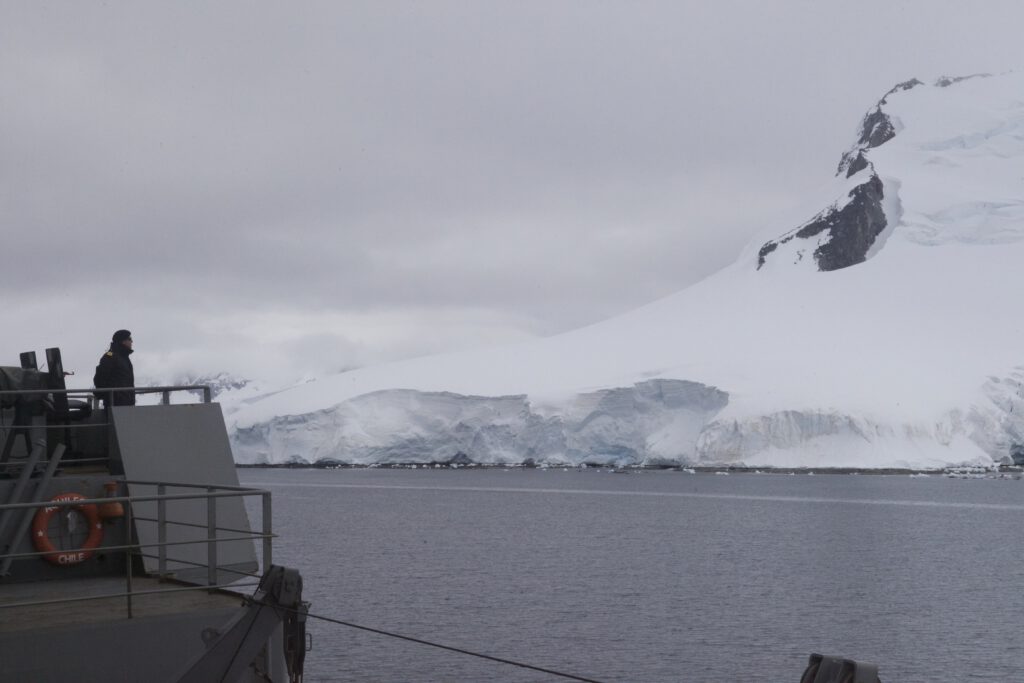
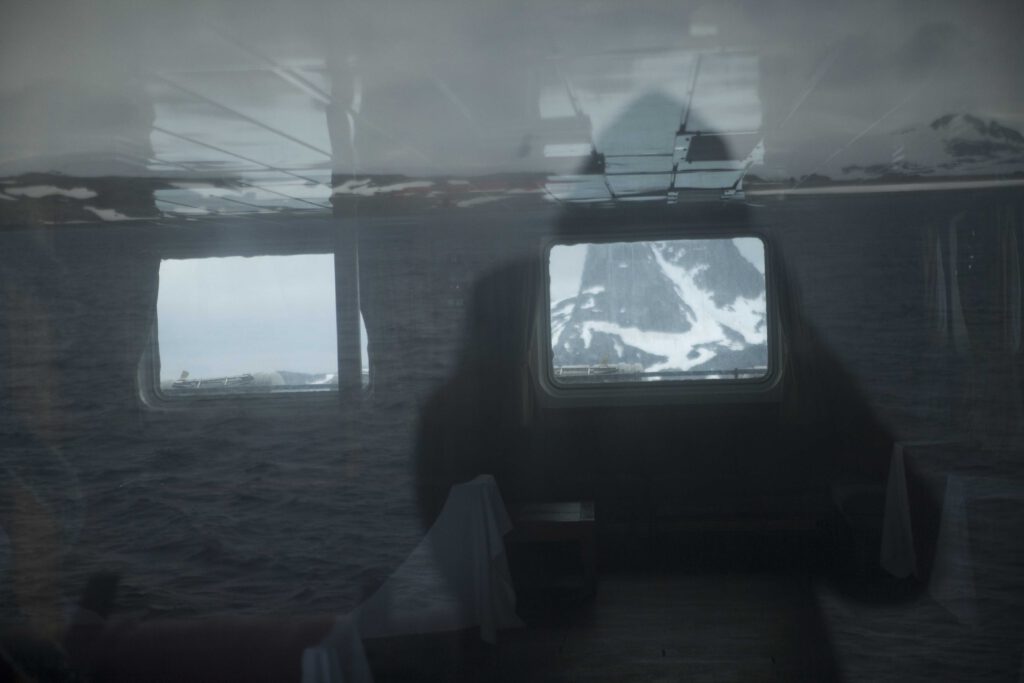
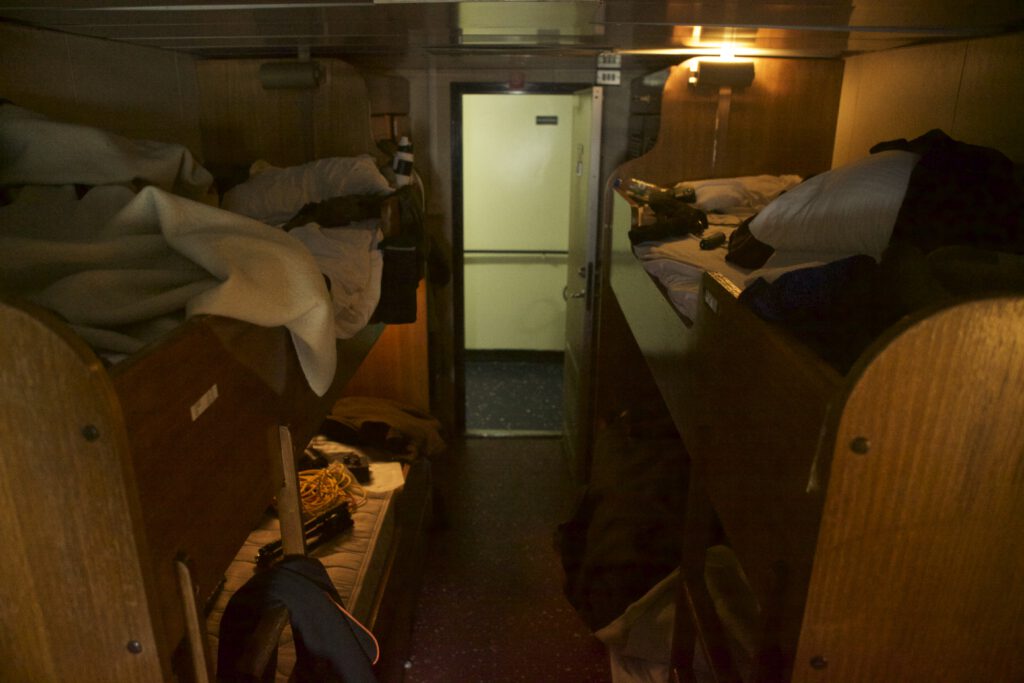
POLAR was an artistic research project initially conceived for a duration of three years, carried out by a group of artists and curators in the Chilean Antarctic from 2018 to 2020. The mission was originally planned to be undertaken by an international group of carefully selected artists, curators, and writers, all with previous experiences of extreme travel—whether above the Arctic Circle in northern Norway and northwestern Russia, the pre-Chilean Antarctic area, or the Arctic itself: Nicole L’Huillier (CL), Víctor Mazón Gardoqui (ES), Rosa Menkman (NL), Valentina Montero (CL), BJ Nilsen (SE/NL), Nicolás Spencer (CL/AT), Mario de Vega (MX/DE), and Annette Wolfsberger (AT/NL). However, due to numerous changes in dates and requirements by the navy, the group was reduced to Víctor Mazón Gardoqui (ES), Rosa Menkman (NL), Nicolás Spencer (CL/AT), and Mario de Vega (MX/DE). The travel conditions did not allow for a clear development of the artistic projects, and after more than a month of sailing with minimal land contact and extremely restricted movement, future exploration editions were canceled, with hopes for better conditions to realize this project.

Videos

Islas Wallaston 
55°58’13.1″S 67°14’41.5″O
Base Antártica González Videla 
64°51’07.5″S 62°55’12.9″O
Antartica, cerca de Isla Decepción
62°45’21.6″S 60°07’40.8″O
Antartica, cerca de Isla Rey Jorge
62°20’18.3″S 58°42’02.9″O
Antartica, cerca de Base Yelcho
65°00’02.2″S 63°31’49.2″O
Antartica, cerca de Base Yelcho
64°53’35.0″S 63°49’41.5″O
Islas Shetland del Sur
62°39’50.8″S 62°09’43.5″O
Base Antártica Yelcho
64°52’20.5″S 63°35’46.0″O

More about this project here (PDF 1MB)

participants:
Nicolas Spencer (CL/AT), Mario de Vega (MX/DE)Rosa Menkman (NL)Victor Mazón (ES)