
As Robert Carracedo points in his archeological report of TIF 23, evidence of culturally modified trees has been found in the Bahía Blanca area by the Terra Ignota team. This bay, and specifically the forest near the Bahía Blanca 2, 3 and 4 shell middens, presents an optimal location for bark extraction. The main problem at this location is that the forest has been exploited for decades for timber extraction. Therefore, without dendrochronological dating we cannot be certain of their age and, consequently, we cannot relate them to the indigenous occupation of the site.
Continue reading “Cultural marks & treeprints”Category archives: research works
Kites: Soaring Through myths, history, science, and art research

In the vast tapestry of human history, certain inventions and innovations stand out as marvels of ingenuity, merging science, art, and culture into a single canvas of human achievement. The humble kite, with its roots reaching back thousands of years, is one such marvel. Often associated with carefree leisure on sunny days, kites have also been instrumental in science, war, climate research, and artistic expression. This essay embarks on a journey through time and disciplines, exploring the multifaceted role of kites in shaping our world.
Continue reading “Kites: Soaring Through myths, history, science, and art research”Holobionte – Harnesing the wispers of wind: windmills, windengines and energy harvesting tools

By Florencia Curci, Victor Mazón Gardoqui & Nicolás Spencer
The utilization of wind energy represents an ancient relationship between humanity and the natural world. Windmills, wind engines and wind generators embody this enduring connection and stand as both scientific marvels and artistic expressions. We will delve into the historical chronology of these remarkable devices to celebrate their scientific and artistic significance.
Continue reading “Holobionte – Harnesing the wispers of wind: windmills, windengines and energy harvesting tools”A Mysterious Hum – comparable snippets

Here you can listen to 30 secs edits of field recordings from different locations on the island of Rügen. Starting on the mainland at Lubmin industrial port with an ‘as close as we could get’ perspective of the FSRU (Floating Storage Regasification Unit) currently stationed there. These recordings have captured the ubiquitous low drone that eminates from the regasification vessel Neptune (also known as FSRU) to various locales, up to 61,5km away, on Rügen. (a list of the order of recordings is below)
Continue reading “A Mysterious Hum – comparable snippets”radio earth @ sonic islands

“radio.earth is a participatory art radio project concerning the ecological crisis. Among other practices, it encourages critical listening to live soundscapes from 1st to 3rd natures.
mobilemics are tools for establishing listening situations from selected locations, in which ecological and environmental aspects may unfold as immediate acoustic atmospheres.
In this context, 1st to 3rd natures refer to sites of various degrees of land usage and devastation, from wild nature to urban, agricultural and industrial zones. 3rd natures are rather cultural configurations, open and speculative and interwoven with ideas, notions and problems of the Anthropocene.
Listening to a location made available by one of the mobilemics ideally invokes exchange and discussion about these topics, among the listeners.”
For the sonic islands project we took one of the Radio Earth mobilemics with us and placed it along the trajectory of our activities on the island. On this page we’ll document the locations, provide a bit of context and share some thoughts and discussions with the radio earth community.
Continue reading “radio earth @ sonic islands”Radio)))noosphere
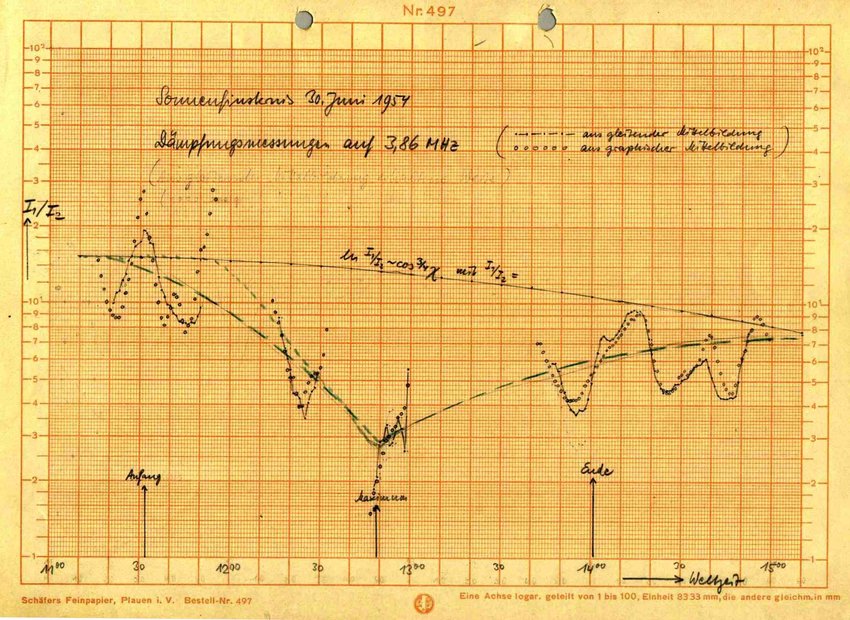
Long term reflection and refraction on matter at 250kms An Ode to the hum
Sonic Islands, Rügen – Day II, 8th September 2023
The Only Way of Discovering the Limits of the Possible Is To Venture a Little Way Past Them Into the Impossible. Arthur C. Clarke
A world far removed from (y)our own—a world where the bustling cities, the laughter of children, and the hum of technology have all vanished. In this bleak backdrop, the island of Rügen in North Germany emerges as an unlikely stage for the grand finale of our species. Imagine, if you will, a scenario with twelve other souls. These twelve are not the architects of our past, nor the saviors of our future; rather, they are re/searchers, the unlikely custodians of our legacy, and they find themselves in solitary isolation within the walls of the Field Station Juliusruh.
Continue reading “Radio)))noosphere”Environment as a legal entity

Report by Claudia González and Paula Urdangarín
We arrived without really knowing what we were going for. We received the invitation to participate, and we embarked on the Terra Ignota adventure. We let ourselves be carried along a new, unknown path.
In the immensity of the landscape, we could perceive our smallness, the tiny fragment we represent on this Earth.
We knew that we had to merge with that landscape, to feel part of it, to understand. In that sense, it was fundamental to internalize, to understand the perception of the other members of the group. What unites us, what connects such a diverse group of people in terms of culture, trades, languages, ways of seeing life. In this extreme area of light, sea, wind, the movement of knowledge and experiences was fundamental.
Geological observations
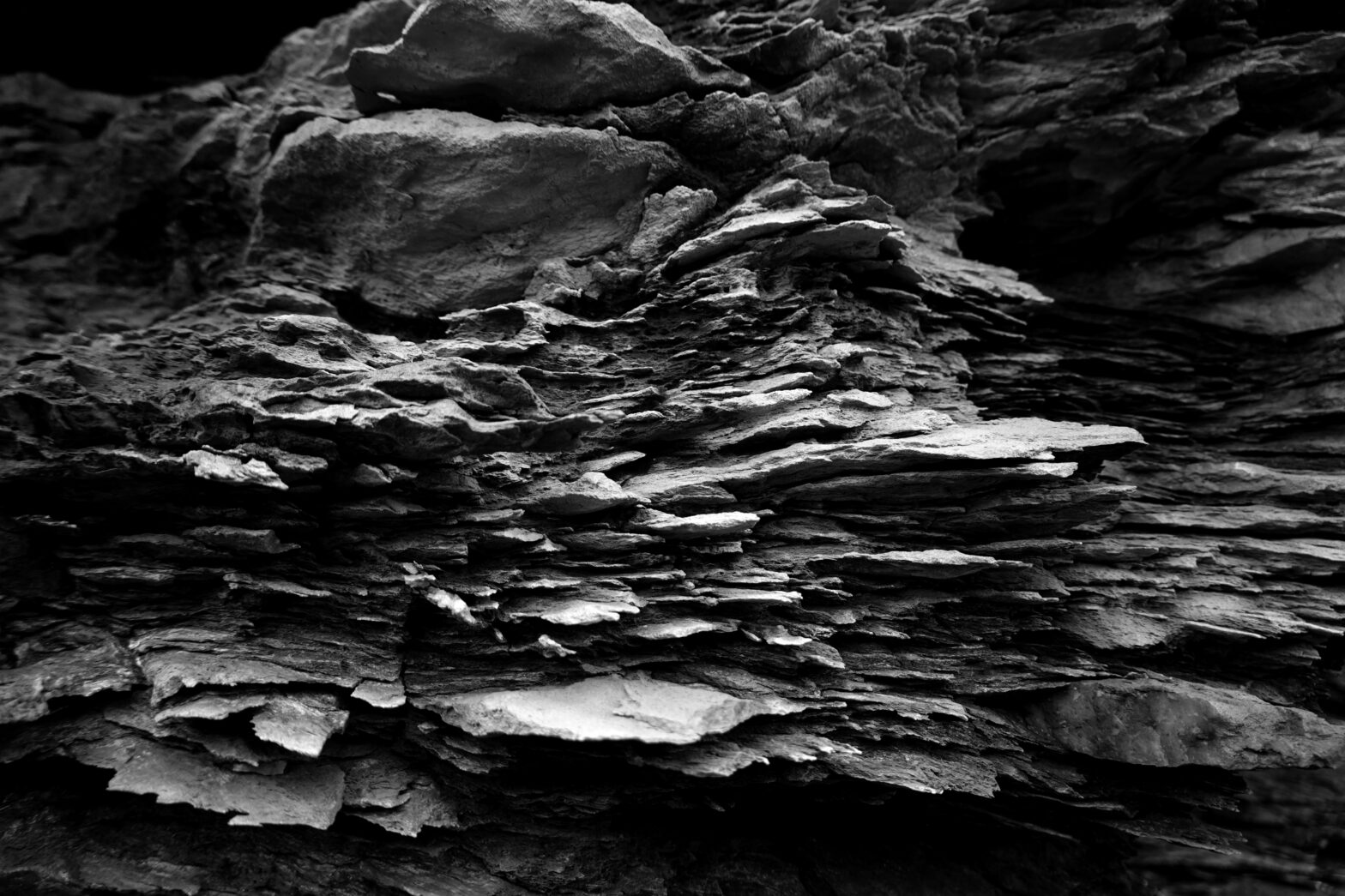
On the origin and habitability of the landscape in fjords and channels of Tierra del Fuego
The region of fjords, channels, and archipelagos south of Tierra del Fuego is characterized by rugged terrain, with high and steep mountains bordered by deep incised valleys that even govern the underwater landscape. Its origin ingeniously links tectonic and climatic processes, embracing persistent uplift as a result of endogenous folding and faulting, as well as depressions and exhumations caused by the weight and carving of glaciations.
Tectonics have continuously generated, earthquake after earthquake, the development of a complex network of faults and fractures, many of which reach the surface, creating jumps in the landscape as well as zones of weakness. Pleistocene ice masses, on the other hand, have taken advantage of the slopes and areas of weakness (high concentration of fractures and rocks crushed by faults) to settle and advance. Glaciers in their upper parts have eroded and polished mountains, defining the high peaks of the Darwin Range. Moreover, as they moved, they dug and smoothed wide valleys with gentle profiles, many of which were invaded by the sea in resonance with the melting of the ice and the rising average sea level.
Continue reading “Geological observations”Archaeological report
1. Background
Early Settlement in Tierra del Fuego
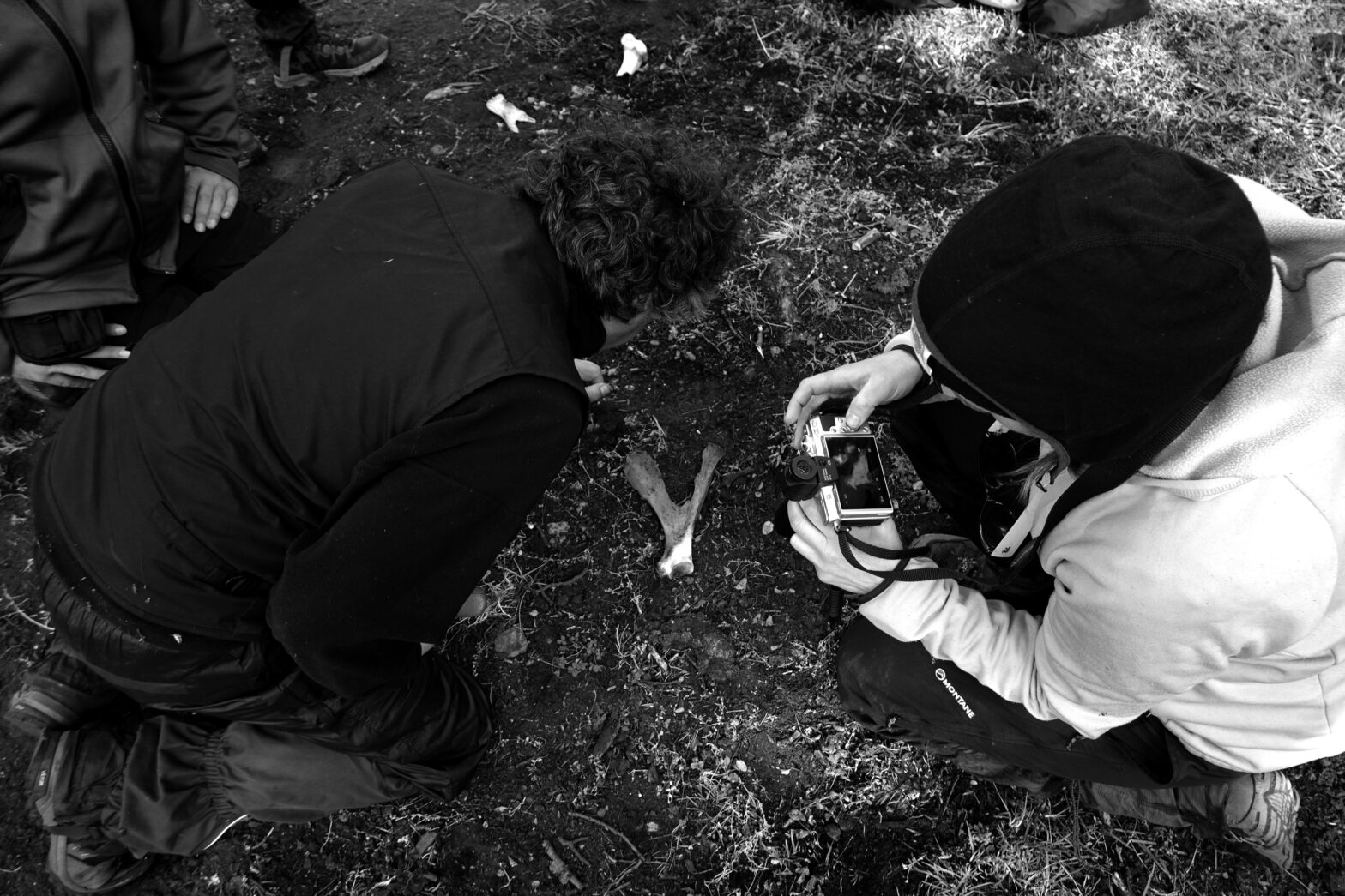
Tierra del Fuego region, located in the extreme south of South America, has been the subject of archaeological studies to understand the early settlement of this inhospitable and fascinating area. Archaeological findings and advances in radiocarbon dating have revealed the existence of a land bridge in the Strait of Magellan, which connected the continent with Tierra del Fuego between 13,000 and 10,000 years BP2 (Before Present) (R. D. McCulloch et al., 2005; R. McCulloch et al., 2009; Ponce et al., 2011).
There is a general consensus among researchers that the initial waves of terrestrial settlement reached the Isla Grande of Tierra del Fuego via the mentioned route in the strait. The earliest radiocarbon dating indicates an approximate age of 10,600 years BP based on samples from the Tres Arroyos site. Another early site, which has provided valuable archaeological evidence, is the Marazzi site, located southeast of present-day Bahía Inútil, dating back to 9590 years BP (Laming-Emperaire et al., 1972; Morello et al., 1999; Salemme et al., 2017). Both sites are representative of the earliest hunter-gatherer human communities that settled in Tierra del Fuego and successfully adapted to the extreme environmental conditions of the area.
Continue reading “Archaeological report”Transfers

Background
The origin of this work dates back to 2015, following a visit to the Gusinde-Hagenbeck collection consisting of cultural objects originally belonging to the Kawesqar, Selk’nam, Yagán and and Aonikenk peoples, which are now housed in the Weltmuseum, Vienna (formerly the anthropological museum).
The review of this collection was initially conducted by Alfredo Prieto and Nicolás Spencer in collaboration with the curator of the South American collection, Claudia Augustat. This study aimed to achieve a more precise understanding of the objects and their anthropological value due to the different ways they were obtained; Gusinde acquired the objects through questionable anthropological purchase processes, while Hagenbeck obtained these cultural elements as “adornments” of people who were exhibited in human zoos.
Continue reading “Transfers”