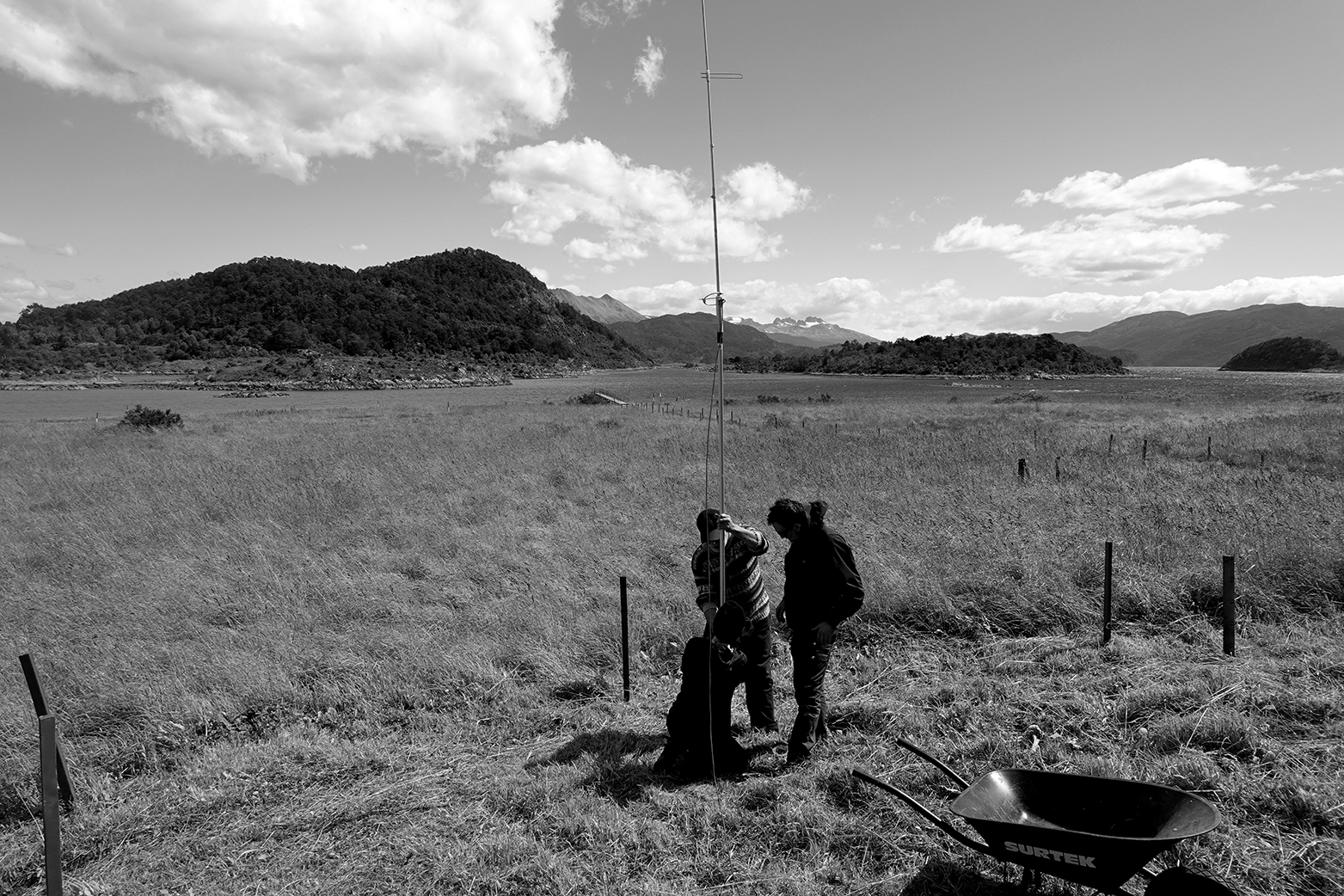
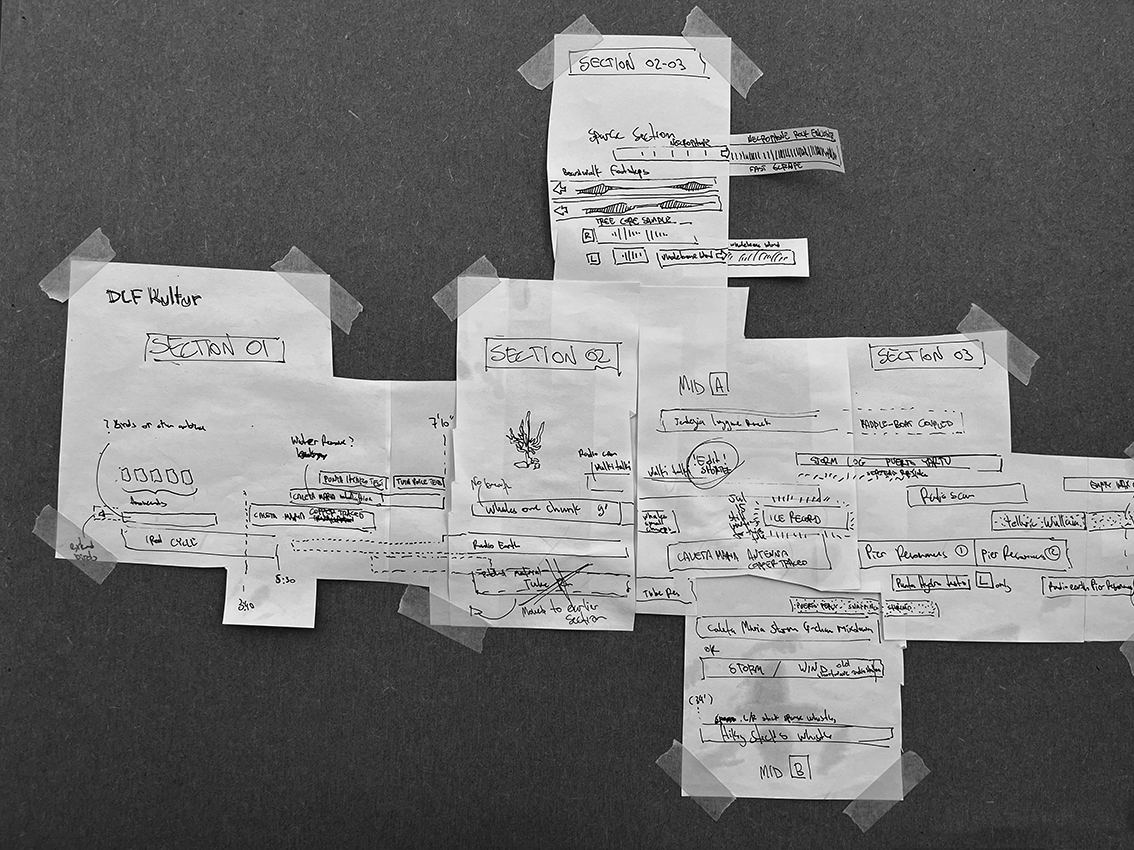
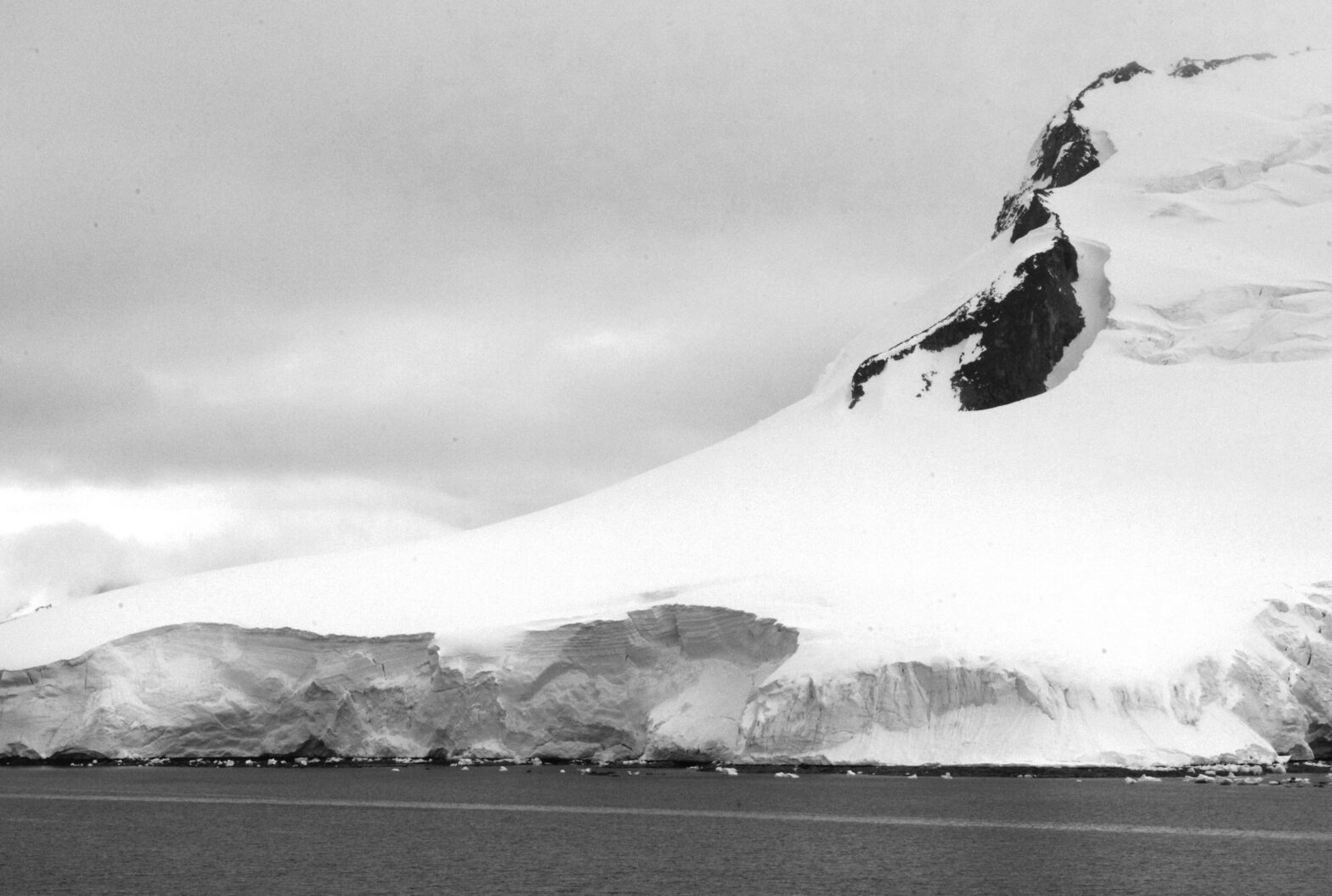
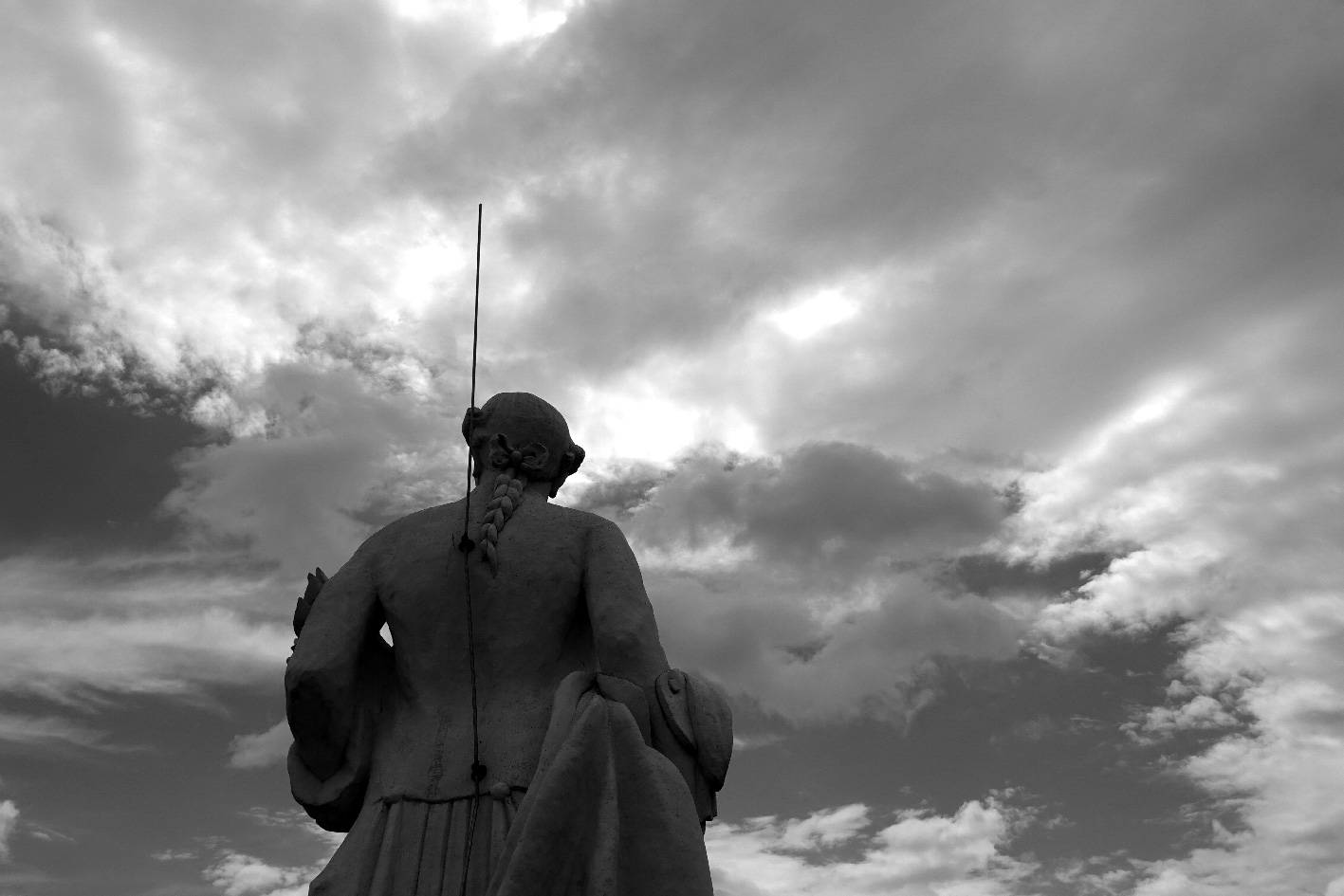
Radiales understands Bahía Wulaia and Seno Ponsonby as a living archive, where landscape, wind, water, and rock record signals of cultural and natural information. The project interprets heritage as a dynamic process of transmission: the place becomes both receiver and transmitter of experiences, knowledge, and memories, able to connect with the community and transcend the physical and temporal limits of the territory.
During this year’s exploration, we will install a radio studio in the former Wulaia station and broadcast daily. We will continue the research in situ, offering listeners a perspective on different projects while experimenting with the radio format itself. Live transmission is proposed as a methodology: a way to release the research at the very moment it unfolds, opening the possibility for the process to be affected by the resonances and encounters that may arise in the territories it reaches.
BIG REANIMATION CEREMONY:Thu. Feb 5th from 15 to 19H CL / 19 – 23H EU (GMT +1)
Soon the archived version of the show will be online here!
Radio partners: Radio Tsonami [CL], Monteaudio [UY], Bauhaus FM, readio.earth [DE], Radiolibre [CO], Radius [US]
This audio montage consists of raw location recordings, with no added audio effects, tracing a research journey through Chile’s southernmost regions (Tierra del Fuego and Navarino Island) to the decommissioned radio station at Wulaia Bay.
X Latin American Congress of Antarctic Science + XII Chilean Congress of Antarctic Research From 28 July to 1 August 2025
During the last week of July, Valdivia will host the X Latin American Congress of Antarctic Science (CLCA) and the XII Chilean Congress of Antarctic Research (CCIA), two key events for scientific knowledge about the white continent. Both will be held at the Nahmías building on the Isla Teja Campus of the Universidad Austral de Chile and are organised by the IDEAL Centre, the Chilean Antarctic Institute (INACH) and the National Antarctic Research Council. The official inauguration will take place on Monday 28 July at 7pm at the Cervantes Theatre, and will bring together representatives from the academic, scientific and cultural world interested in the environmental dynamics of the southernmost part of the planet.
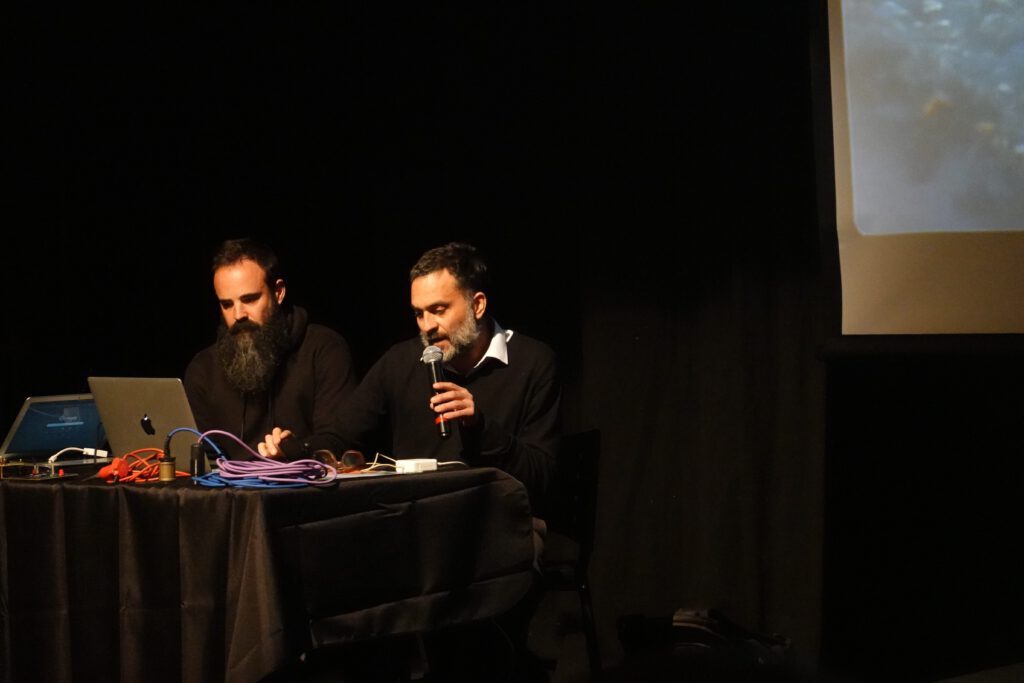
On this occasion, the transdisciplinary platform Terra Ignota has been invited to participate with an audiovisual intervention during the opening ceremony.
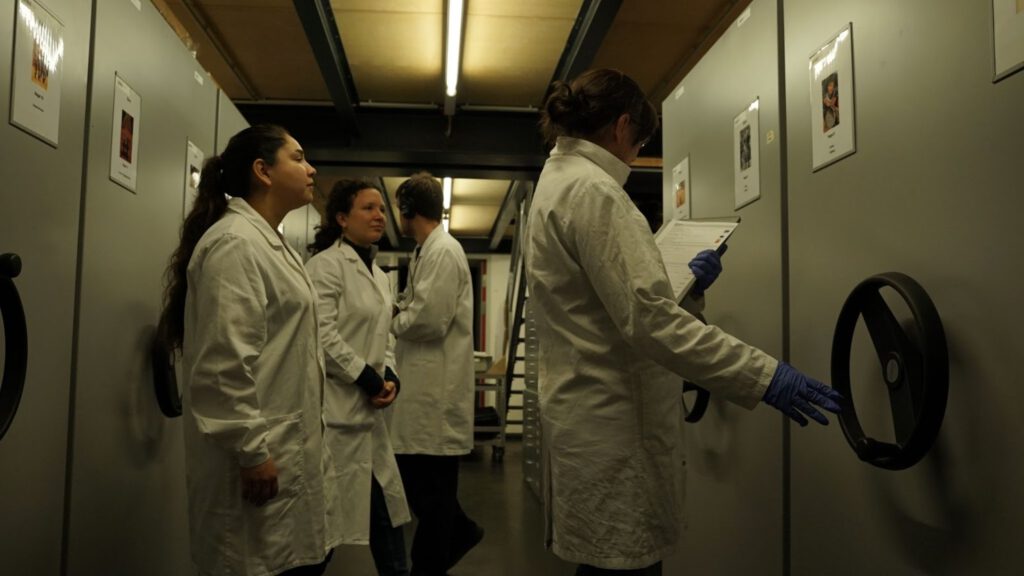
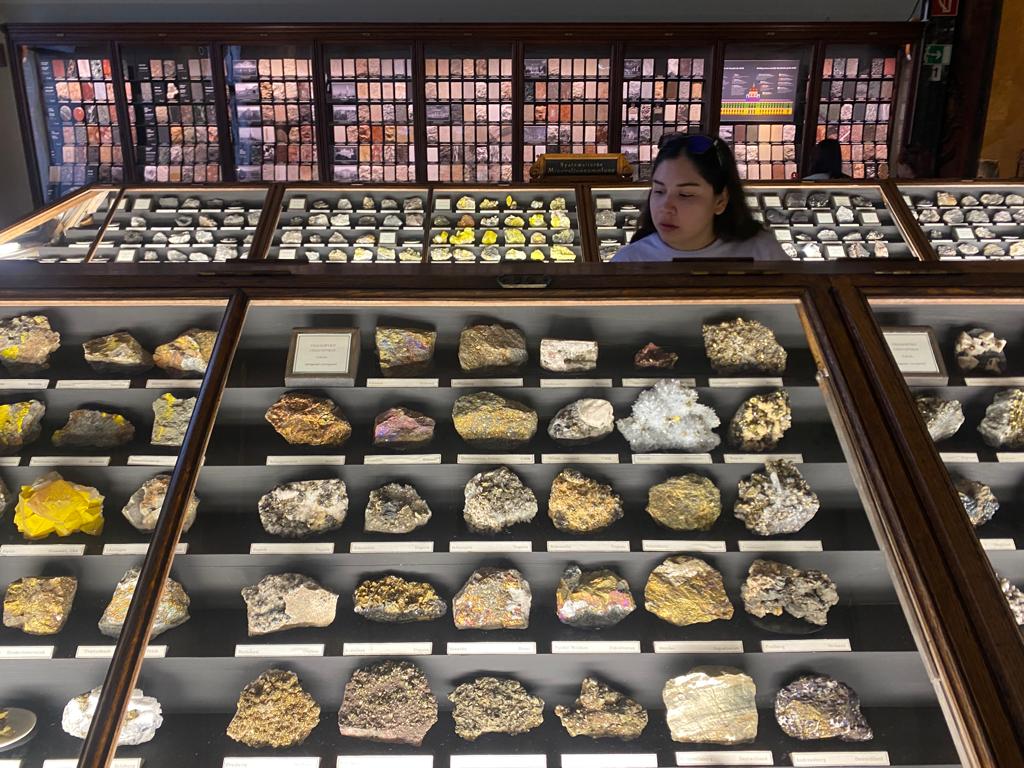
On July 18th, we presented the Terra Ignota platform along with several of our recent research initiatives at the Weltmuseum Wien. On this occasion, we also visited the museum’s depots—the collections of the Weltmuseum Wien comprise around 200,000 objects, of which only 1.5% are on public display. Accompanied by Claudia Augustat, curator of the South America Collection and member of the Terra Ignota team, we had the opportunity to conduct an in-depth exploration of the museum’s archives.
How do mammalian abilities of hearing and sounding underwater adapt to marine environments? What interlinks cetacean sounds, seabed topographies and ocean structures? How do human-whale relations refract through maritime and coastal techniques? This talk sets these questions in dialogue with insights and discoveries from recent experimental hydrophone recordings in the Chilean sub-Antarctic archipelago of Magallanes. Raviv Ganchrow is going to present Wahle Refractions at Interaction Design @ Zurich University of the Arts. See details >>>
The Faculty of Architecture and Arts at the Universidad Austral de Chile (UACh) will kick off its Academic Year 2025 with an inaugural event to be held on Wednesday, April 3, starting at 2:15 p.m. in the university’s Aula Magna. The event will feature Terra Ignota. During the opening ceremony, the members of Terra Ignota, Nicolás Spencer, Florencia Curci and Iván Flores (Director Instituto Artes FAA, Chile), will present the talk ‘TERRA IGNOTA: Transdisciplinary research and creative methodologies’, in which they will share their experience in the exploration of innovative methodologies for the generation of knowledge in contexts of environmental and social change. Later at 16:30 hours, Terra Ignota will carry out the intervention ‘Ecotono’ in the Emilio Pugin building of the Faculty of Science, a proposal that seeks to activate through vibrations the interstice between the Botanical Park and the building. Professors and students from both faculties have been invited to participate in this intervention, fostering an interdisciplinary dialogue between art and science.
Open dialog Between Art, Science and the Museum. Date: 5 and 6 February from 18:00 – 20:00 Venue: Museo Territorial Yagán Usi – Martín González Calderón Aragay corner Gusinde, Puerto Williams, Chile.
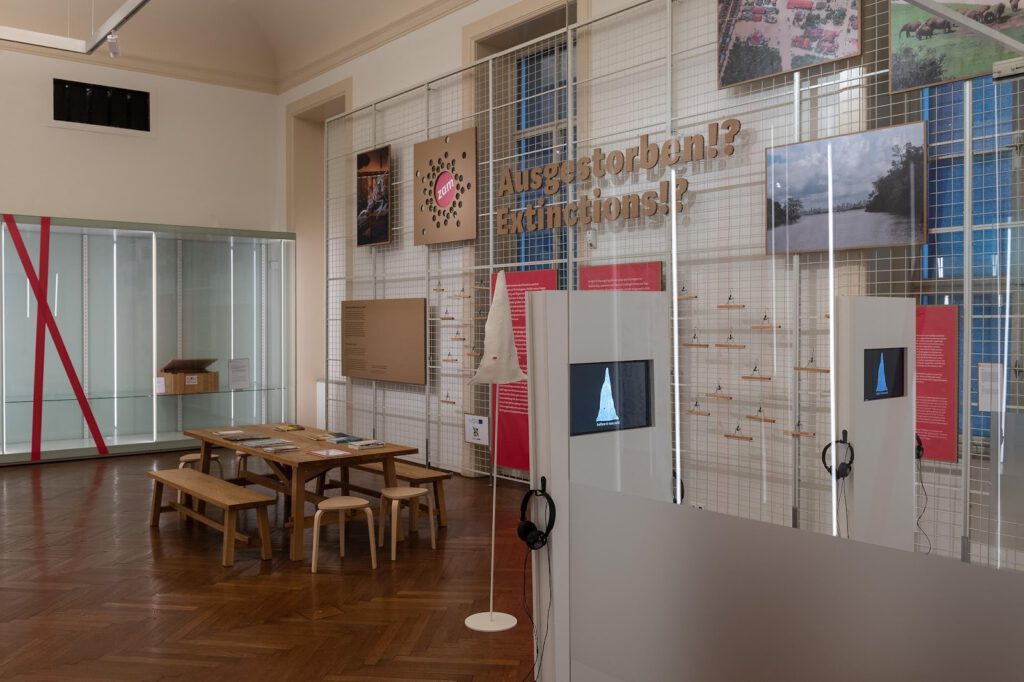
Before the research trip to the Zona de Contacto Intercultural, Fernanda Olivares and Nicolás Spencer were invited to participate in a residency at Weltmuseum Wien to be part of the exhibition “Extinction!?” as part of the TAKING CARE project. The idea of this residency was to work with objects from the collections obtained by Martin Gusinde and Carl Hagenbeck and explore new museographic approaches based on perception, feelings, the discussion around extinction, and the recognition of the Selk’nam community in Chile as a living community.
We investigate the objects of the Selk’nam collection to later display the results for a year in the exhibition rooms of this former anthropological museum. We approached these objects cautiously, understanding that they have their own position and agency independent of who observes them, a place as a result of a long history, with multiple meanings and ways of being interpreted. For this, we began by understanding their ecosystem, from the periphery of the city to the elemental particles that constitute these artifacts.
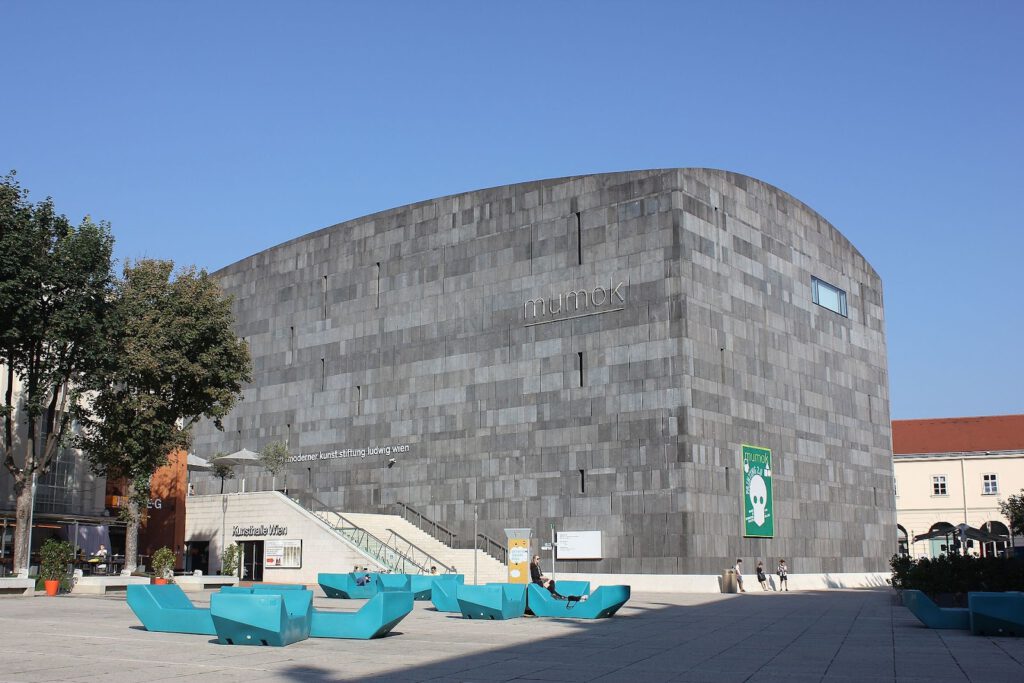
We initiated a field study that began in the city of Vienna, exploring its cultural environment through its museums and their different logics of representation. In pursuit of this goal, we interviewed people connected with various museums and institutions such as the Weltmuseum, Vienna (Claudia Augustat, Christiane Jordan), the Museum of Natural History (Constanze Schattke), the Missionshaus St. Gabriel (Fr. Franz Helm), and the Museum of Contemporary Art, Mumok (Susanne Neuburger).
conservation storage at Weltmuseum ViennaMumok, Museum of Modern ArtMissionshaus St. Gabriel Natural History Museum Vienna
(subtitles can be activated)
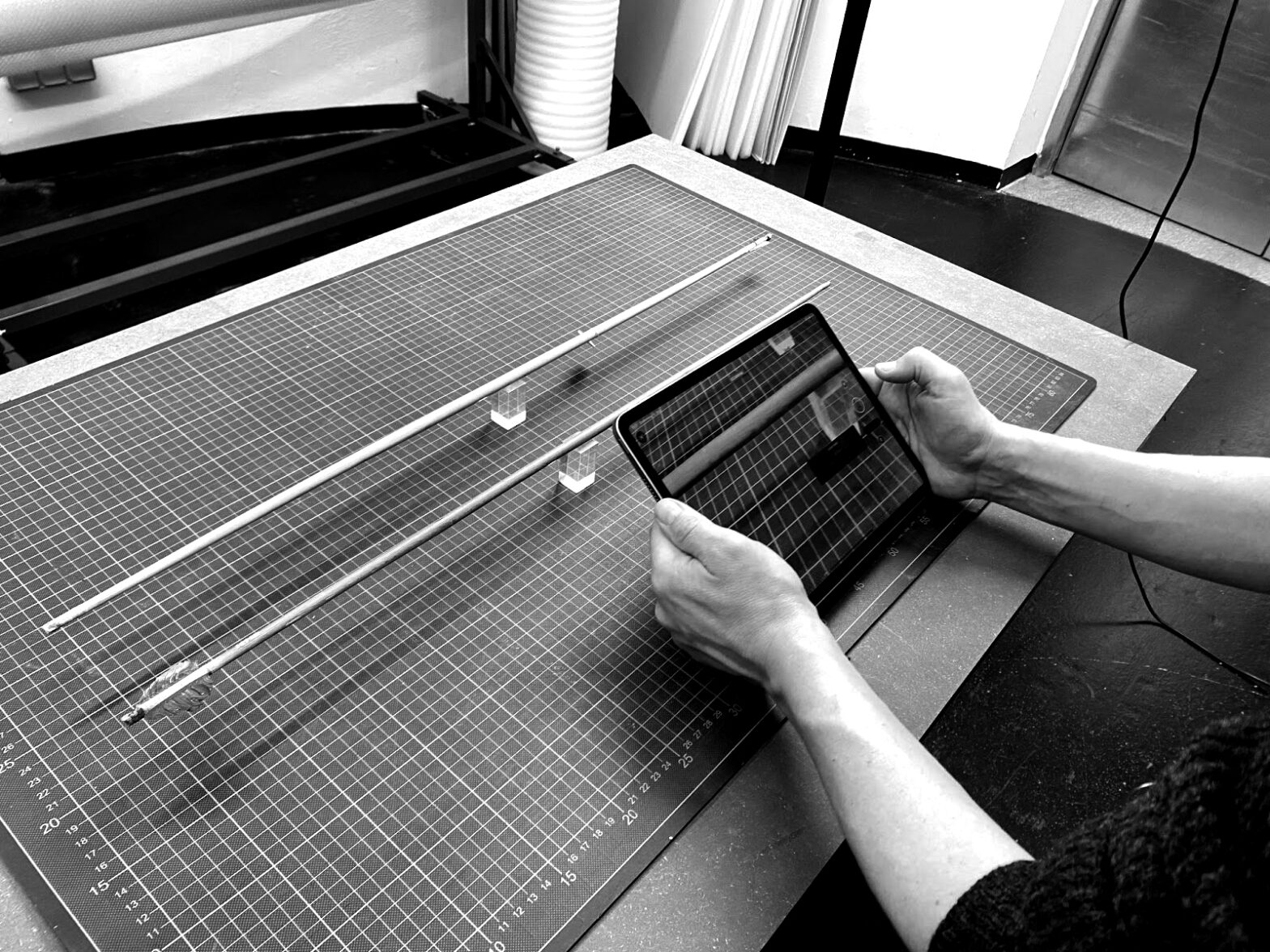
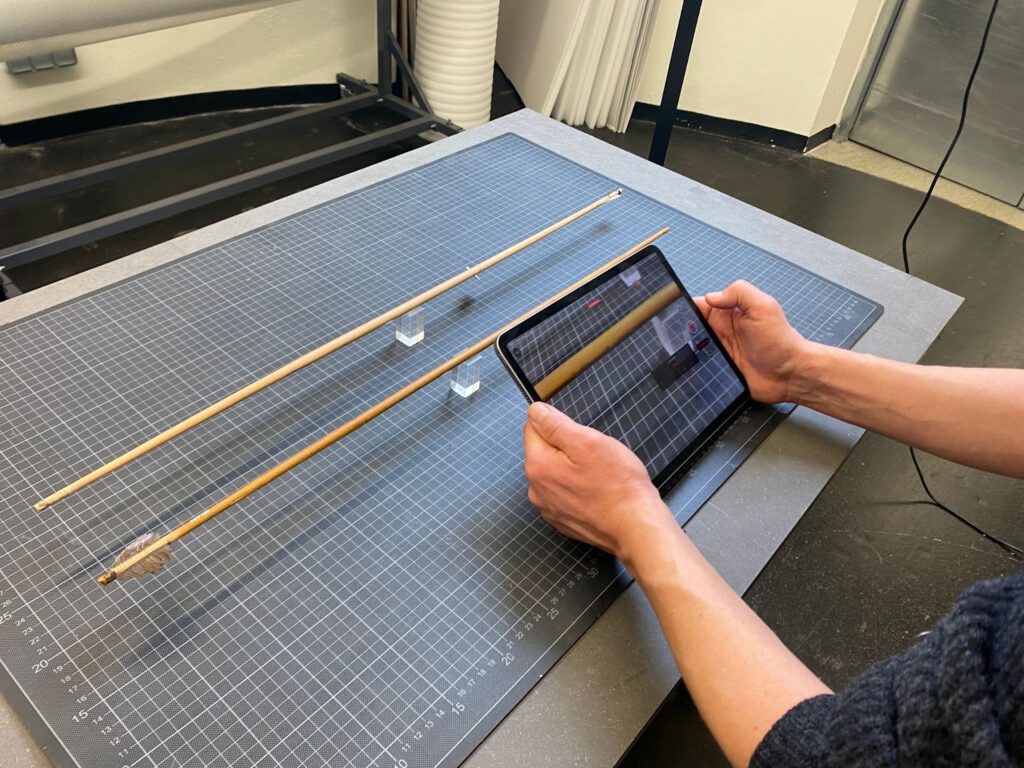
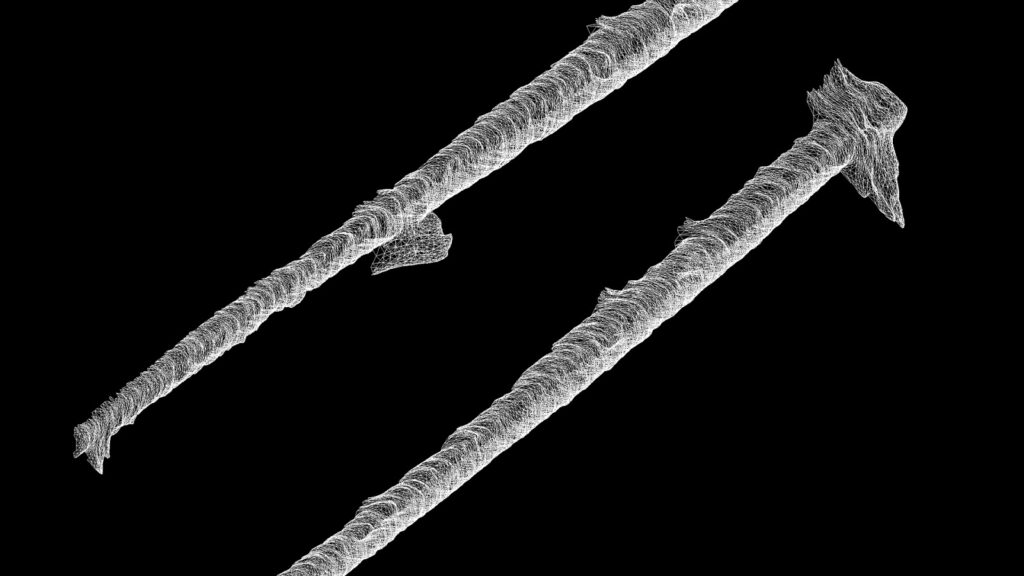
Then we delved a little deeper, cautiously observing the isolated objects in the display cases of the exhibition hall, moving through restoration laboratories to the storage and conservation warehouses. We transitioned from the controlled atmosphere that preserves them to using scanning and 3D modelling technologies to simulate the surface that is in constant contact with it.
object scanning process at Weltmuseum Vienna
Thus, from the original object, we created a vectorial and empty form, whose interior would need to be filled through creative heritage practices or what we would call “lies.”
For some, lying is an immoral act; for others, it is an act of survival.
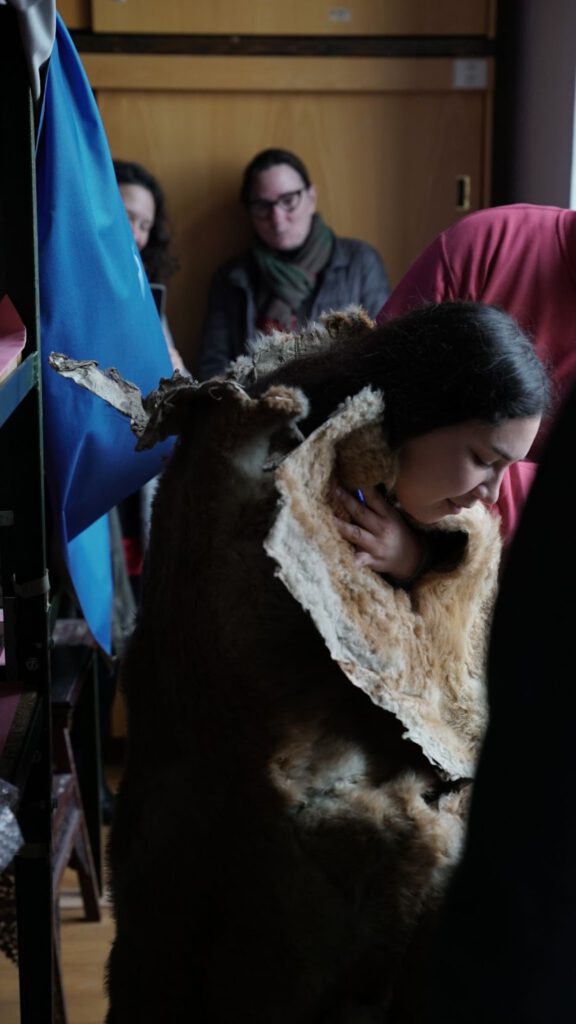
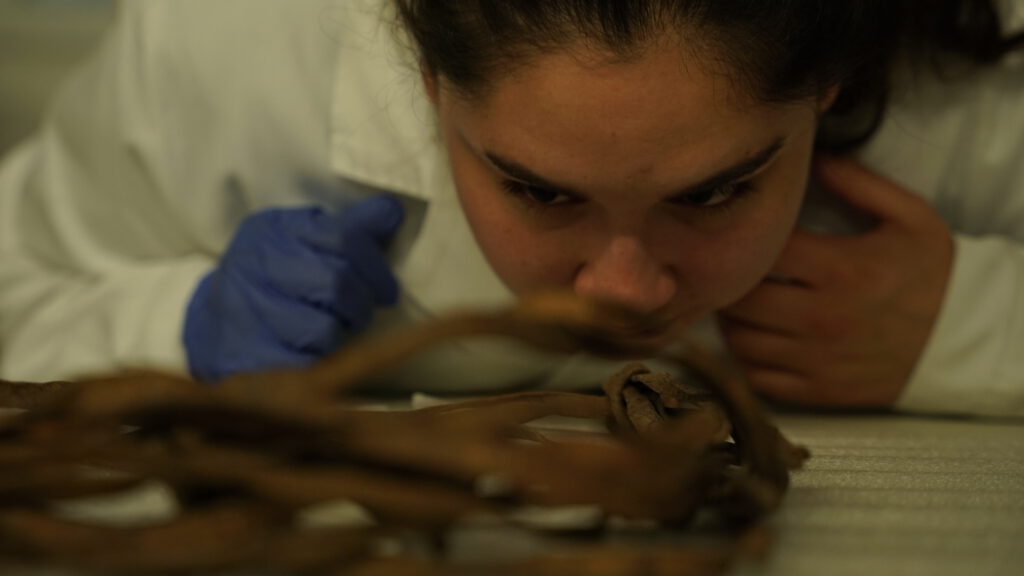
Many of the objects in the Gusinde-Hagenbeck collection were taken violently from their users. This, combined with the systematic attempt to annihilate their owners, caused these artifacts to arrive at the museum with little or no information. The same happened with their descendants, including Fernanda Olivares, who has been in a process of reconstructing her past for years. To do this, Weltmuseum Wien allowed her to come into contact with the objects, touch them, smell them, and ask them about their past. In this way, Fernanda reconstructed part of her heritage through a story she created. A version that does not contradict but rather adds to what is catalogued by 19th-century anthropologists and interpreted by thousands of museum visitors. We are based on the idea that imagination is just another portrait of reality, that it cannot go as far as believed, and that the most delusional idea is just another colourful portrait from the palette of what can be considered reality.
Analysis and handling of objects found in storage and conservation cellars at Weltmuseum Vienna
Video
The video is an essay, as mentioned, about museum ecosystems and the objects originally belonging to the Selk’nam community. The objects were scanned and emptied of their content, making them transparent so that later, through a creative process, Fernanda Olivares could re-signify them through a story, a narrative about their utility or meaning. Additionally, we integrated the sounds that coexist with these objects in the rooms that house them, along with their visitors and the people who care for and exhibit them.
After our trip to the Intercultural Contact Zone, we added footage from the places we visited in the field to the video, starting at minute 15:45. These places were similarly scanned and vectorized, to be emptied and re-signified with a perspective that invites natural spaces into the museographic discussion; the “natural” ecosystems become cultural as they are inhabited by humans, giving rise to future archaeologies.
Repatriation practices
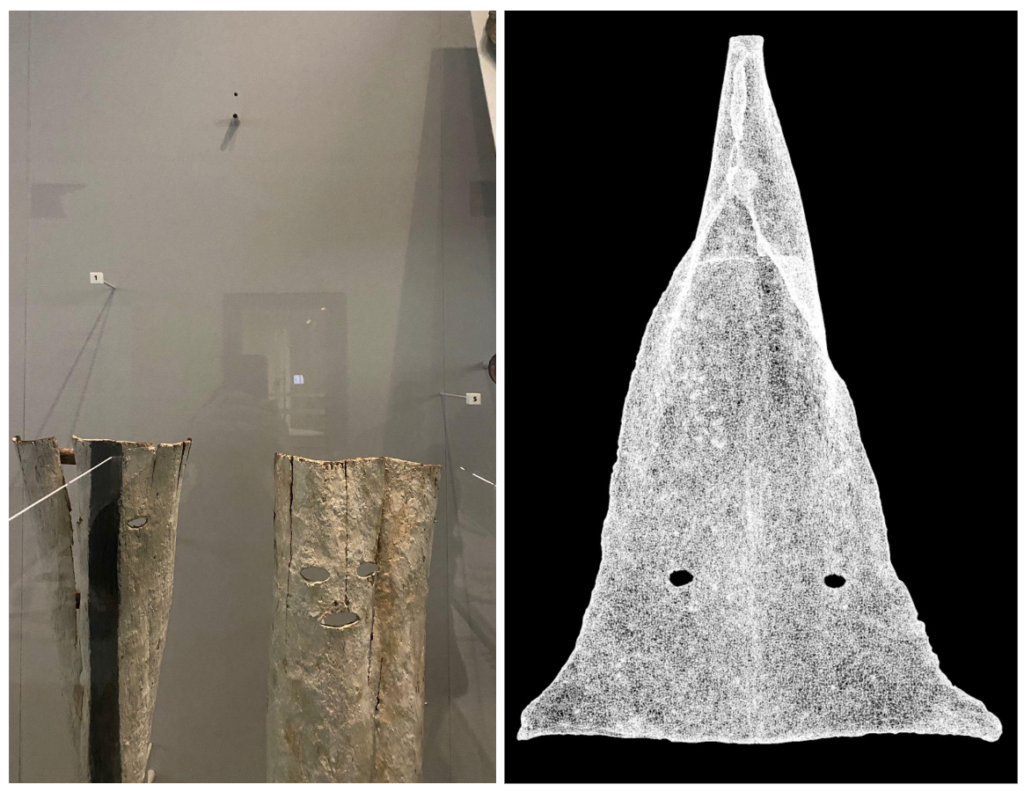
The ceremonial mask featured in the video (at 5:00 minutes) was removed from the exhibition at the request of Fernanda Olivares. After being scanned, it was printed in two copies: one remained in the ‘Extinction!?’ exhibition at the Weltmuseum Vienna, and the other was taken back to Tierra del Fuego by Claudia Augustat, curator of the South American collection at that museum. Although the plastic replica’s transfer did not adhere to any repatriation protocols, it allowed us to engage in a symbolic exercise, gaining insight into the mechanisms at play and attributing value and meaning to an object with a clear origin but imprecise significance. After its return journey, the mask would be handed over to two representatives of the Selk’nam Hach Saye Selk’nam foundation: Hema’ny Molina and Fernanda Olivares.
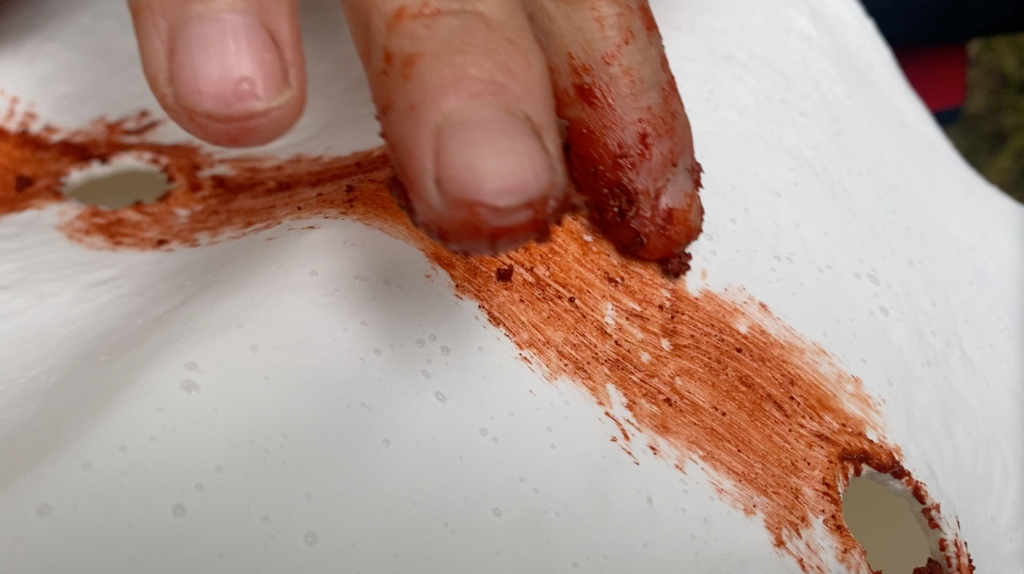
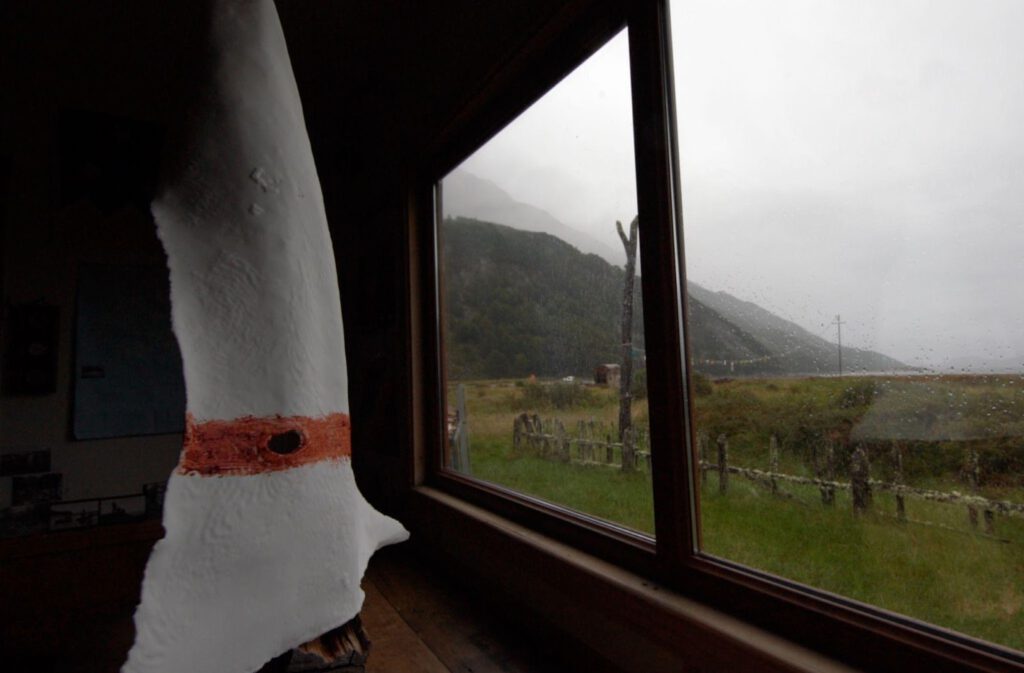
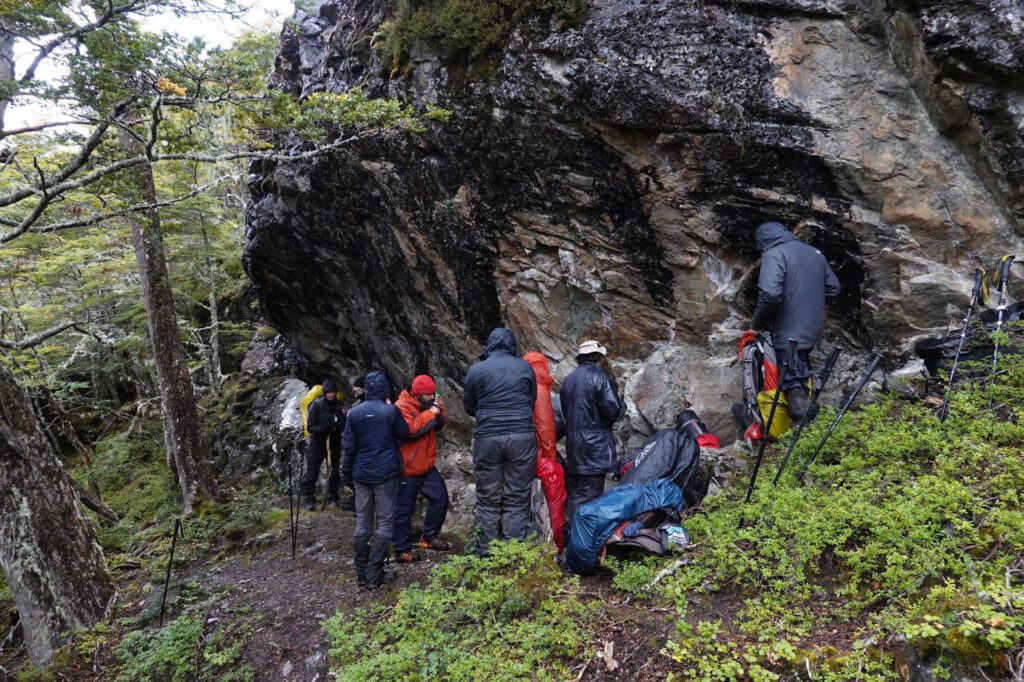
Once in Tierra del Fuego, we were invited to a ceremony at Parque Karukinka. There, the mask protection was removed, and it was symbolically presented to the forests from where it was originally taken over 100 years ago by German missionary Martín Gusinde. During this event, the plastic replica was anointed with animal fat using traditional colors that were historically used to paint bodies and cultural objects. This gesture transformed an inorganic material into a living symbol, turning an empty form into a symbolic container of repatriation.
the moment when the mask was painted in Karukinka
Detail of original mask, Weltmuseum Vienna
We were aware that the plastic mask could be seen as an extracted and exoticized object. Nevertheless, for those of us participating in the ceremony, the focus shifted away from the object itself and toward the gesture. This reversal turned a materialistic exercise into a ‘total social fact1,’ where the mask’s importance was no longer about the wearer but rather the projection of their gaze into the forest. It leads us to consider that perhaps the essence of repatriation or re-signification lies in the practice itself, and the separation of subject or object from their environment is the root of colonization, modernity, and disarray
Dislocations / Extinction!? installation
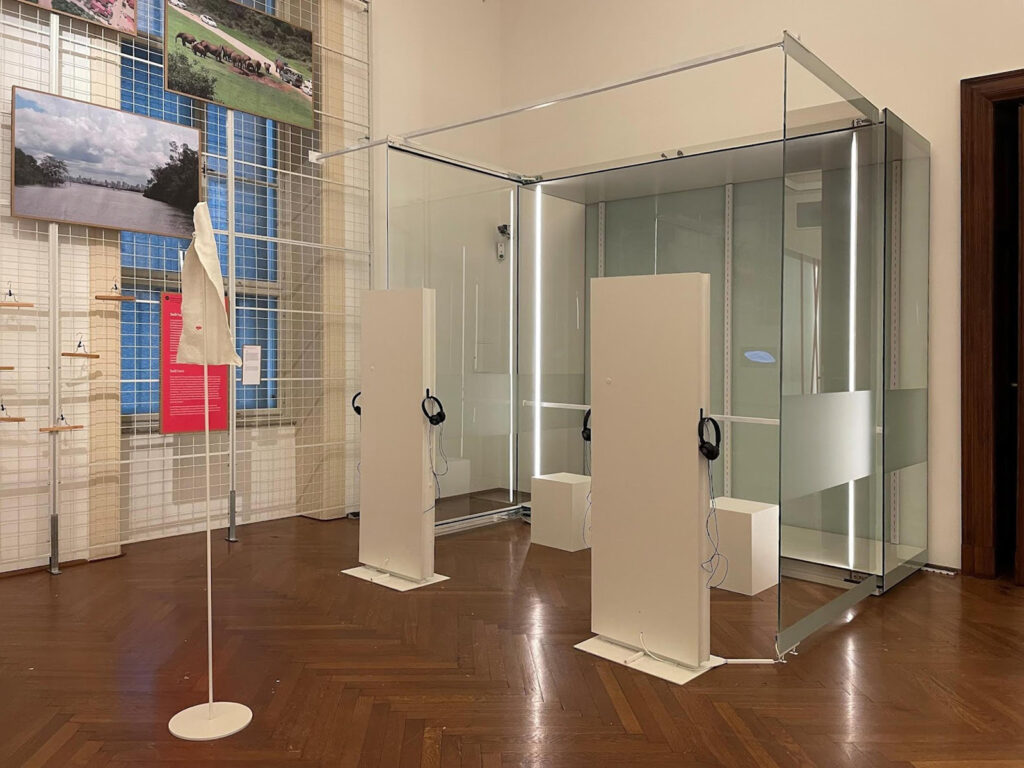
The installation was set up in “The Corridor of Astonishment” (Der Korridor des Staunens) at the Weltmuseum Wien between February 23, 2023, and April 2, 2024. The concept was to position the video in a way that creates a dislocation between the viewer and the location of the exhibited objects in the museum.
The video, which creatively explains the meaning or use of “cultural objects,” can be viewed while sitting on a plinth inside a display case. Simultaneously, a copy of the Selk’nam ritual mask, which was removed from the exhibition, observes from outside as visitors to the “Extinction!?” exhibit learn from the video. What is exhibited is the visitor’s attempt to understand a collection through imaginative exercises.
The mask leaves the display case and observes the same situation it was in for years, while the other copy is in Tierra del Fuego, observing the valleys, forests, and bays from where it was once taken. Meanwhile, the original mask returns to the storage room, where it is preserved in a climate-controlled and dark chamber.
“It was important for this piece to exchange positions between observer and observed, placing the viewer as an object of study. The museum visitor trying to understand other cultures is an anthropological phenomenon that can be exhibited and studied.” Fernanda Olivares
Display case from which the Selk’nam mask was removed, Weltmuseum Vienna, and scanned image of the mask
Installation view “Extinction!?” at Weltmuseum Vienna
the mask observing in Caleta María, Tierra del Fuego
Contact Zone; A Park? A Museum?
One of the goals of our field study in Tierra del Fuego was to identify and validate a contact zone between the Kawésqar, Yagán, and Selk’nam cultures—an area with natural and cultural qualities that could house contemporary museological collections. The idea was to come together to dialogue and try to understand the spaces that could represent parks and reserves aimed at conservation, museums as effective places of care, and potential spaces of cultural representation.
Parks, Reserves, and Sanctuaries
In Chile, the designations of National Park, National Reserve, and Nature Sanctuary supposedly offer guarantees for the comprehensive care of unique ecosystems. However, in reality, their protection extends only as far as the interests of private entities and state policies allow.
According to Paula Urdangarín, “Analyzing the current protection figures, we can conclude that there is no absolute protection for these areas in our legislation. Legal gaps can—and are—exploited to allow economic interests to prevail over the real safeguarding of these zones. There is legal ambiguity regarding supposedly protected areas, and no long-term certainty exists”. See http://terra-ignota.net/2023/07/03/environment-as-a-legal-entity/
Parks in Chile do not include coastal borders nor the communities that have interacted with these areas for thousands of years. Their geographical limits, in addition to lacking strong ecosystem considerations, form a political imaginary that changes over time and is responsible for why today their ancestral inhabitants cannot walk or navigate freely. On the other hand, we believe it is important to establish transnational norms for ecosystem protection that transcend geopolitical divisions.
In some parks protected by private entities, non-governmental organizations with significant economic interests are involved. This suggests apparent care strategies for future, more profitable resource extraction. Therefore, solid legislation is needed to ensure the care of these ecosystems independently of the will or interest of the private organizations that guard them.
Regarding this topic, the idea arises to seek new legal figures that protect rivers, mountains, and lakes as entities with rights to shield them from transient political and economic interests. It is essential to unify international criteria and globalize experiences such as granting rights to Pachamama (Ecuador, 2008); the Law of Mother Earth’s Rights (Bolivia, 2010); assigning legal personhood to the Atrato River (Colombia, 2016); granting legal personality to the Whanganui River (New Zealand, 2017); and granting legal personality to the Ganges and Yamuna Rivers (India, 2017). These approaches are based on the idea that effective environmental protection requires recognizing its intrinsic value and ensuring its legal defense by granting rights with regulations that generate reciprocal relationships in the long term.
Terra Ignota Forum: Some Considerations
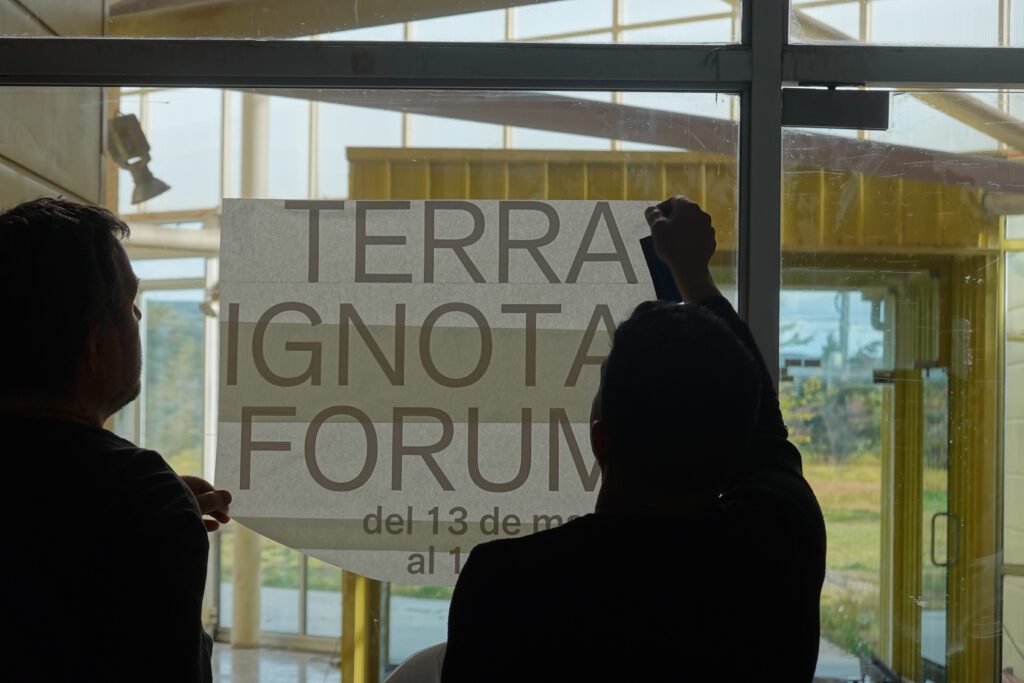
After a 10-day expedition and finding evidence of an Intercultural Contact Zone in Yendegaia Park, we debated for three days about the qualities of this park as an area with natural and cultural characteristics that could house contemporary museological collections. The debate, called the Terra Ignota Forum, involved the local community, park rangers, scientists, artists, philosophers, and curators.
As a result of this encounter, it seemed to us that the idea of a park as a museum, at least in Chile, does not guarantee the protection of the contents housed within it. An ontological shift of this nature, while an interesting starting point for reflection, would only be a semantic exercise. On the other hand, we believe that museums in general have lost representativeness, as society does not identify with them, their contents, or the necessary narrative that makes them possible.
Here, it is interesting to think in reverse; the museum as a park. The idea of the landscape as a space for contemplation and reflection seems to have shifted to museums and cultural institutions through the passive and unidirectional relationship they have with their visitors. Instead, one could think of a museum-park as a ‘place where the arts are cultivated,’ an open space for experimentation, play, and speculation where the visitor engages with poets, writers, or scientists in a non-hierarchical, horizontal, and democratic way. A space where the absurd division between culture and nature is dissolved to seek more relevant spaces for exchange and interaction.
1 Marcel Mauss, in his influential work “The Gift: Forms and Functions of Exchange in Archaic Societies” (1925), introduces the concept of the “total social fact”. This term refers to the idea that social phenomena cannot be understood in isolation but are intrinsically interconnected and form part of a broader whole.
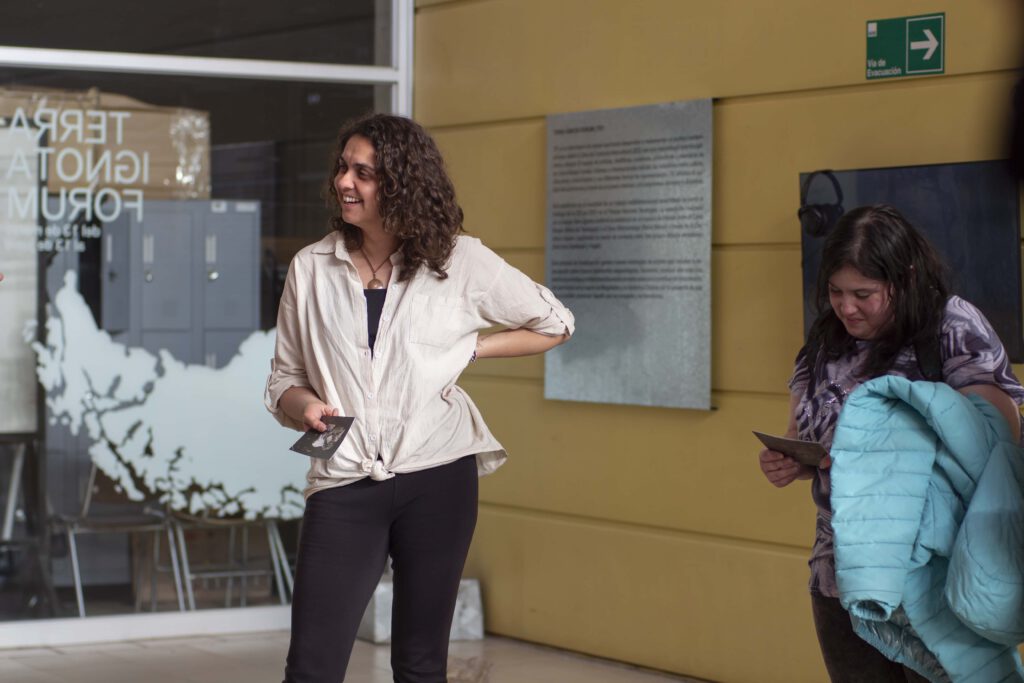
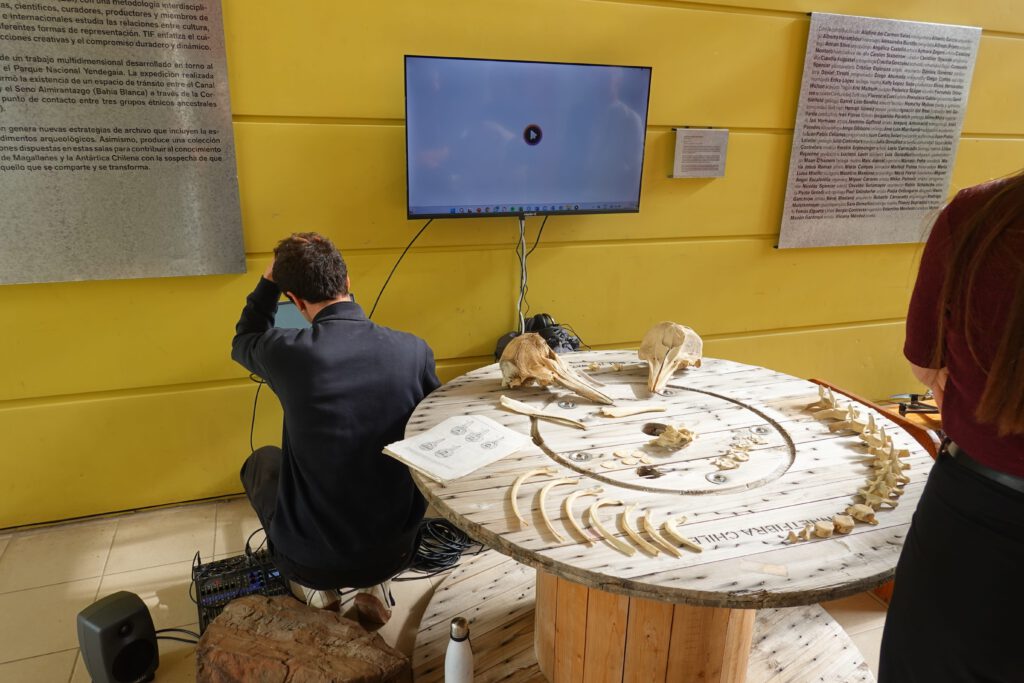
The exhibition at UMAG documents results and different methodologies developed around the discovery of the Intercultural Contact Zone (ICZ) in the Yendegaia National Park. The expedition(s) carried out by the Terra Ignota team (2021 and 2023) confirmed the existence of a transit zone between the Beagle Channel (Yendegaia Bay) and Almirantazgo Sound (Bahía Blanca) through the Darwin Range, suggesting a point of contact between three ancestral ethnic groups (Selk’nam, Kawésqar and Yagán).
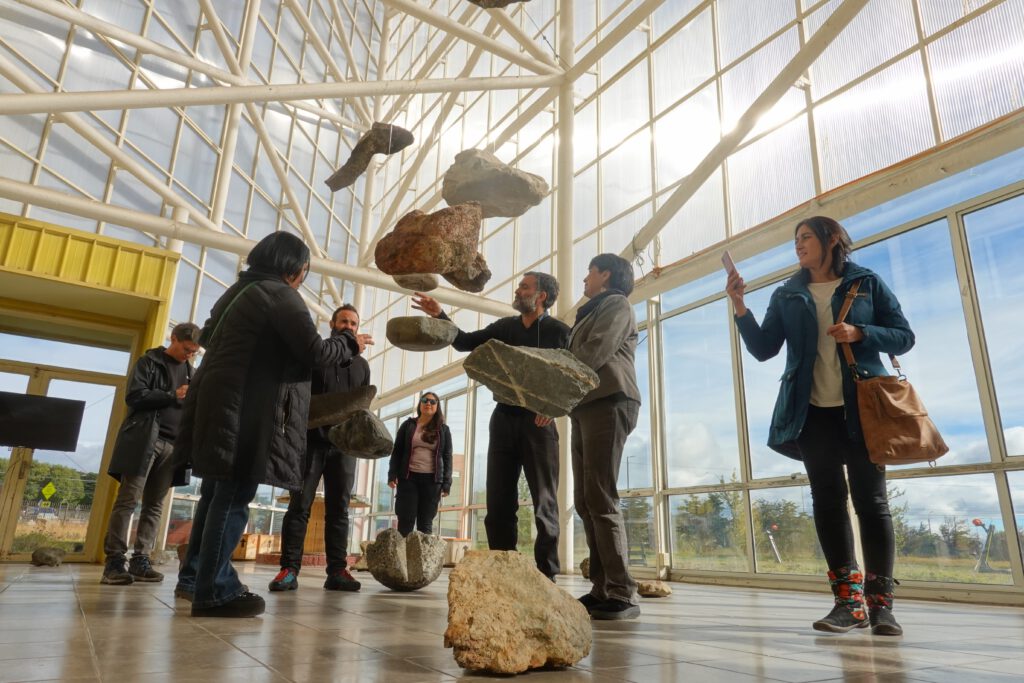
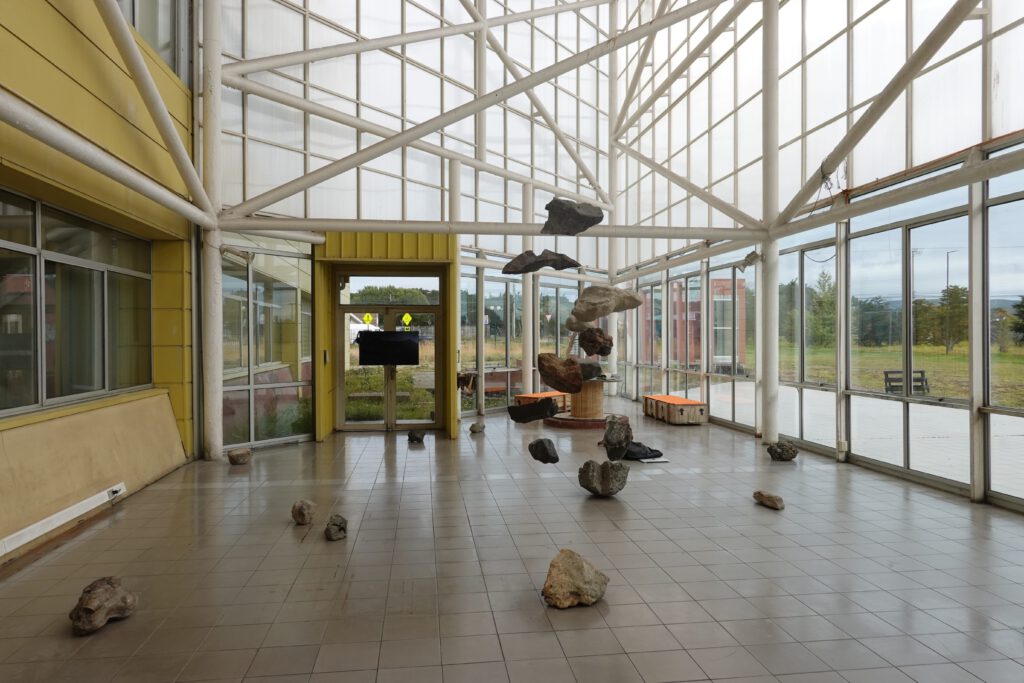
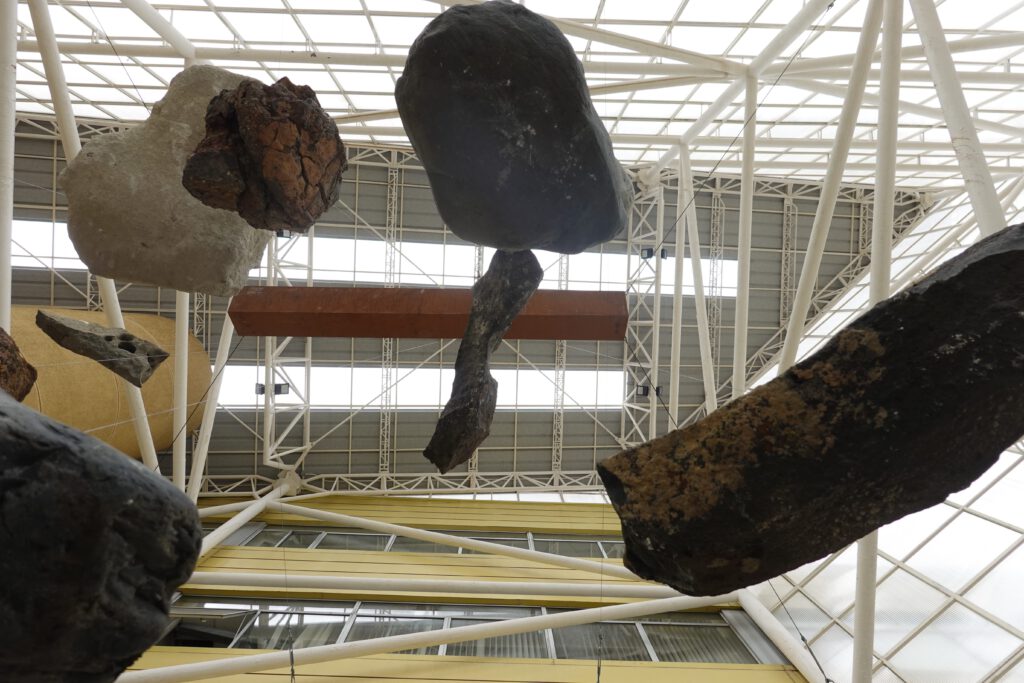
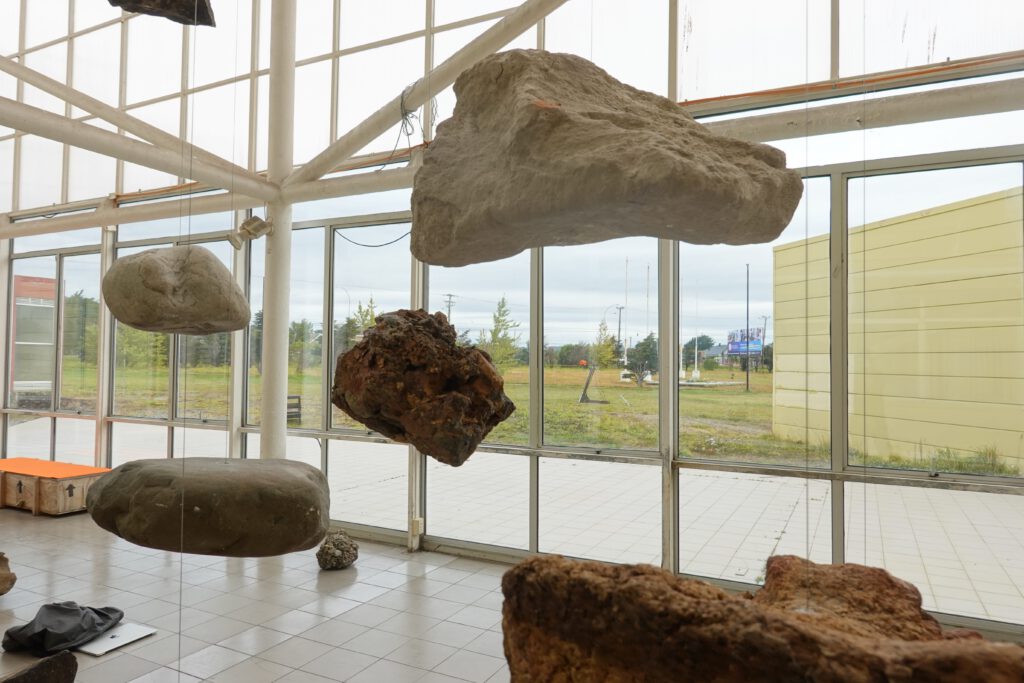
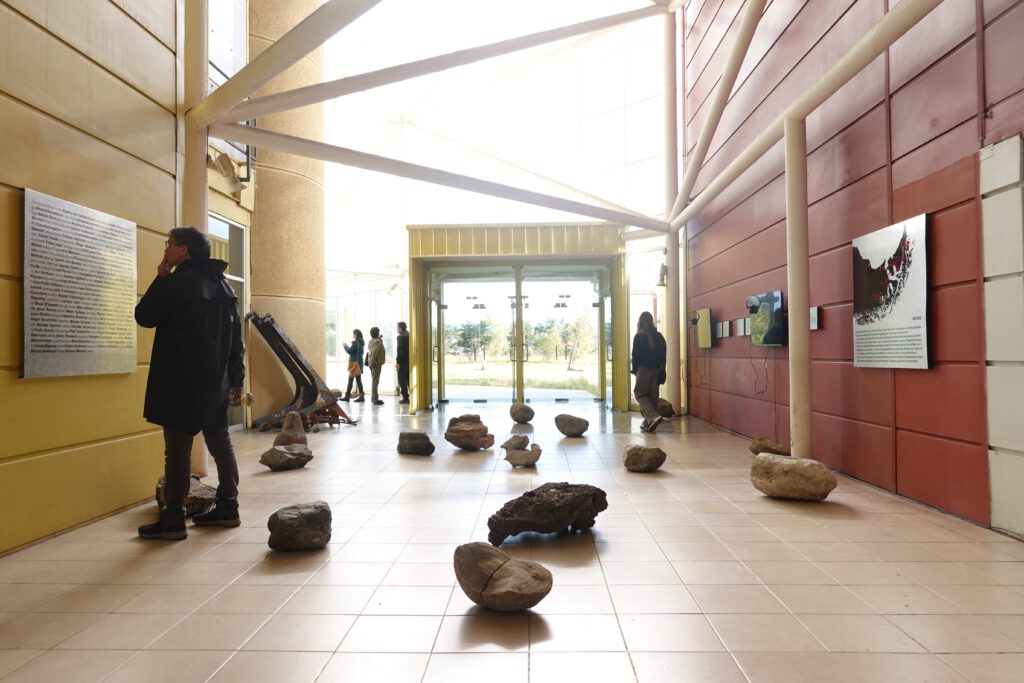
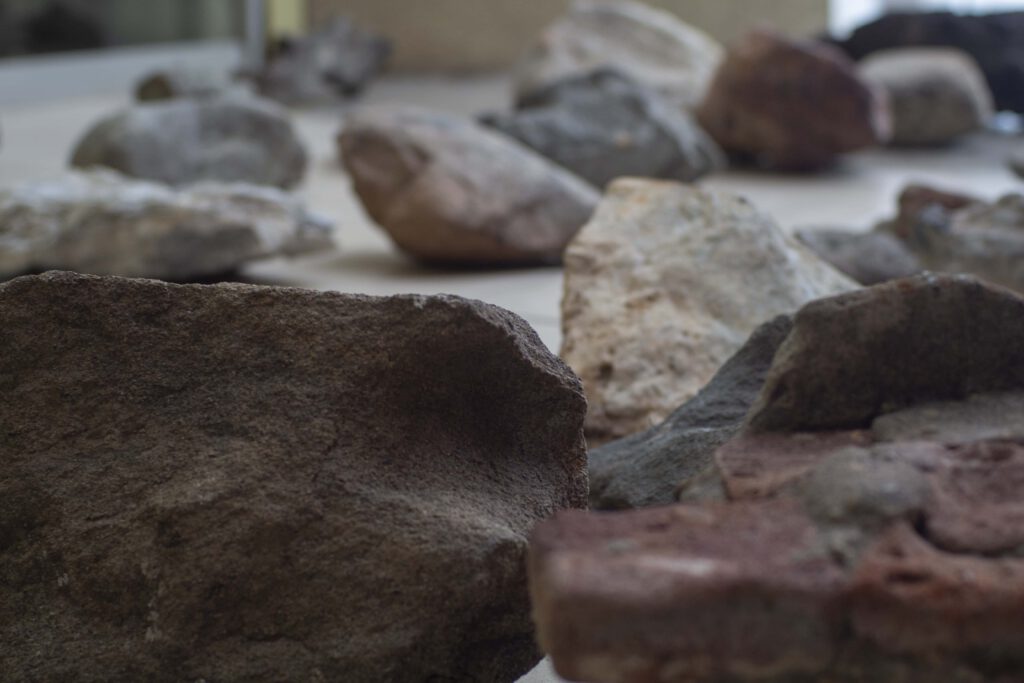
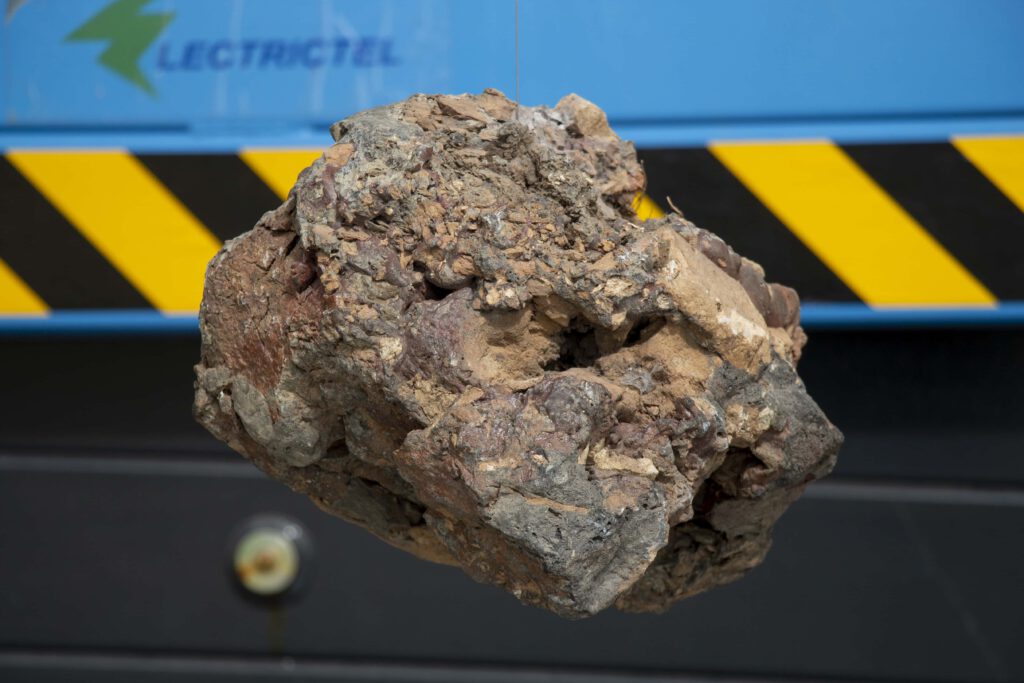
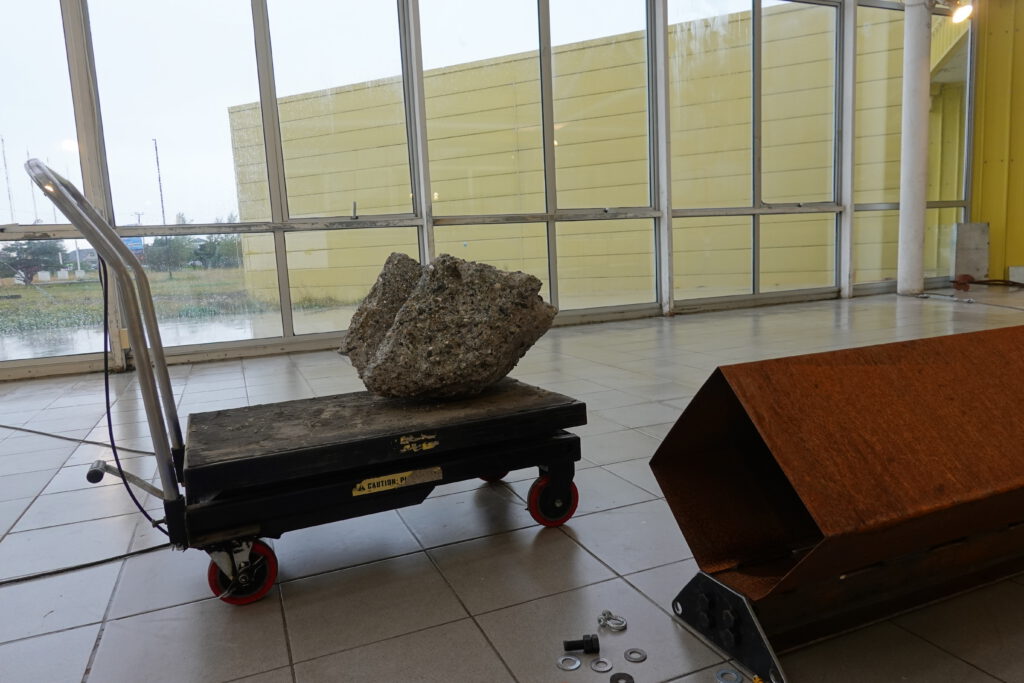
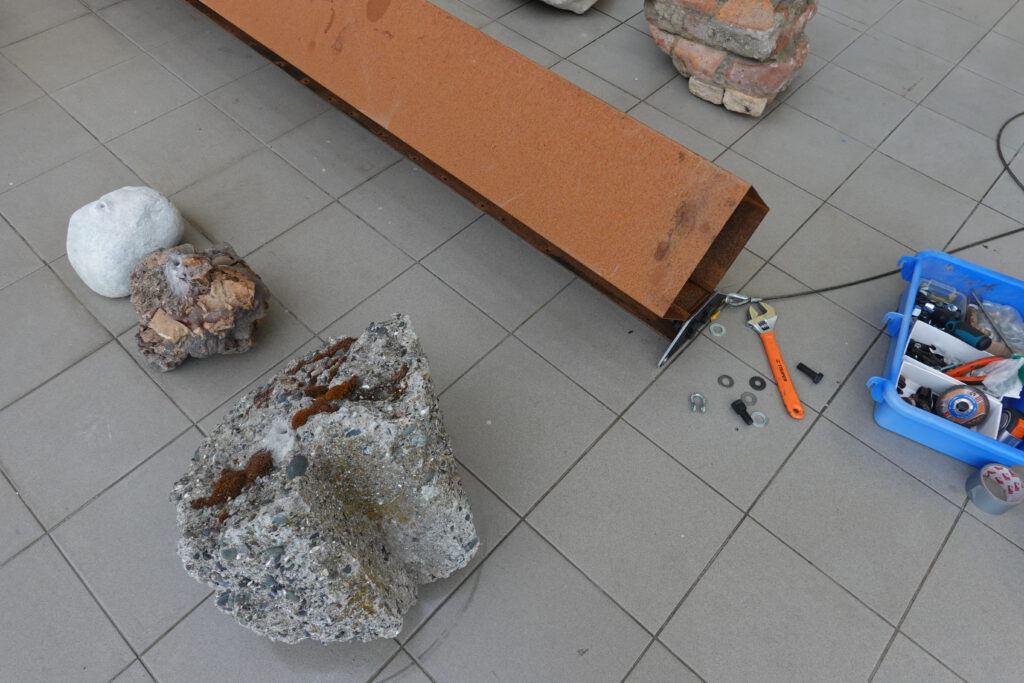
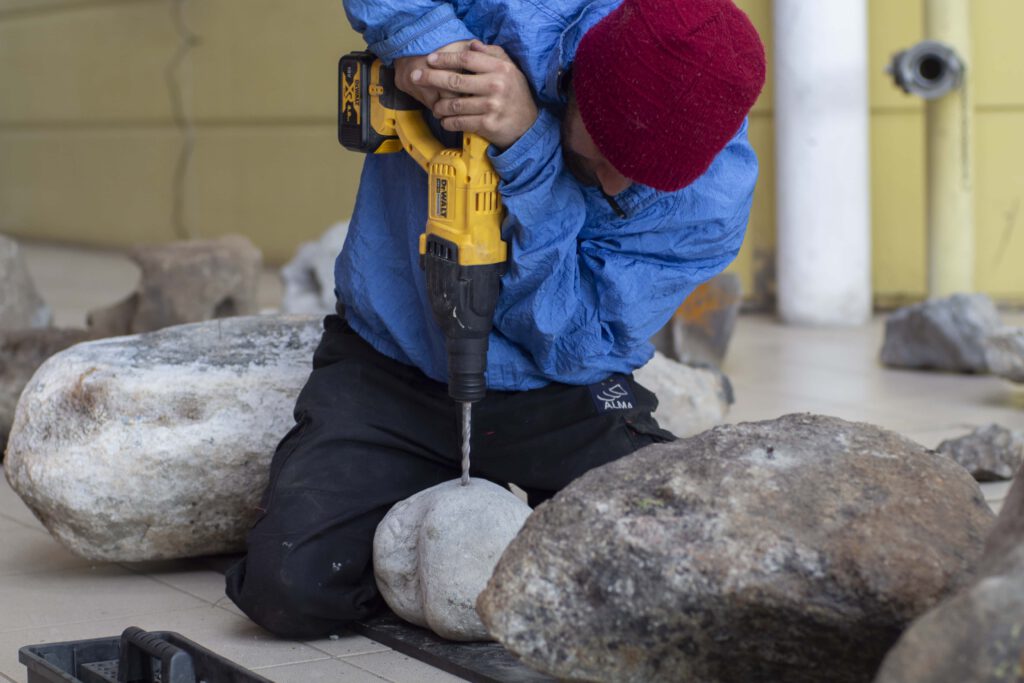
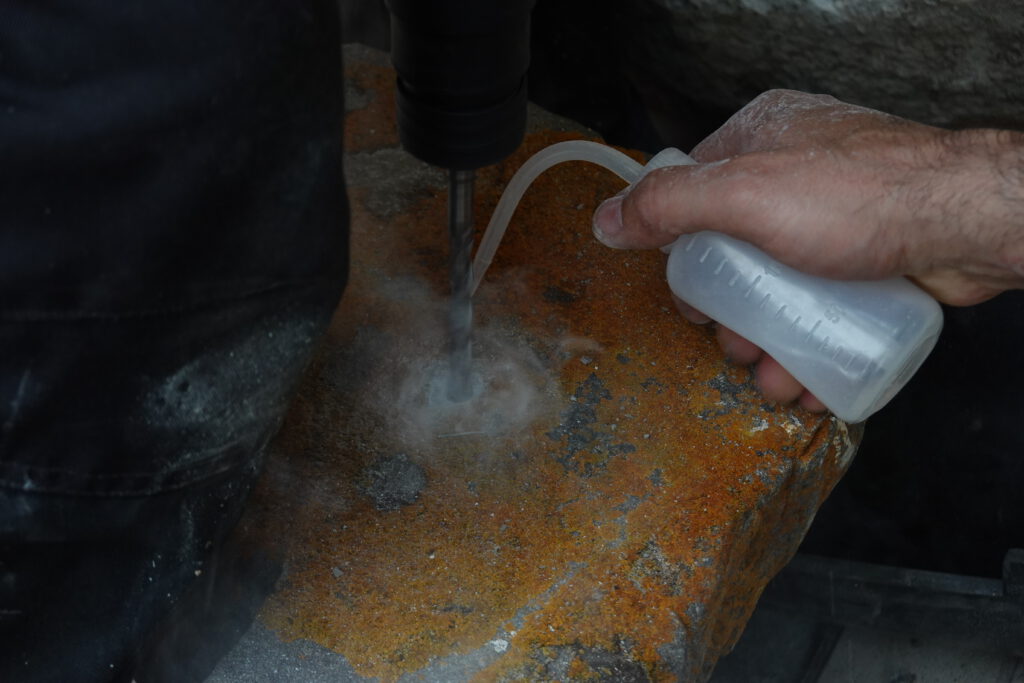
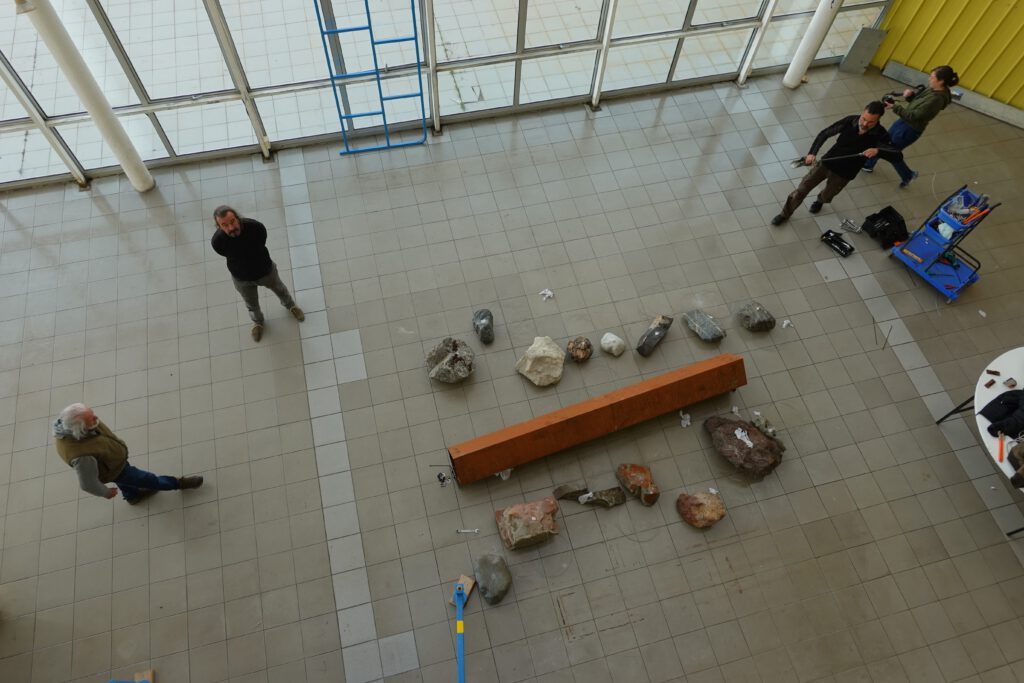
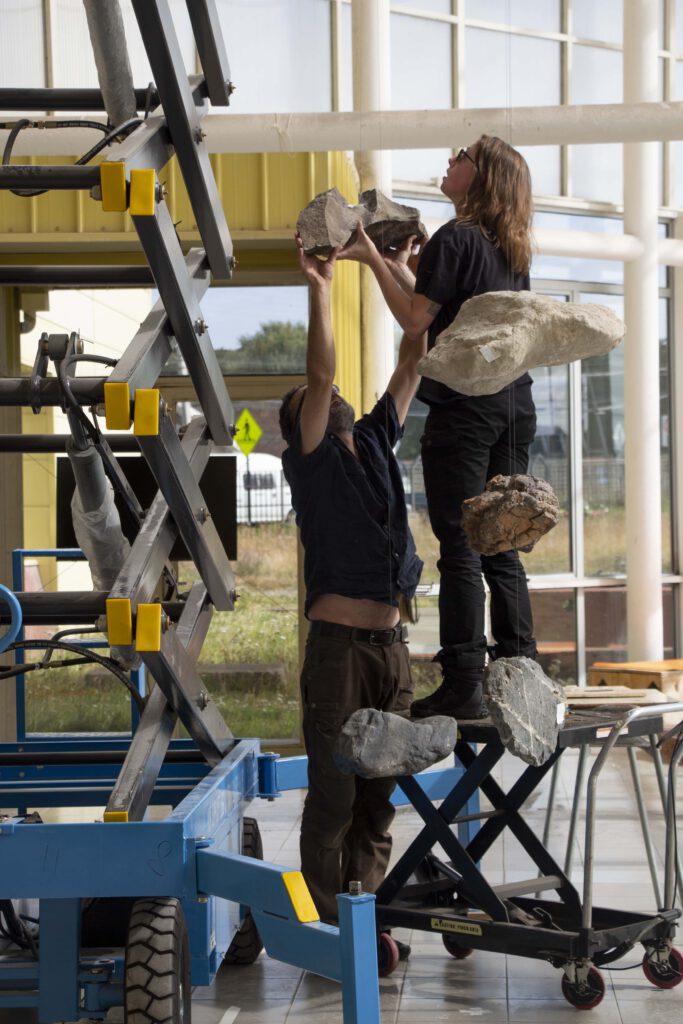
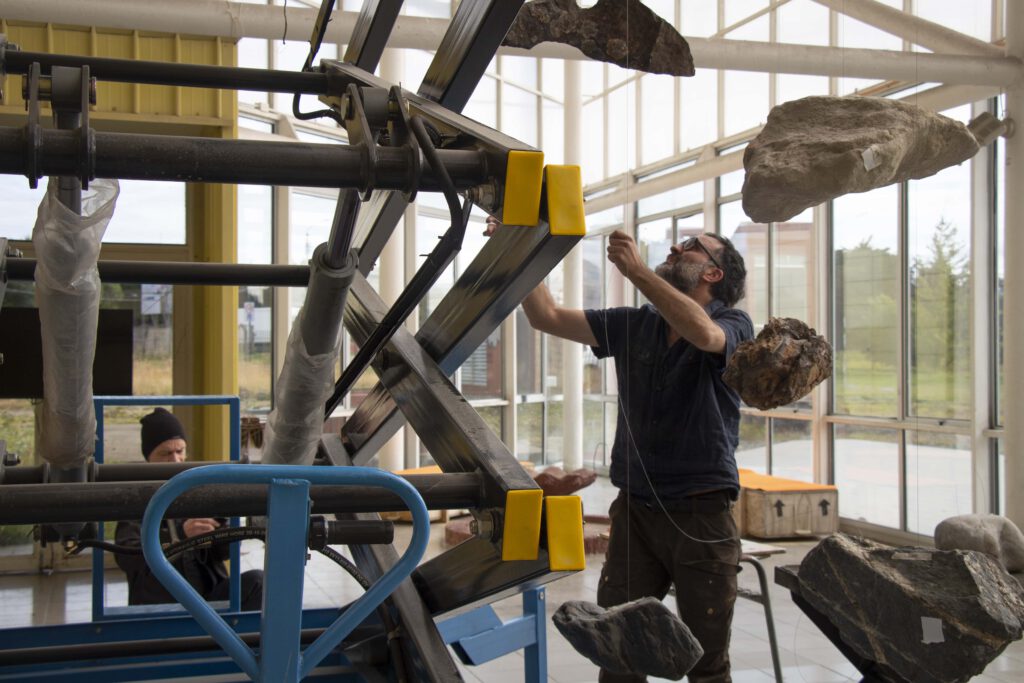
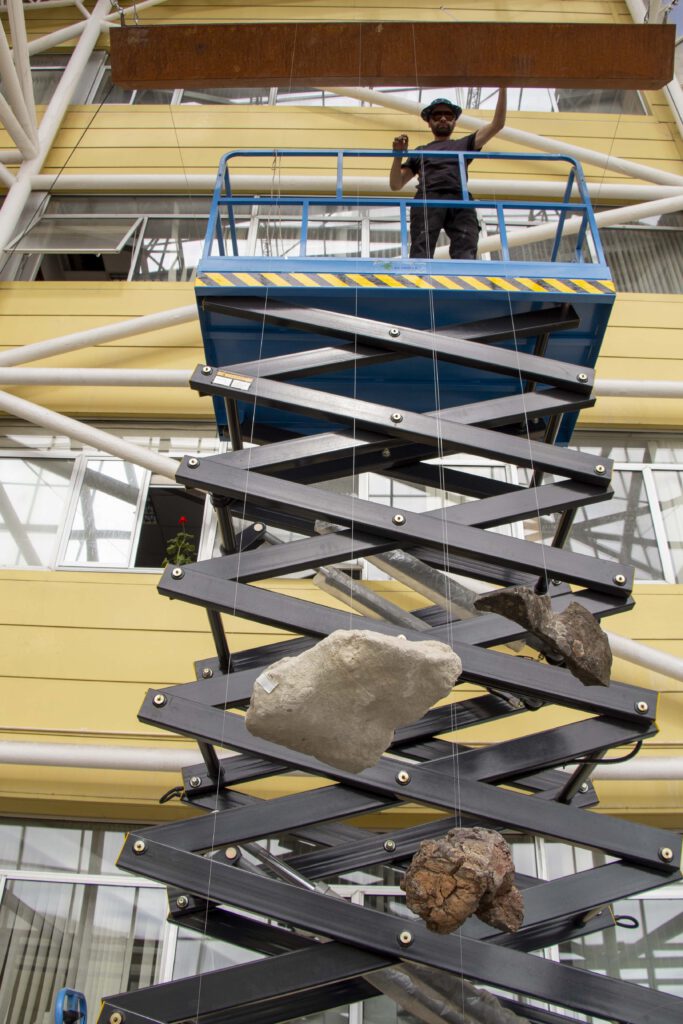
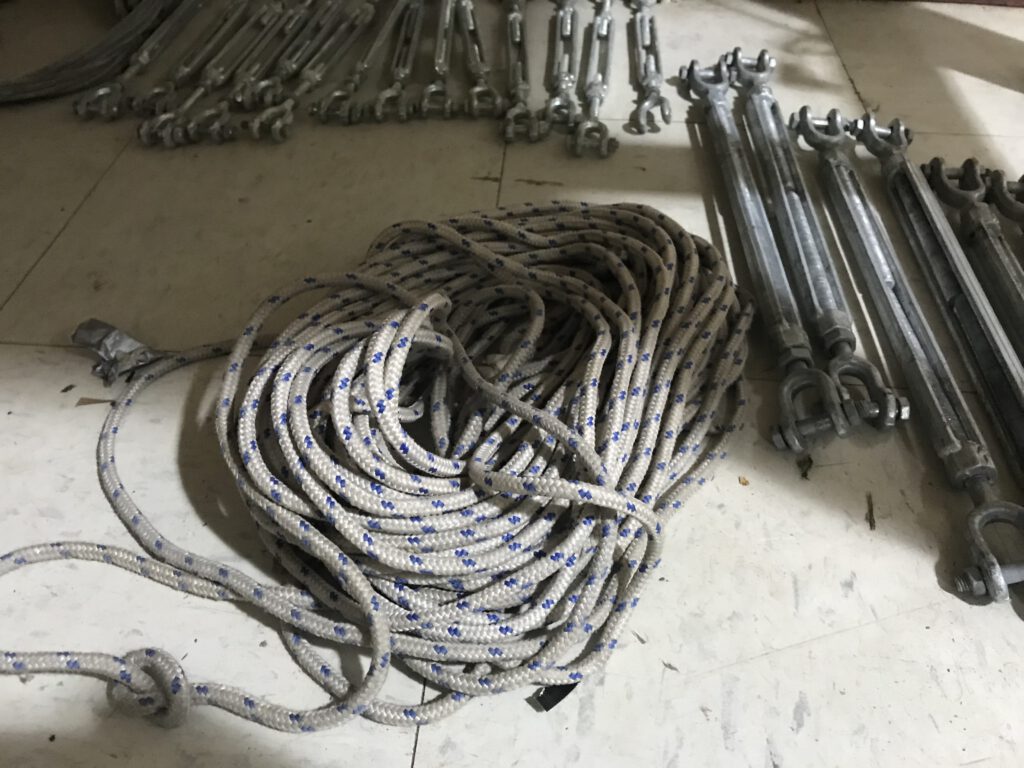
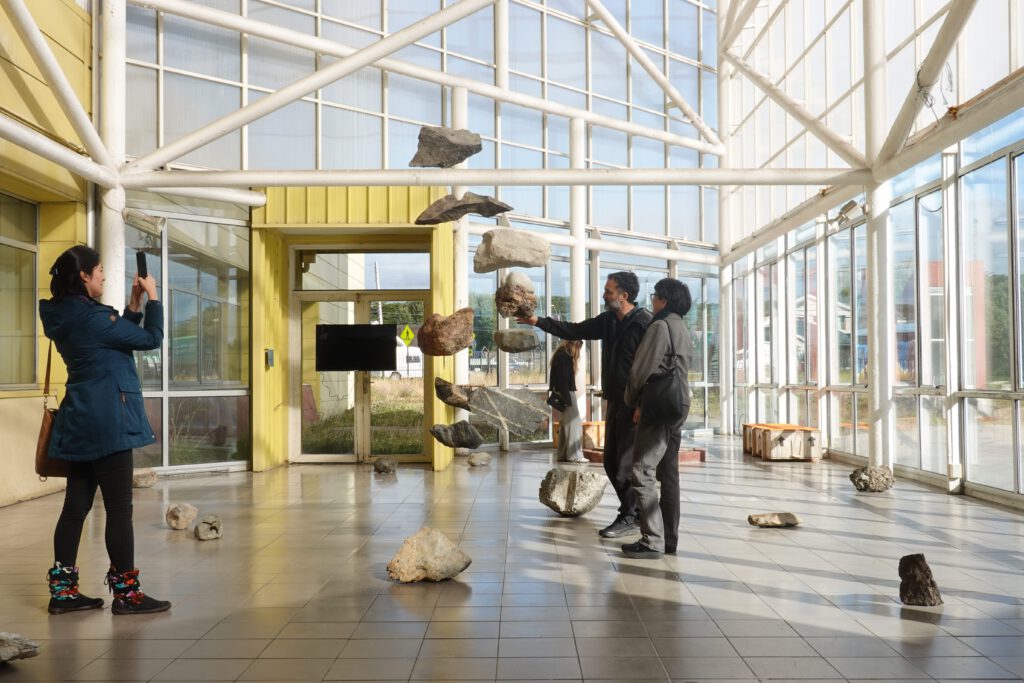
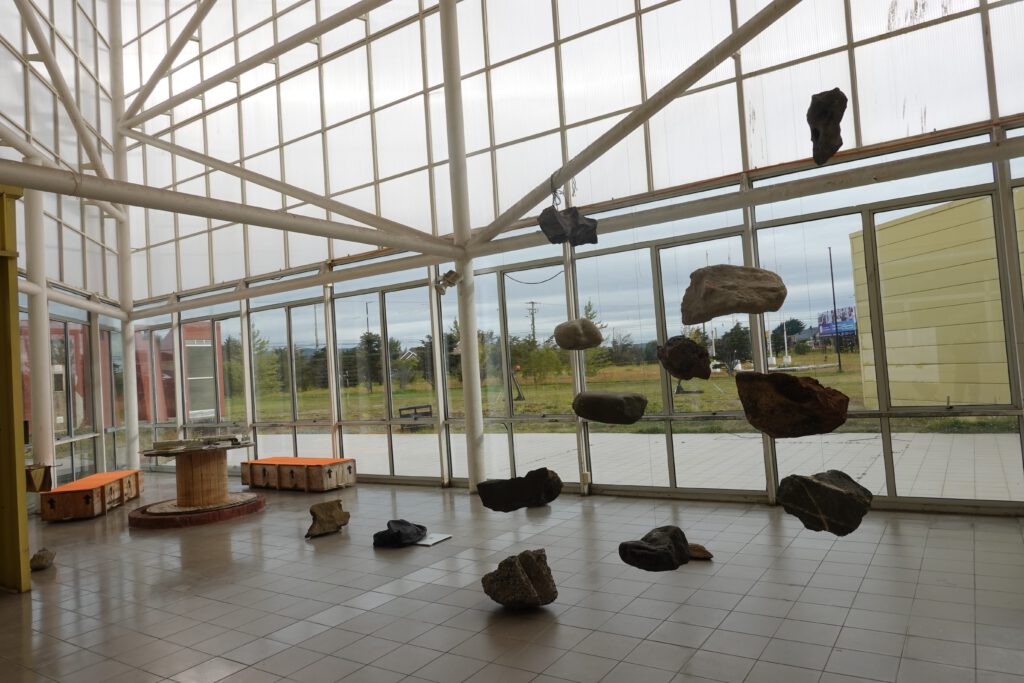
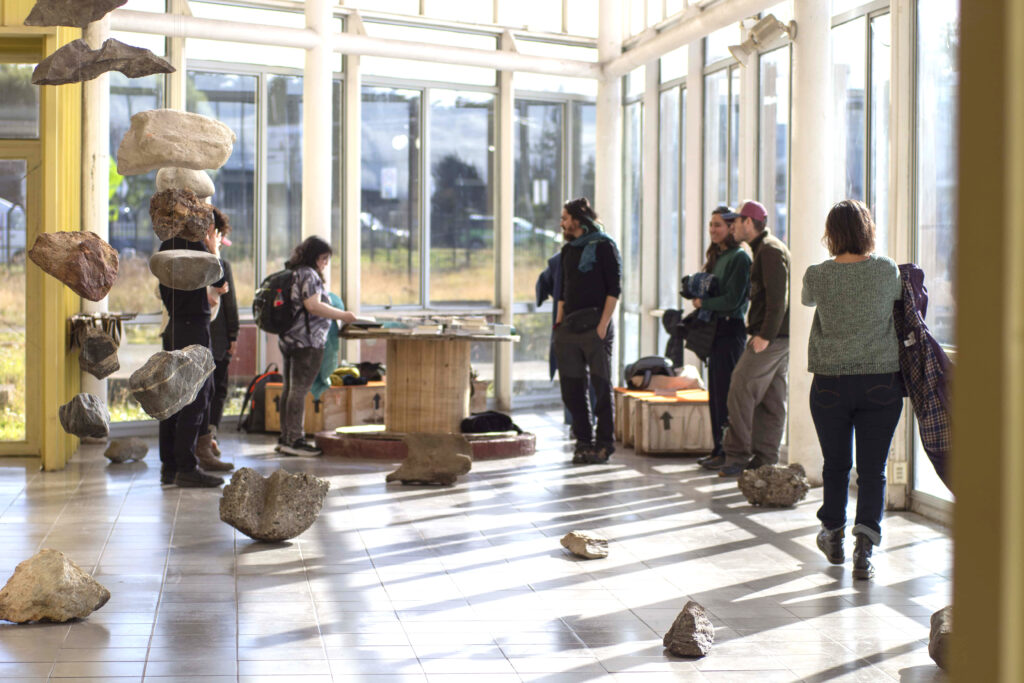
year: 2015-2022 stones, piano string, iron, tensioners
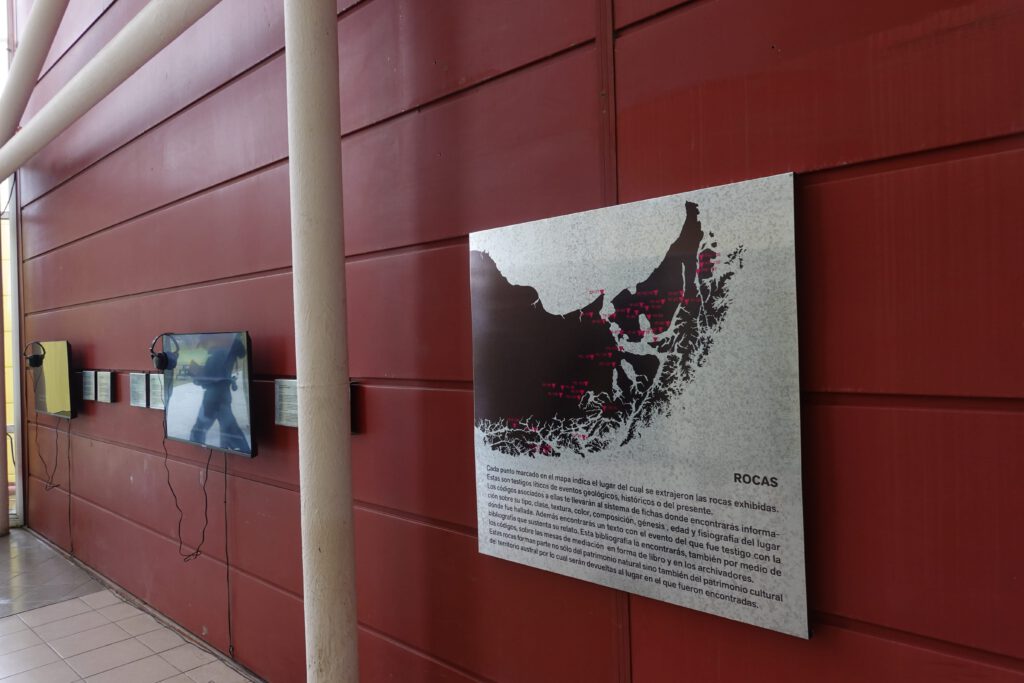
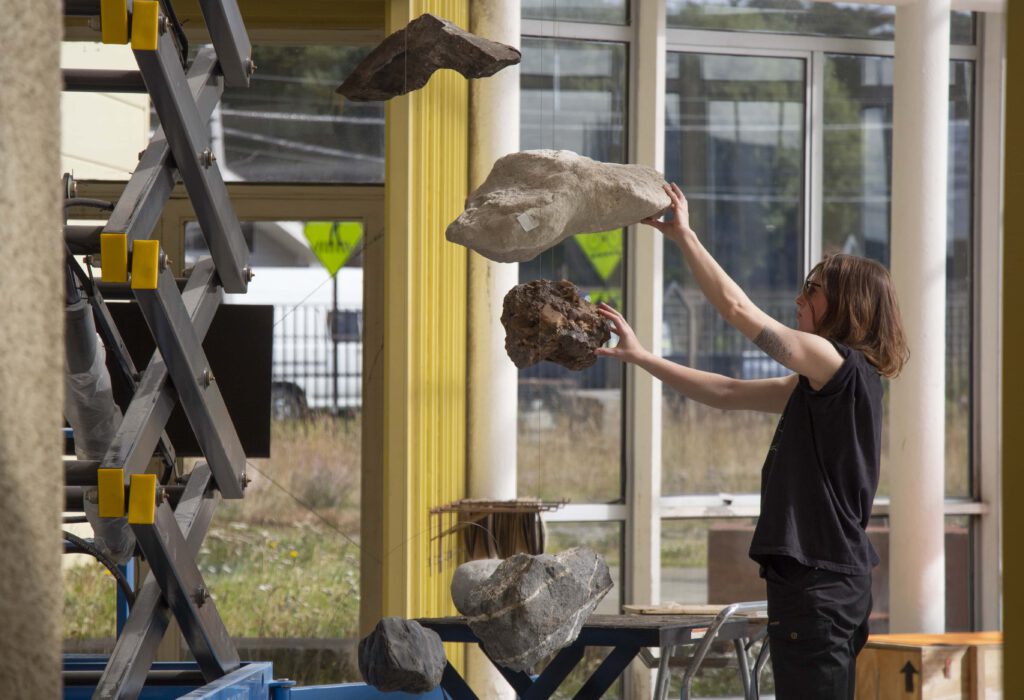
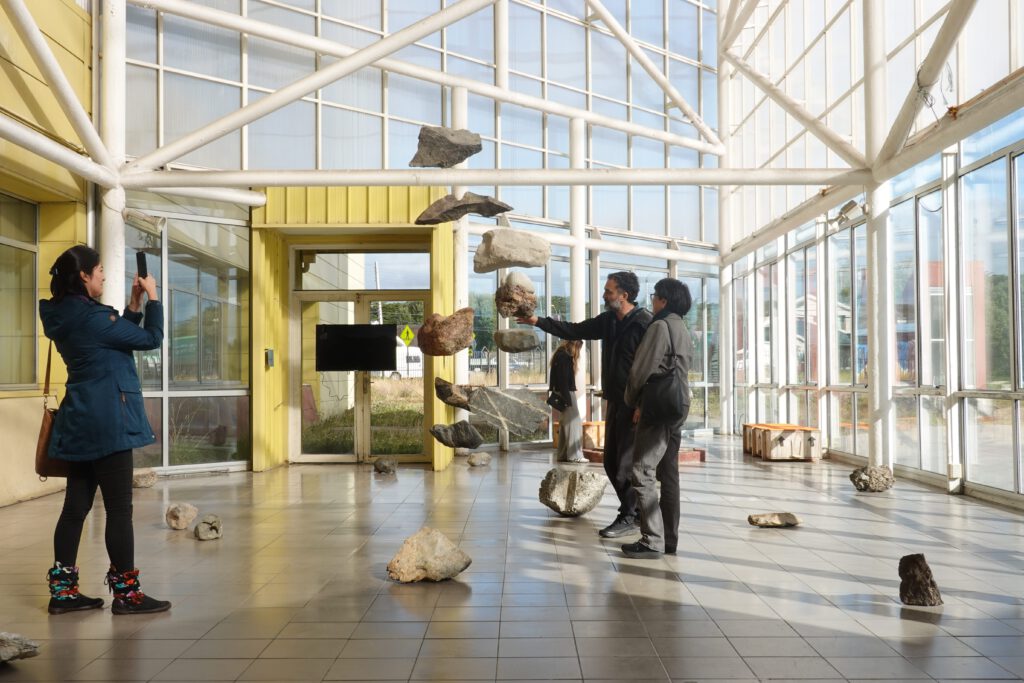
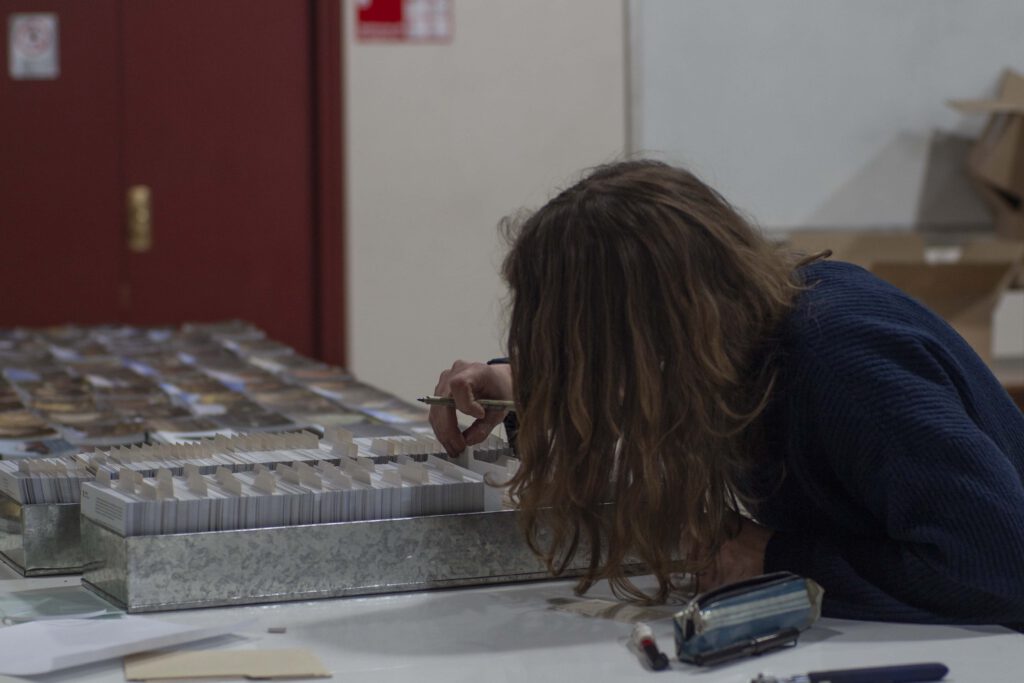
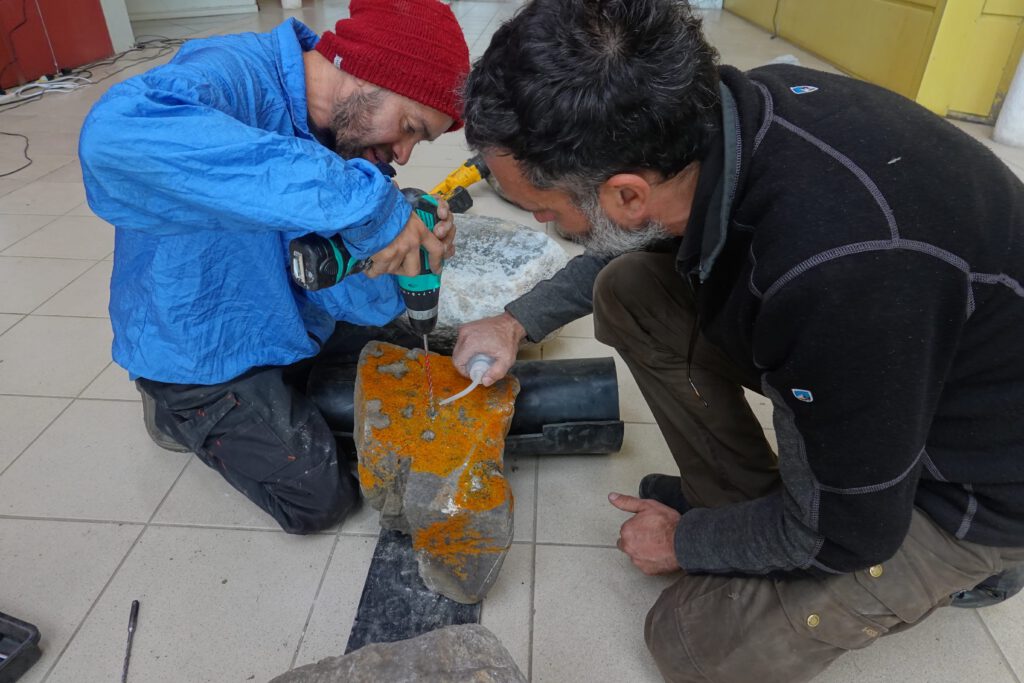
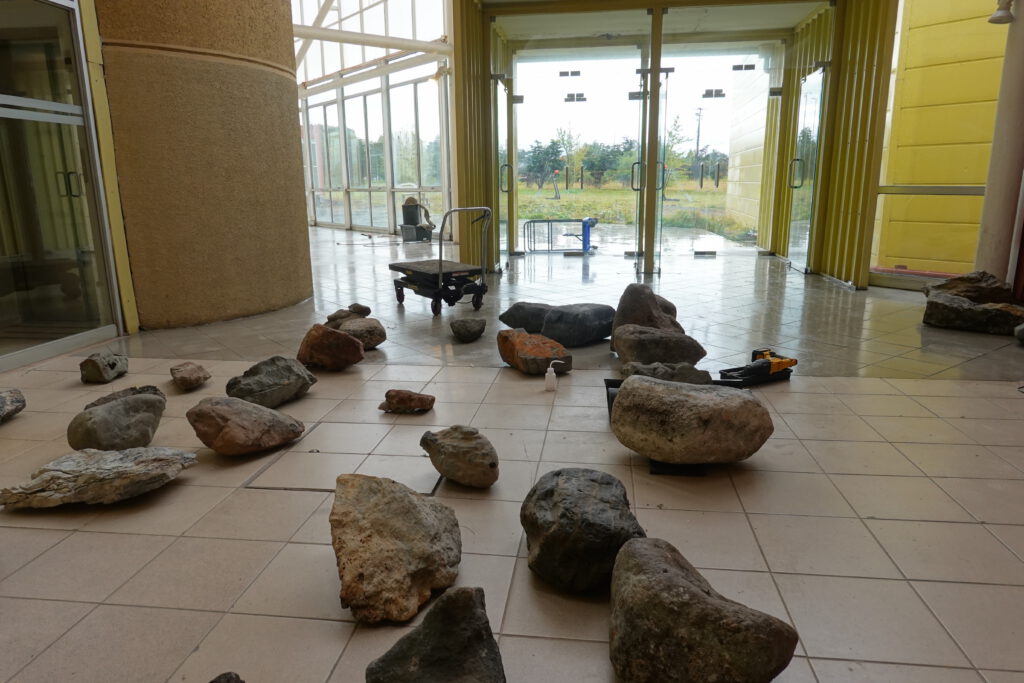
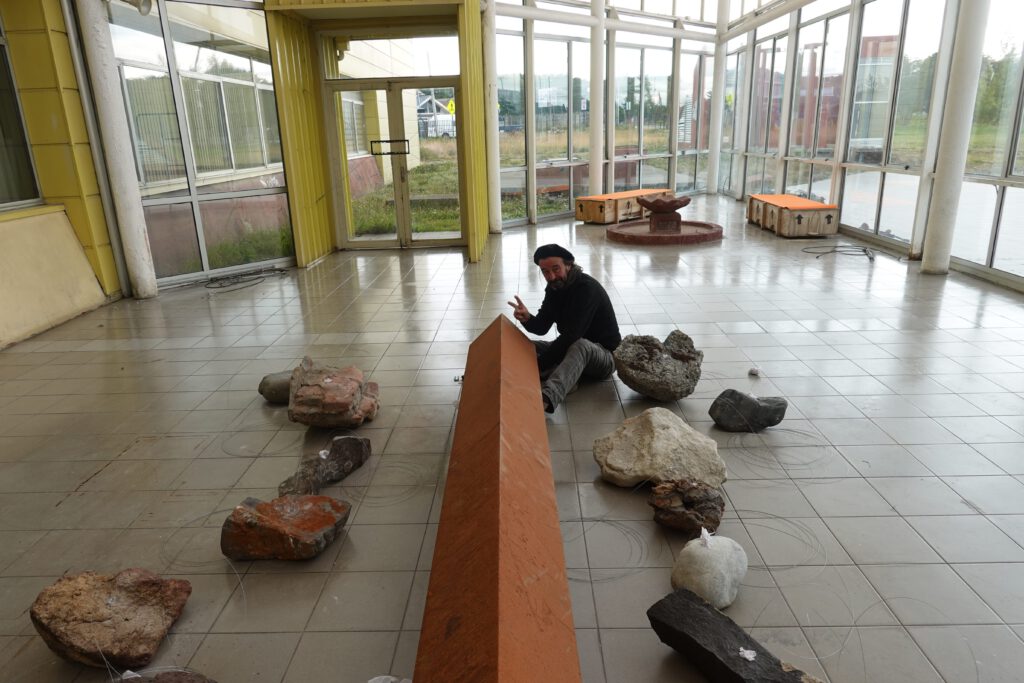
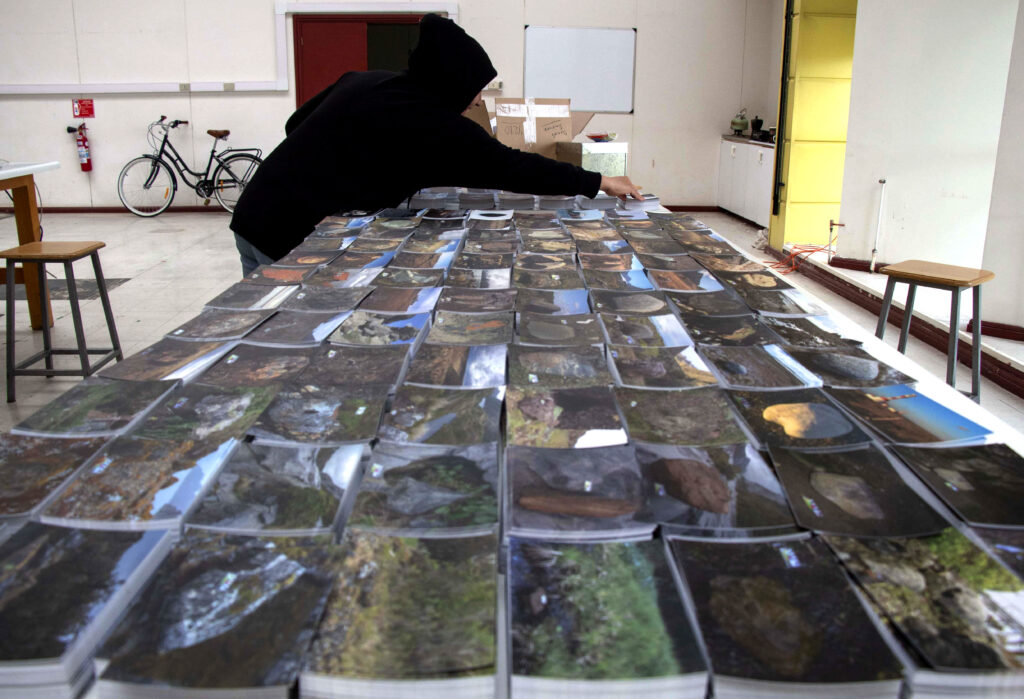
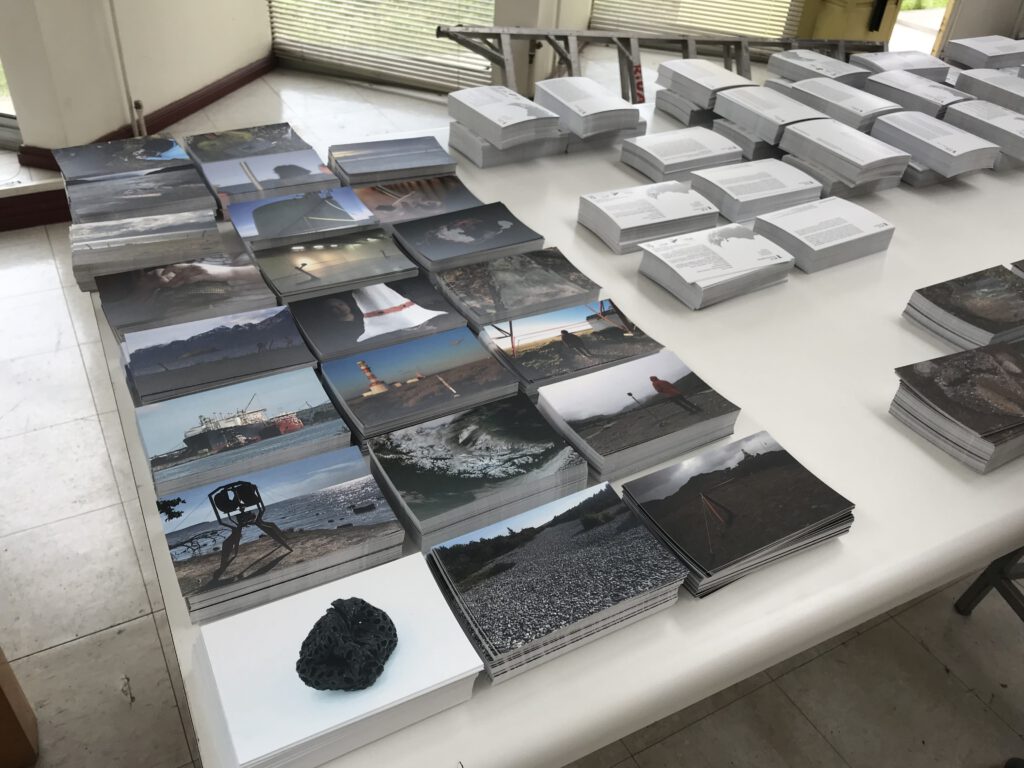
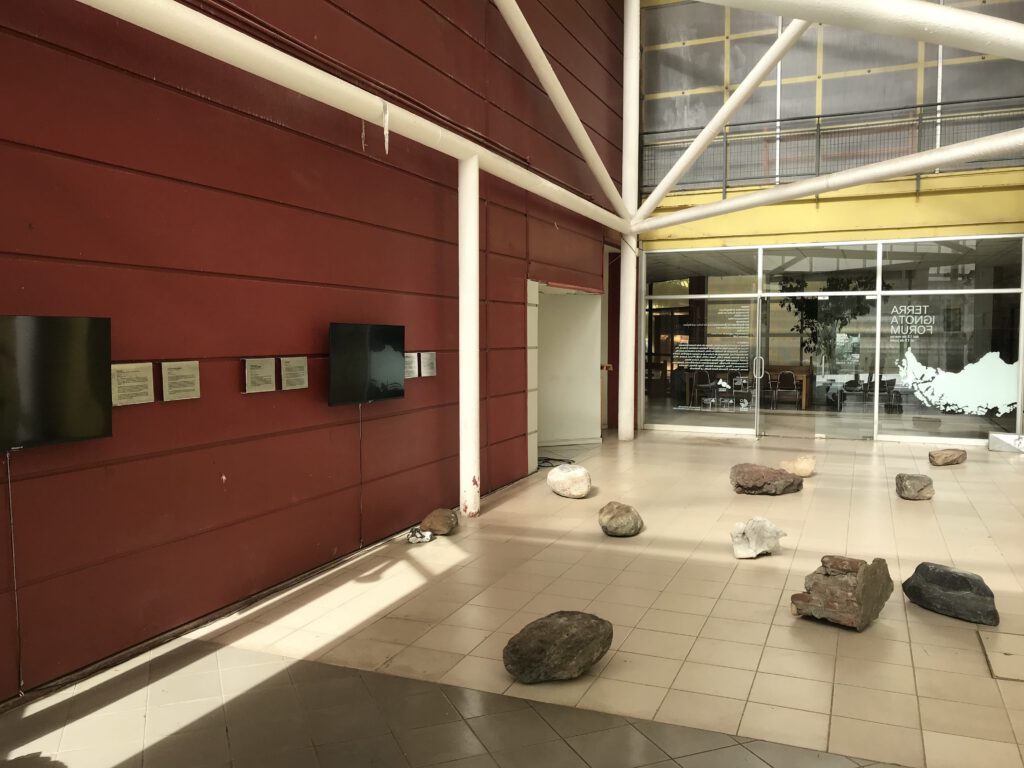
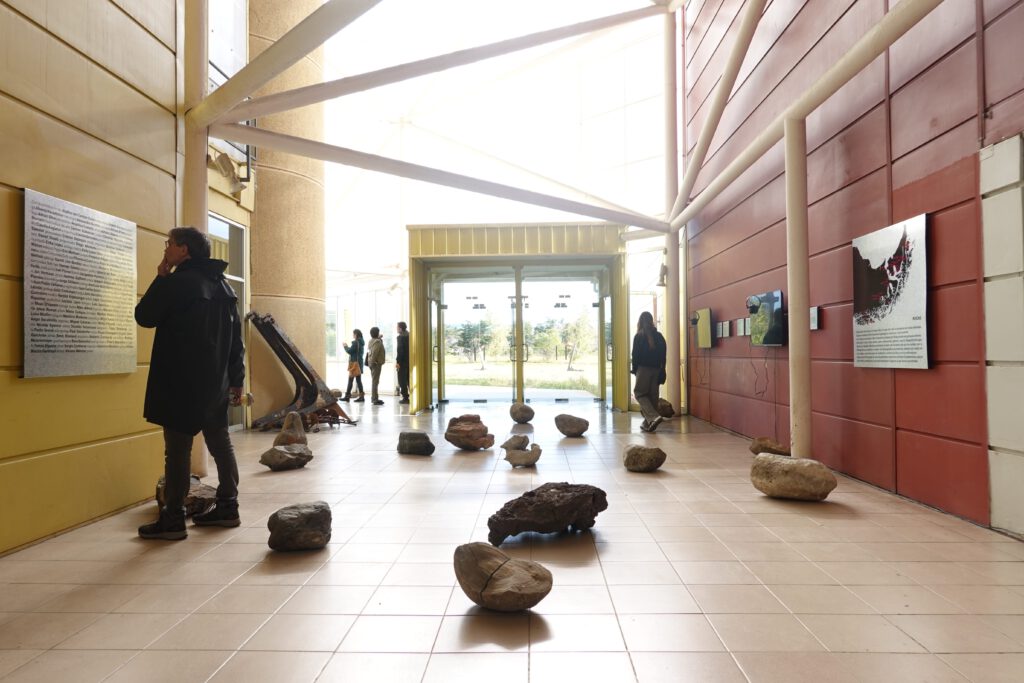
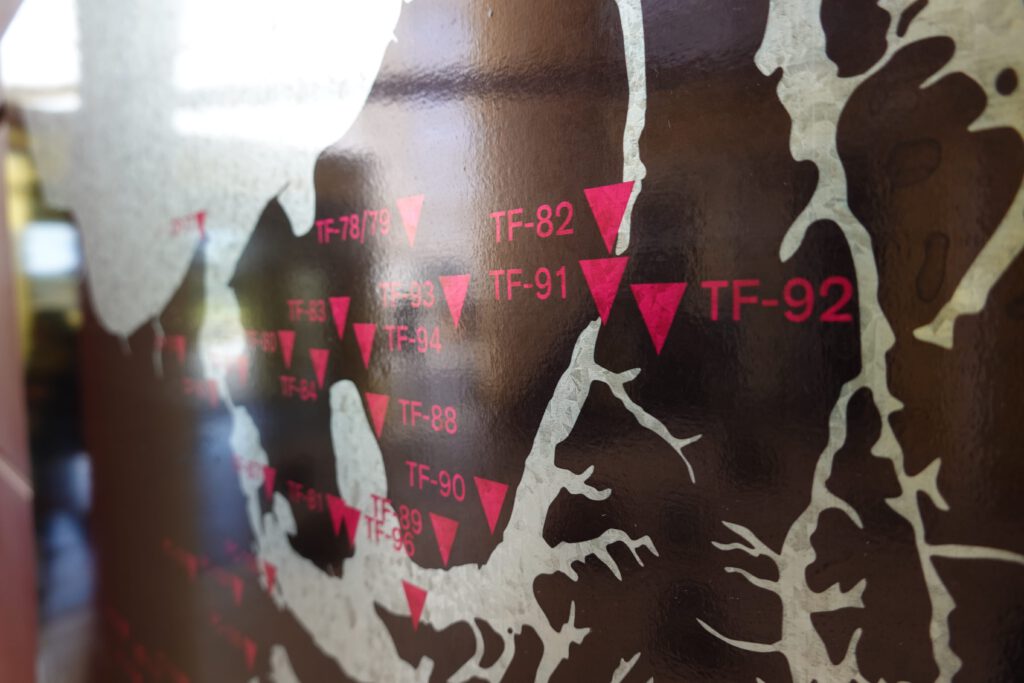
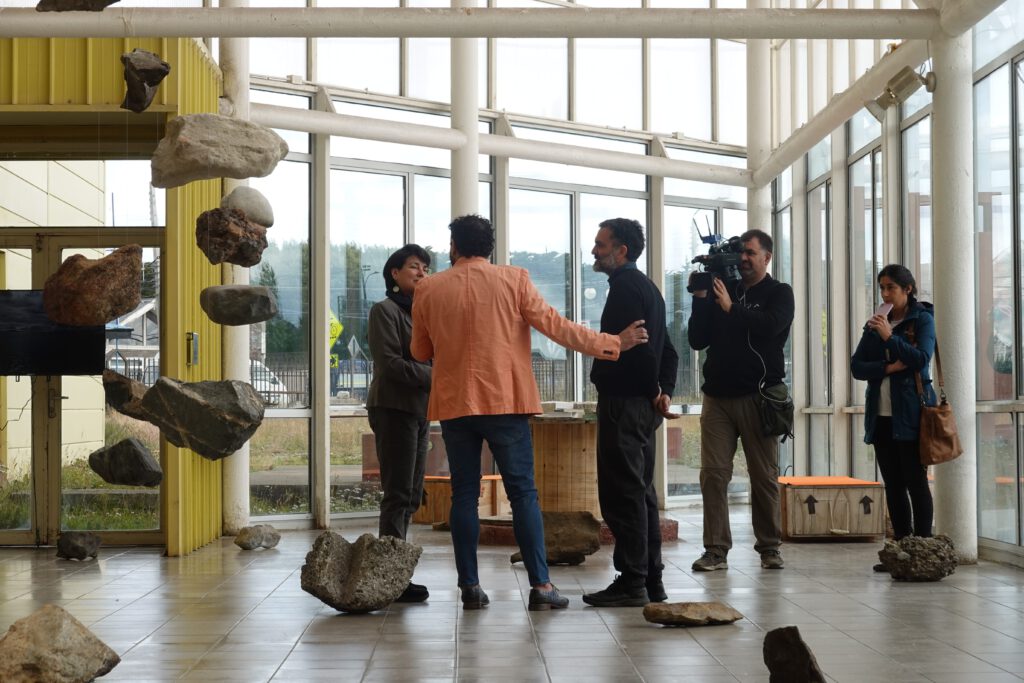
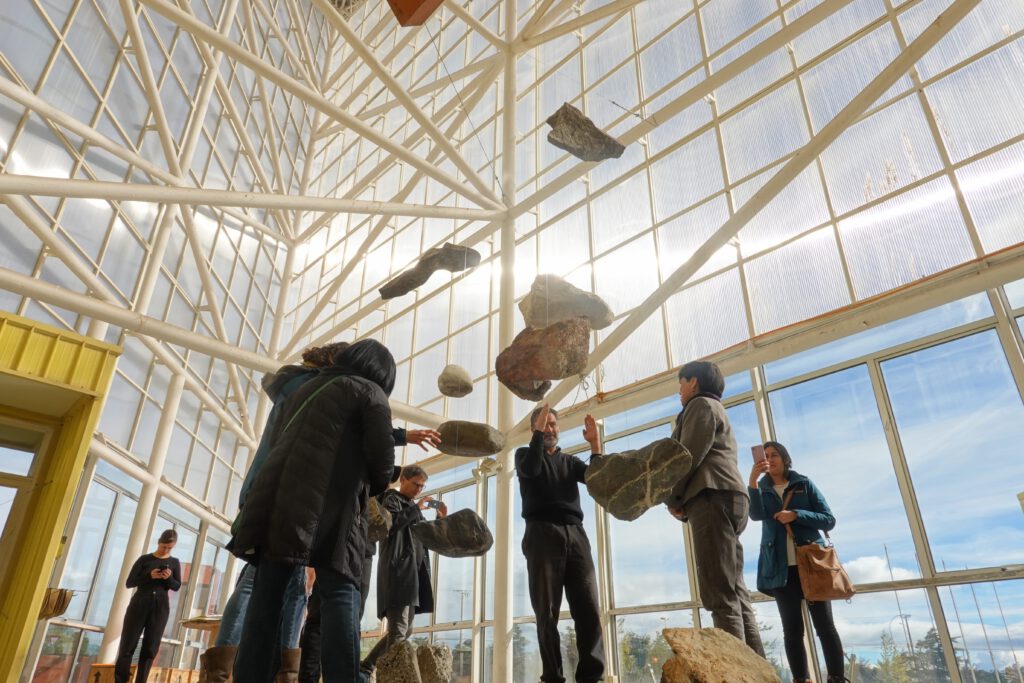
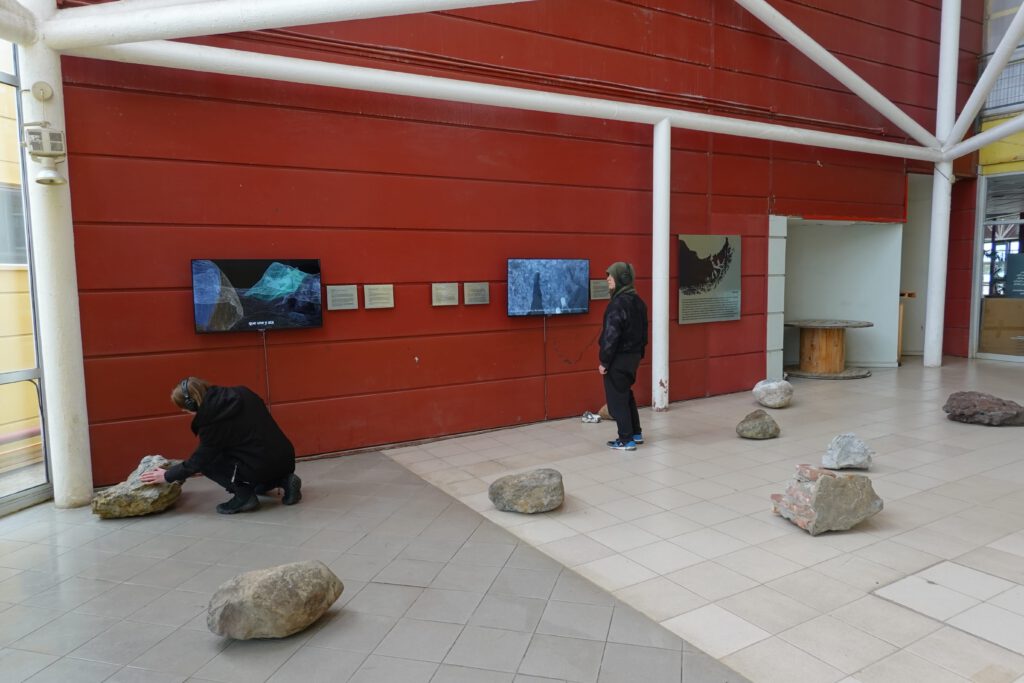
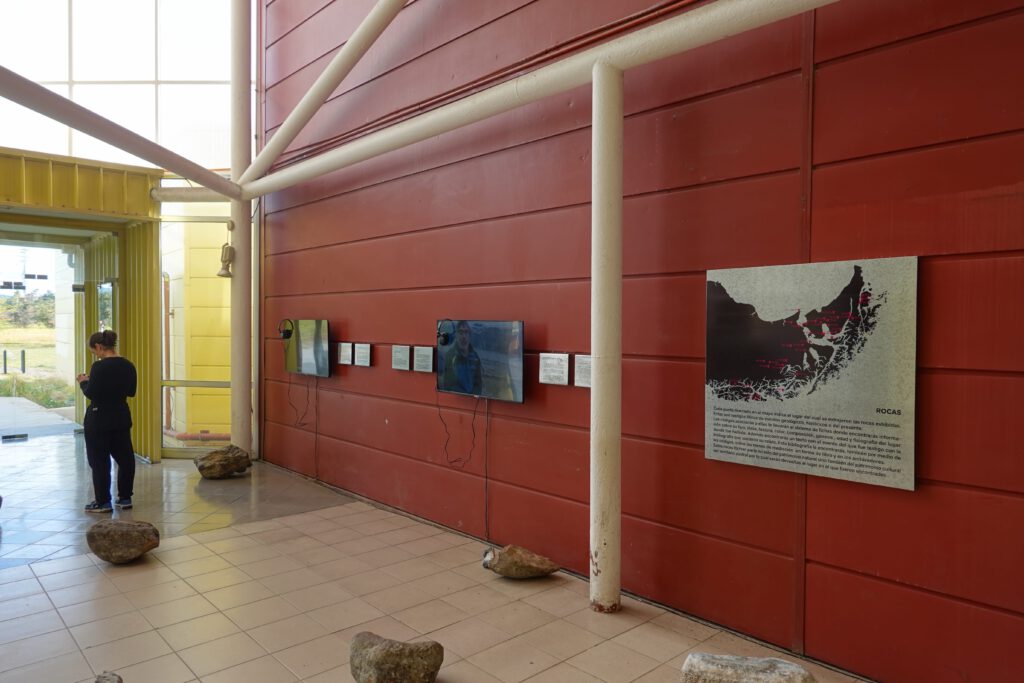
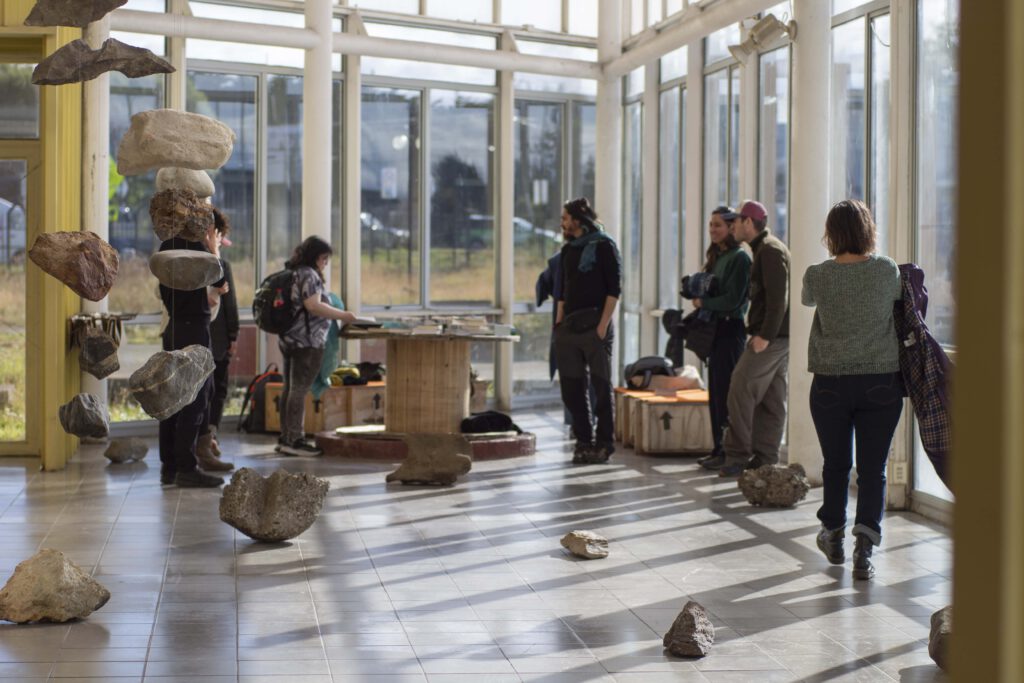
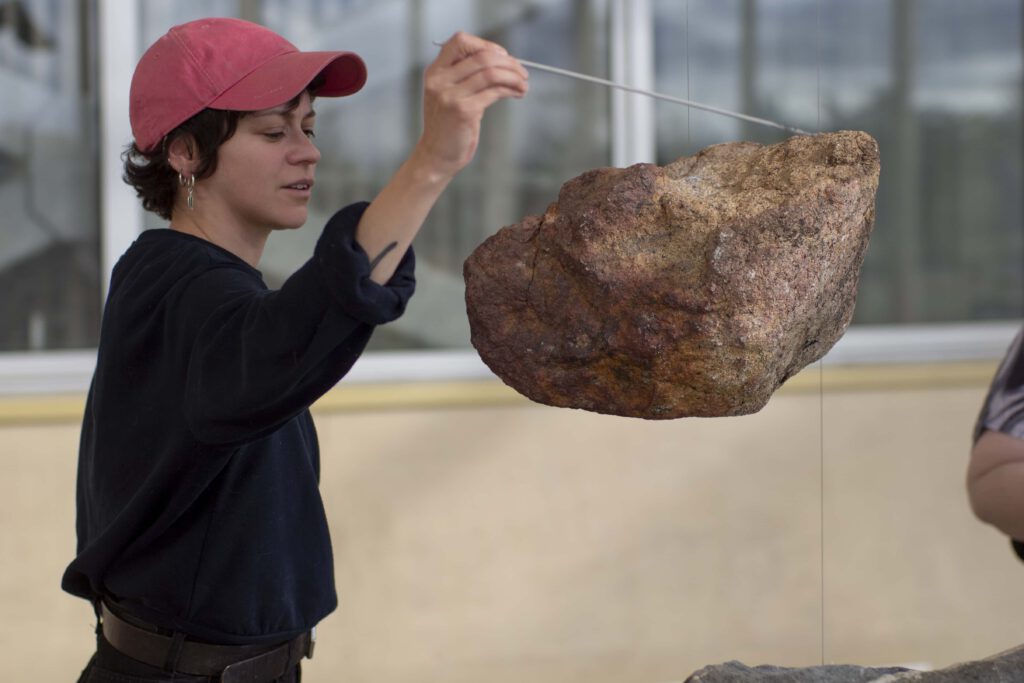
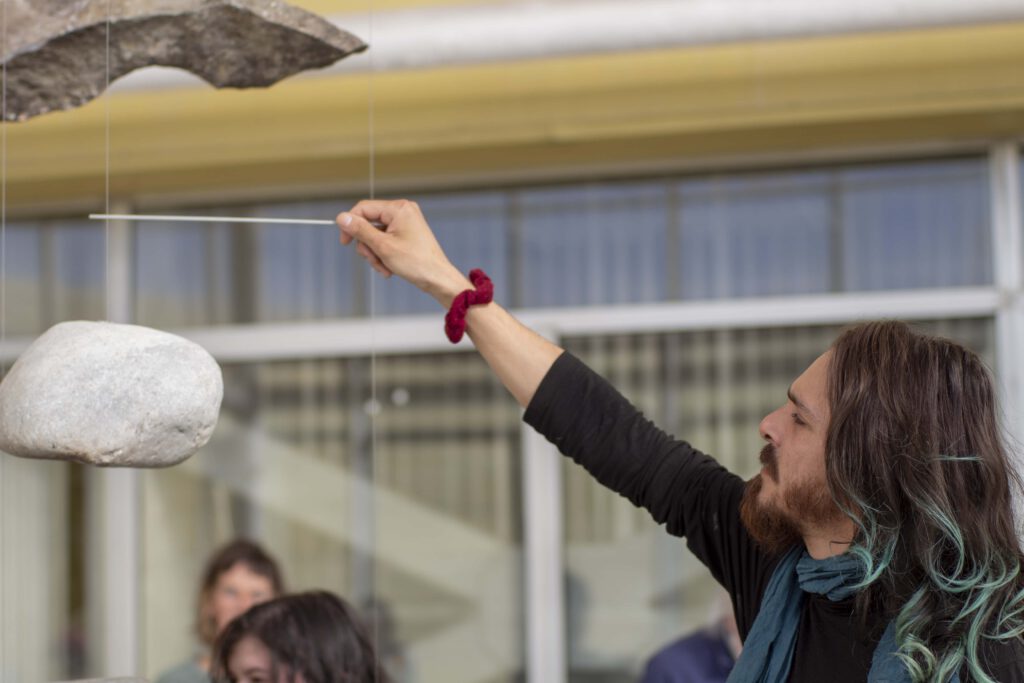
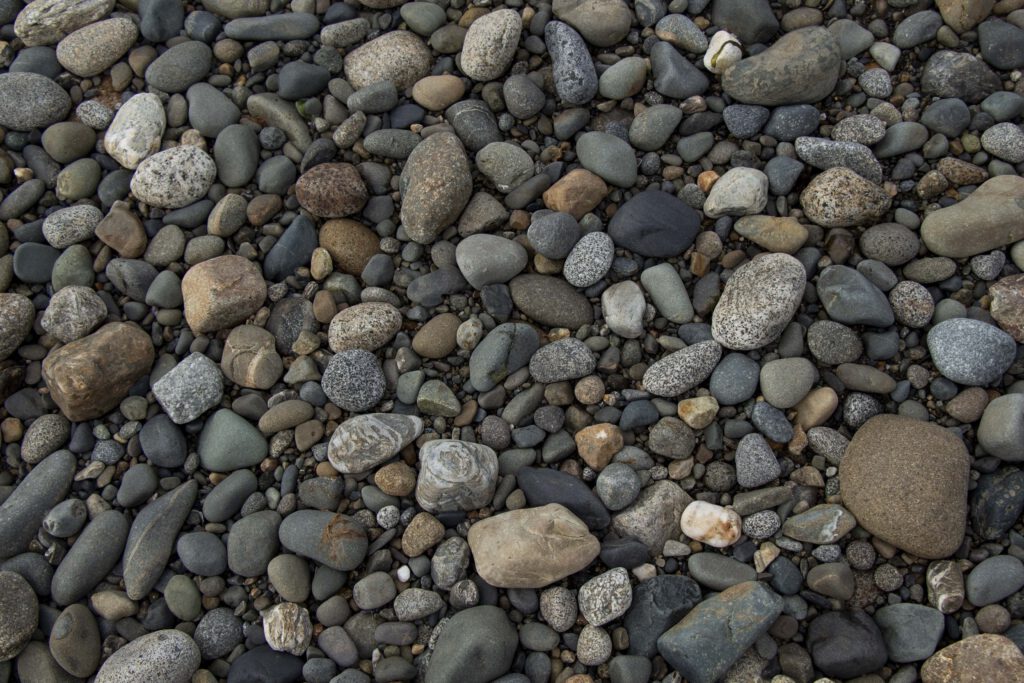
Rocas is a sound installation made up of 44 stones – some of them in suspension – all collected from Fiordo Témpano north of Puerto Edén to Cabo de Hornos and about to be returned to the place where they were found. In addition to being considered part of the living heritage of the southern territory, the rocks are conceived as lithic witnesses of geological, historical or present-day events.
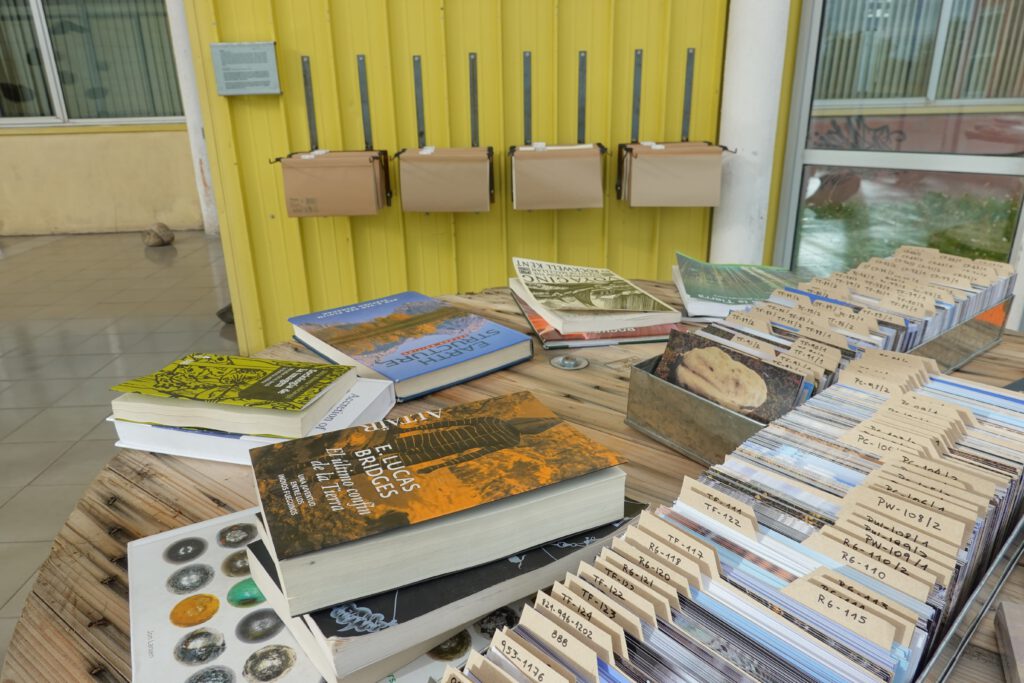
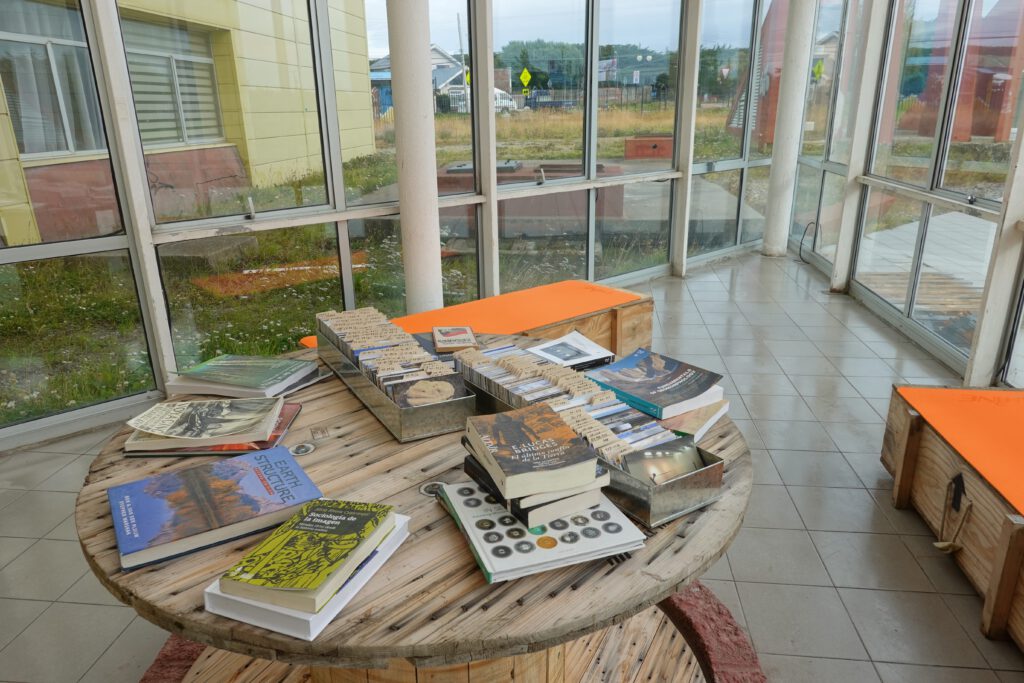
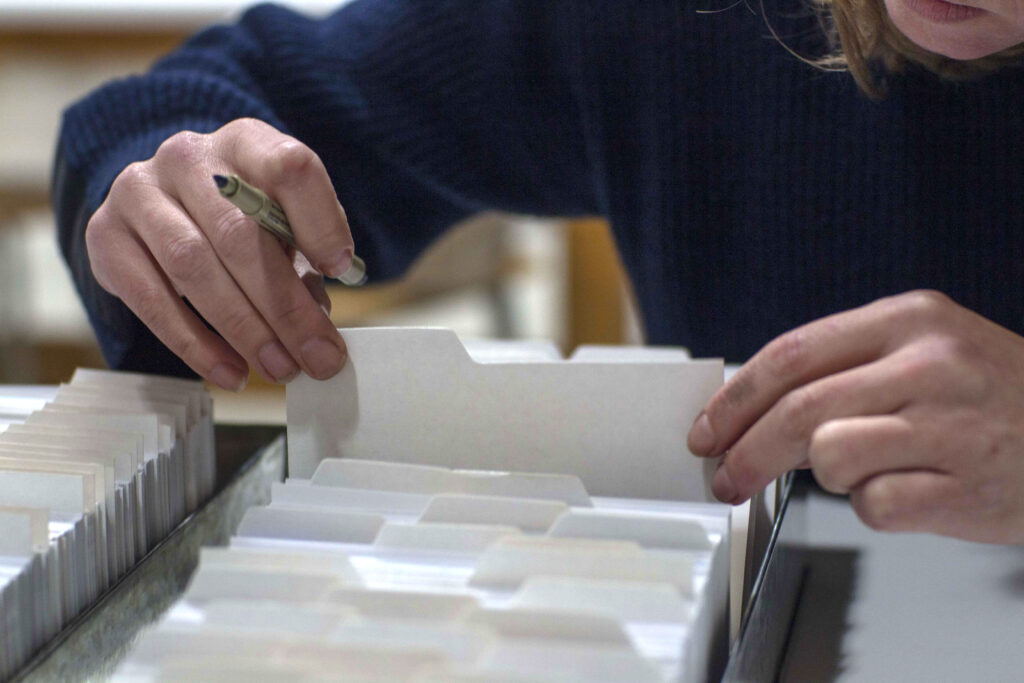
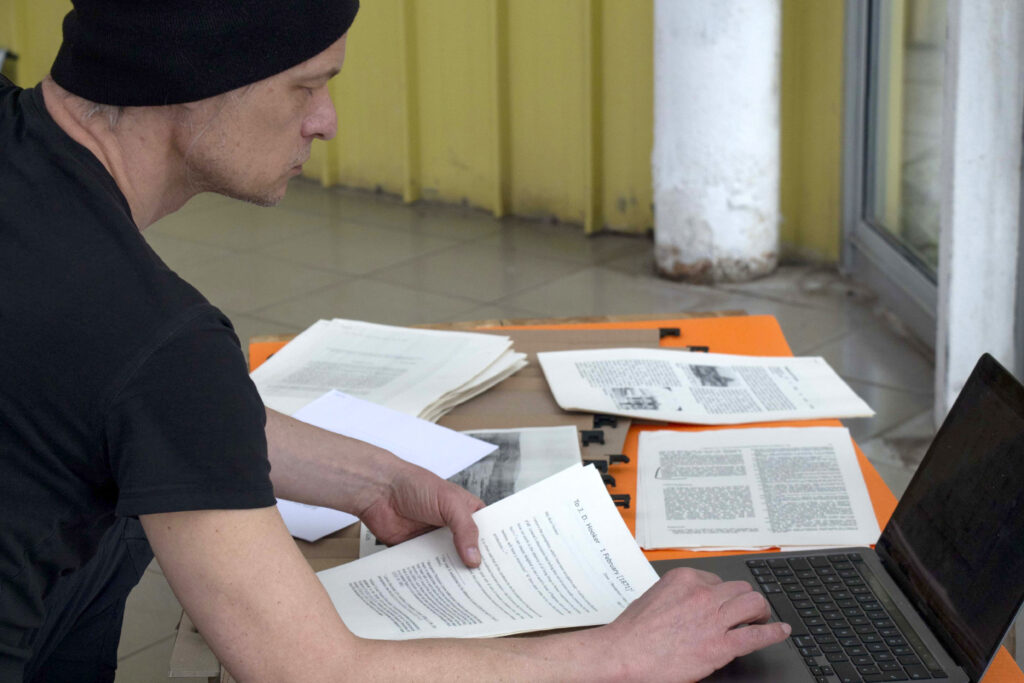
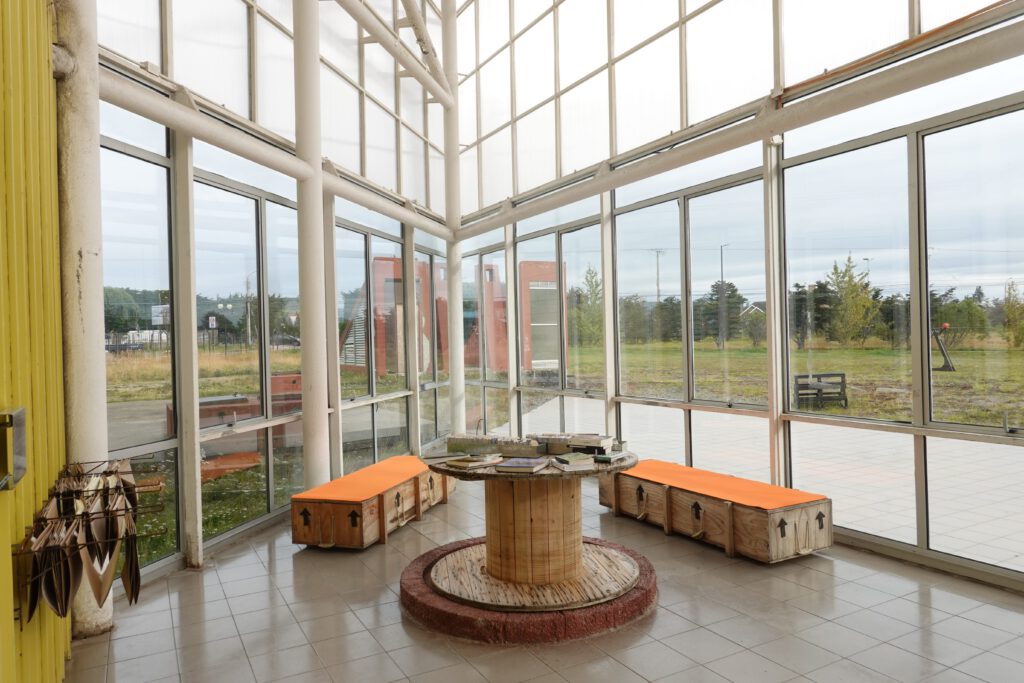
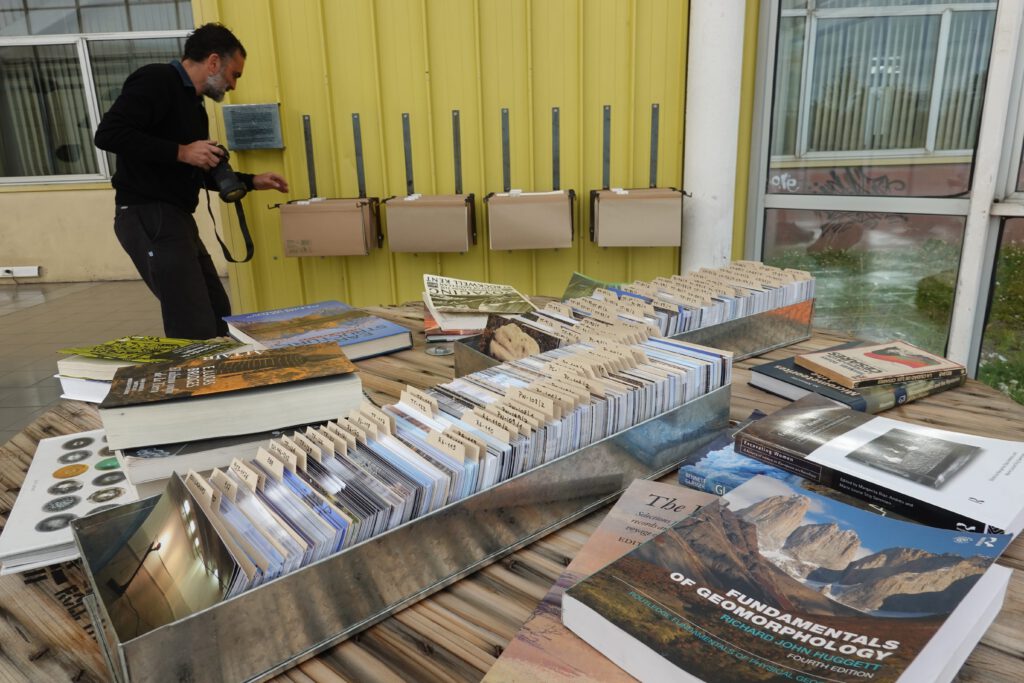
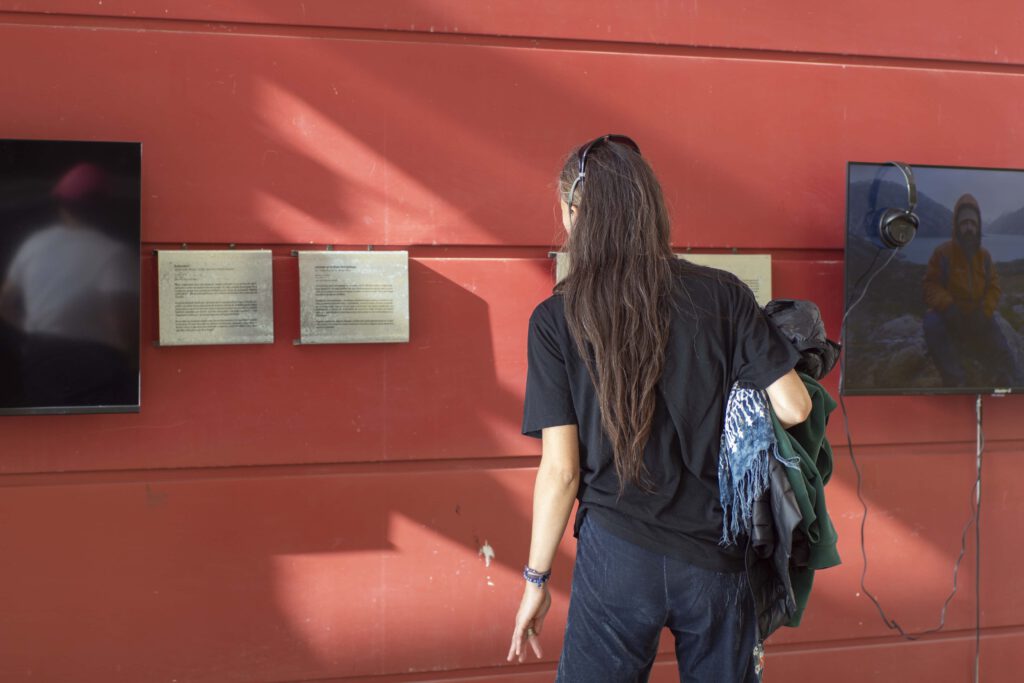
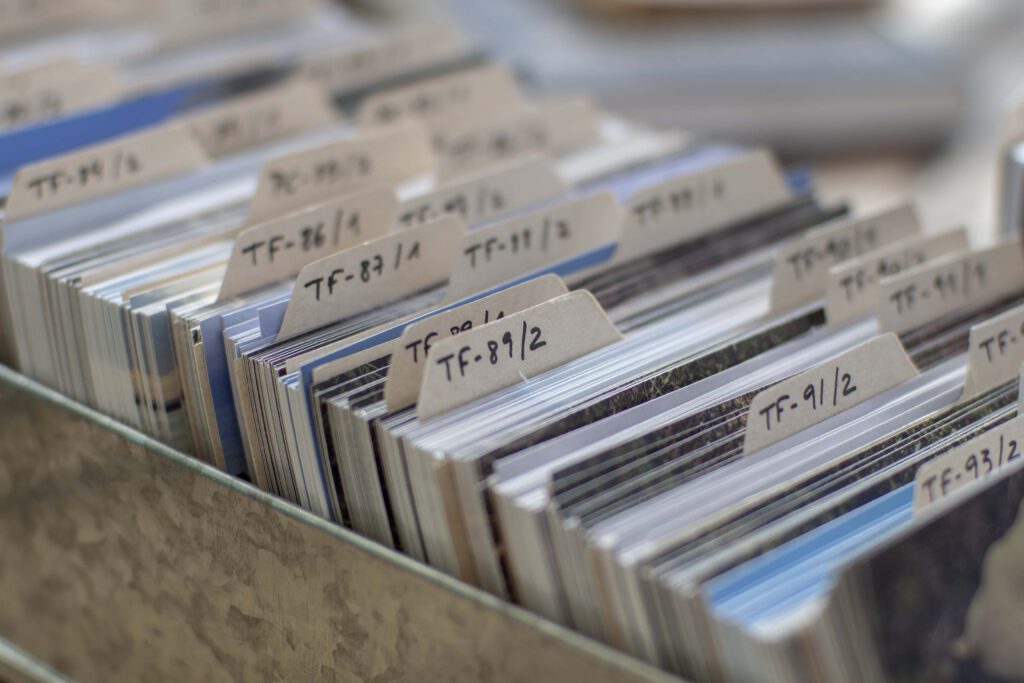
The installation is complemented by a mediation table of the extensive archival work carried out, which includes more than 2000 pages of scientific papers, articles, images and stories through which a system of codes invites the visitor to unfold narratives of each of the rocks. The two postcards corresponding to each piece can also be consulted: the first, of a scientific nature, shows its formal and material characteristics and its geographical location; the second, of a poetic nature, shows a story assigned to a collaborator who approaches the object from his or her own discipline.
Zona de Contacto Interculturalby Terra Ignotateam
duration: 17:11 min. year: 2023 single channel video HD, stereo
The work of archaeology consists of exploring and understanding human behaviour from past and present material remains, including in a relevant way the modifications we produce in the landscape. Archaeology is practised on this occasion through the collaborative work of different agents in the Darwin Range.
For decades, archaeological accounts and findings in Bahía Yendegaia have shown shell midden, habitational structures and pictorial representations. But for the first time, in Bahía Blanca and along the Lapataia Valley, ancient narratives have been transformed into occupation sites documented by anthropogenic material finds and landscape modifications.
This transdisciplinary project has not only allowed us to discover new archaeological remains, but has also demonstrated the importance of combining different areas of knowledge to fully understand the history, geography and meaning of a place that functioned and will continue to endure as a link in the territory.
duration: 6:10 min. year: 2023 single channel video HD, stereo
Journey in the Great Archipelago is a map by Dr. Alfredo Prieto and Cristian Espinoza based on John Bartholomew’s Atlantic map tracing a journey of early humanity from the centre of Africa to Tierra del Fuego during the Würm glaciation.
Where we have been taught to see dismembered, distant, sometimes colliding bodies, which we have called islands and continents; we see a single archipelago. Humanity, seen in a single great movement, appears to us from here as a continuous spread. A movement of hundreds of thousands of years of advancing, returning and learning technologies to deepen their way of inhabiting the archipelago.
Sometimes when travellers diverge, they forget their unity after several generations. And when they converge again, they find it difficult to recognise the other travellers as part of the same humanity.
duration: 20:00 year: 2023 single channel video HD, stereo
Collaborative piece dealing with cultural objects and their forms of representation based on experiences in museums. The original video is part of the audiovisual installation exhibited at the Weltmuseum Vienna, in the project TAKING CARE 2023 – Ethnographic and World Culture Museums as Spaces of Care”.
Fernanda Olivares (Selk’nam, director of the Hach Saye Foundation) and Claudia Augustat (curator of the South American collections at the Weltmuseum Wien) freely interpreted the objects belonging to the collection of Selk’nam objects obtained by Martin Gusinde (Austrian priest and ethnologist) and Carl Hagenbeck (precursor of anthropozoological exhibitions).
The video shows objects that were scanned and represented by means of vectors. The emptiness of their vectorial form is filled by speculative narratives as an exercise in understanding the past through dislocated objects (from the Latin dislocare – to remove from their place).
Archaeological findings: The Intercultural Contact Zone by Terra Ignota team
year: 2024 single channel video HD, stereo
Through research in the Lapataia Valley and the discovery of material finds, the ancient narratives of occupation sites have been transformed, proving the existence of a transit passage between the Onashaga (Beagle Channel) and the Almirantazgo Sound. This possible transit or meeting point between the Selk’nam, Kawesqar and Yagán communities has been called the Intercultural Contact Zone.
Archaeology was practised, on this occasion, through collaborative work between scientists, artists, curators and the communities whose ancestors possibly inhabited this area. This study proposes that since the opening of the glacial ice in the Holocene, the transit of humans and animals was made possible through the same route we follow today.
Archaeological discoveries include large fishing corrals, overhang habitats, temporary camps and forest modifications. This transdisciplinary project has not only allowed us to discover new archaeological remains, but has also demonstrated the importance of combining different areas of knowledge to fully understand the history, geography and significance of a place that functioned and will continue to endure as a link in the territory.
Can independent and autonomous networks cope with modes of energy production and consumption on a global scale?
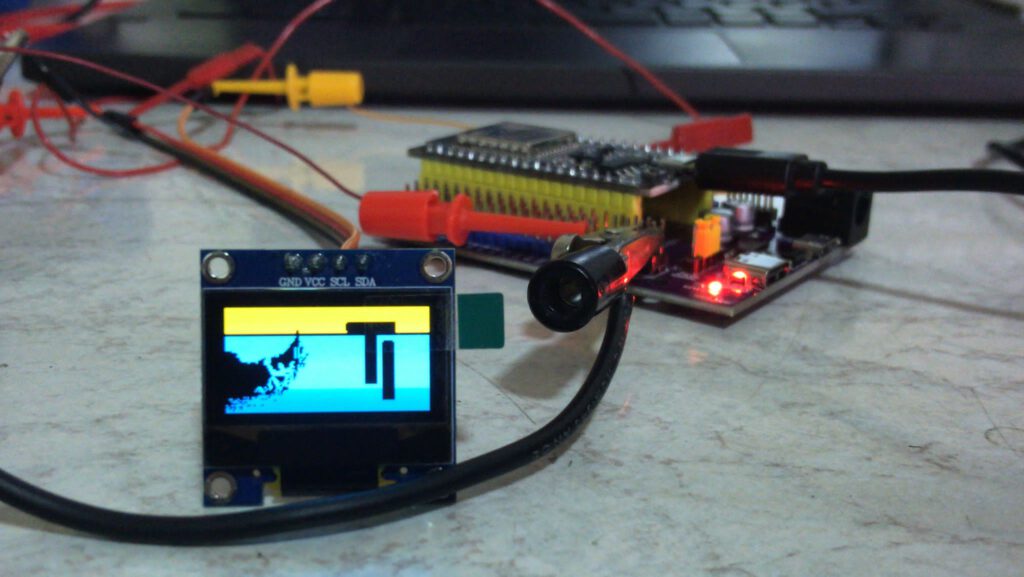
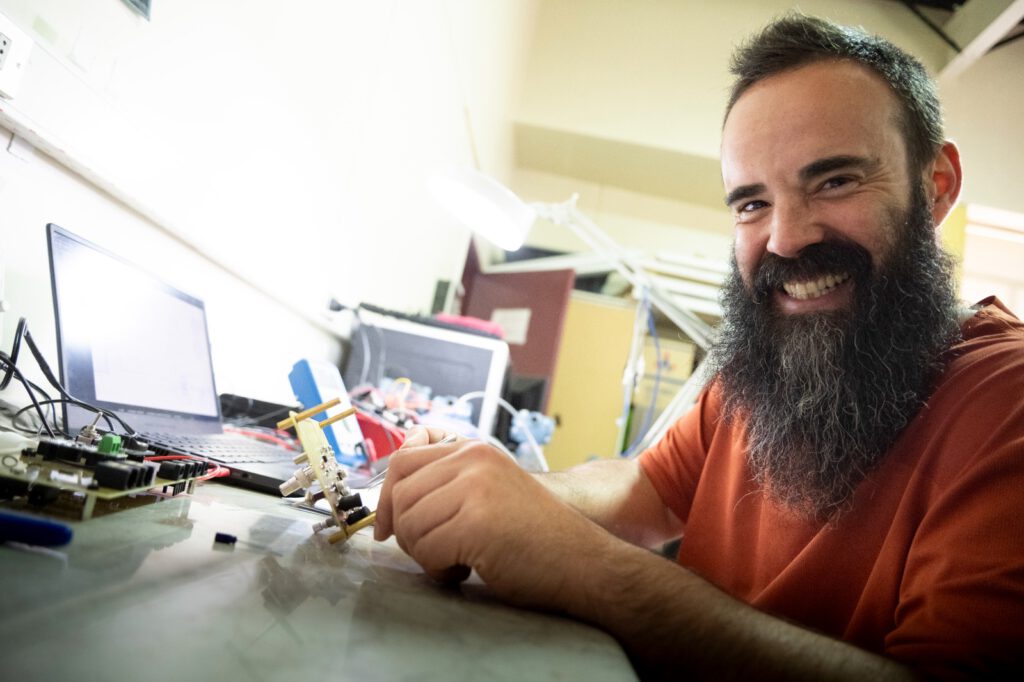
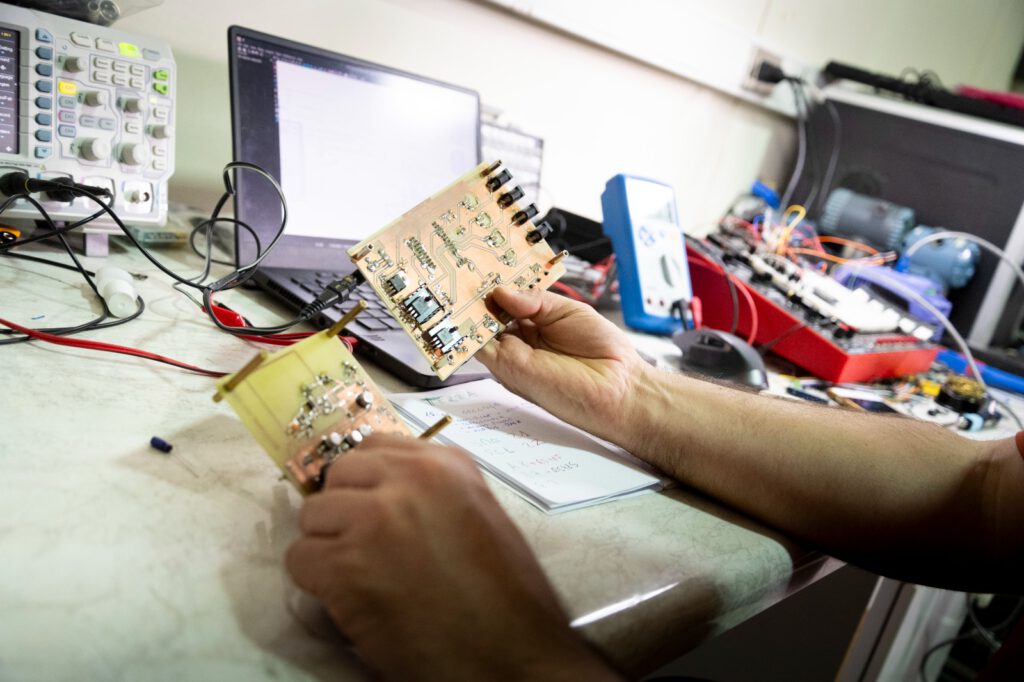
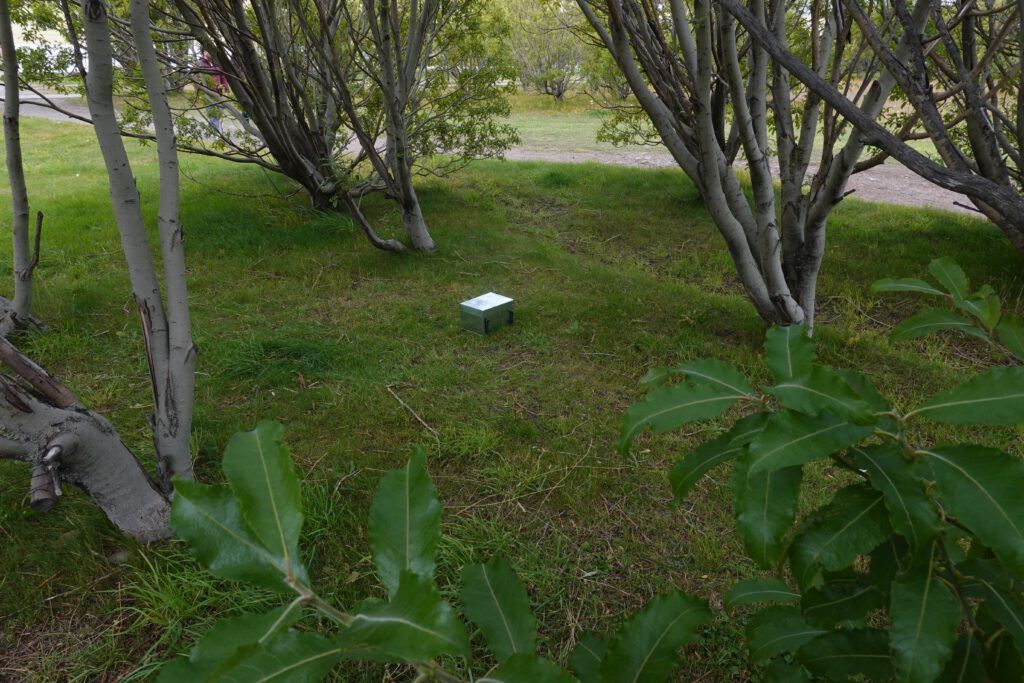
Holobionte is a quest for the creation of a self-sufficient and decentralised system for measuring atmospheric and geological data. It proposes the creation of a data collection and interpretation network managed by the civil community with special emphasis on isolated or ecosystemically fragile locations. The image shows the first prototype of the Holobionte 0.1: open-hardware wind turbine, with its charging, discharging and energy storage control system, 12V battery, 5-12V voltage regulator.
After listening to the archaeological team discuss their techniques and methodologies for observing trails and tracks during field investigation activities, it became important to design a new, less invasive tool for soil analysis. Both out of respect for ecosystems and communities and to prevent the archaeological method from destroying its own object of study.
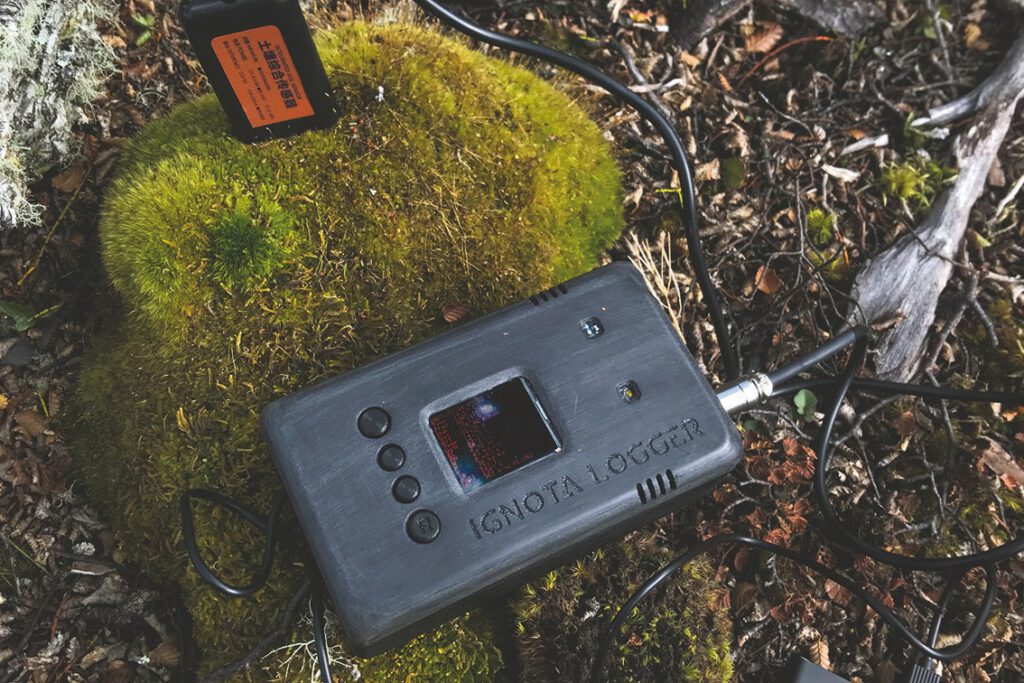
This new tool, called Ignota Logger, measures, records and analyses environmental data in real time, through a portable device.
These measurements are correlated with the disturbances generated by human settlements at the geological level, detecting variations at the site and being able to identify anthropogenic activity through the measured values.
In soil analysis, the levels of interest are: nitrogen, phosphorus, potassium -related to fertility-, electroconductivity -amount and type of soluble salts in humidity-, Ph levels -acidity or alkalinity-. From these first acquired values, the design was extended to measure external variables such as atmospheric temperature, humidity, barometric pressure, altitude, VOC gases, ultraviolet (UVA) and infrared (IR) light, the full light spectrum (LUX) providing real-time site-specific atmospheric observations.
Environmental Linguistics is an investigation of the relationships between language development, landscape and climate.
The starting point were Martin Gusinde’s phonographic recordings, which were made on behalf of the Berlin Phonogramm-Archiv in the years 1918-24 in Tierra del Fuego.
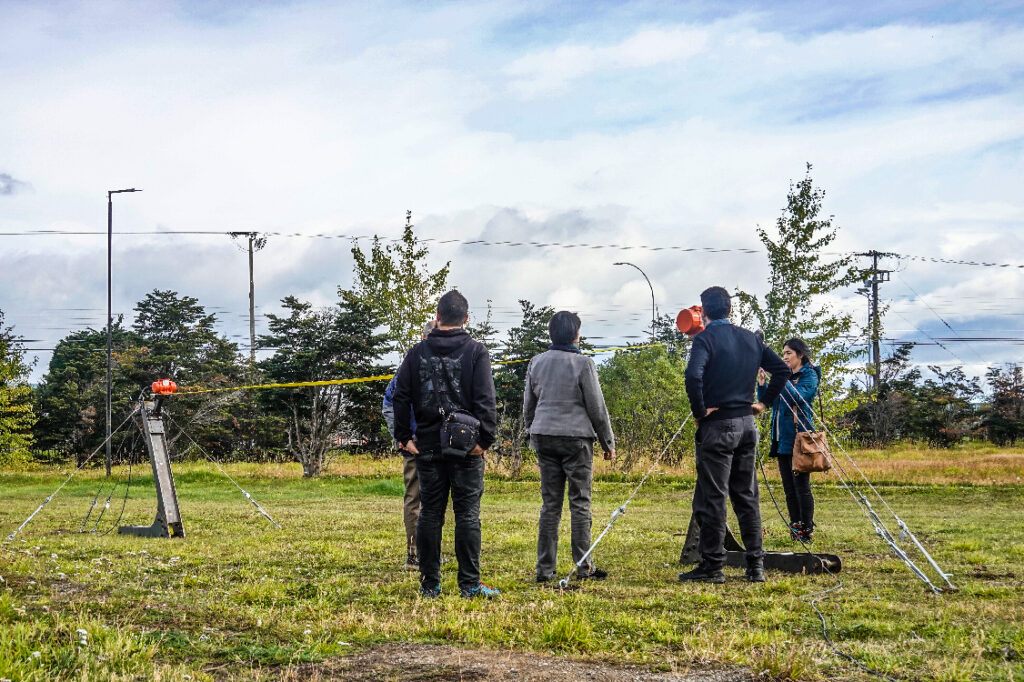
We developed an experimental approach that allowed us to conduct a systematic comparison of speech propagation and intelligibility in the field. The passage between Yendegaia and Admiralty Sound, which has been described as a possible historical “intercultural contact zone” and “communication pass”, seemed an appropriate place to test the interactions between voice and terrain.
Among Gusinde’s recordings, there was a single recording containing only speech utterances (and not songs) with Selk’nam vocabulary spoken by Antonio Toin, recorded on 27.07.1923 in Remolino with the label Cylinder #4. The recording is a simple sequence of spoken words, each repeated twice.
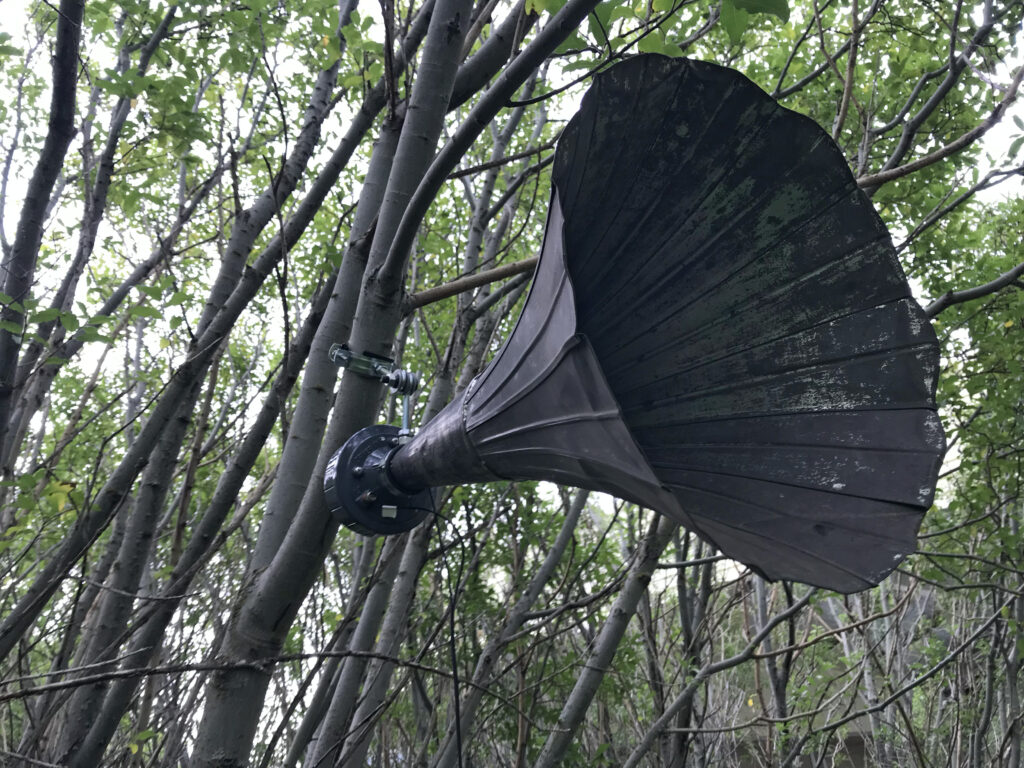
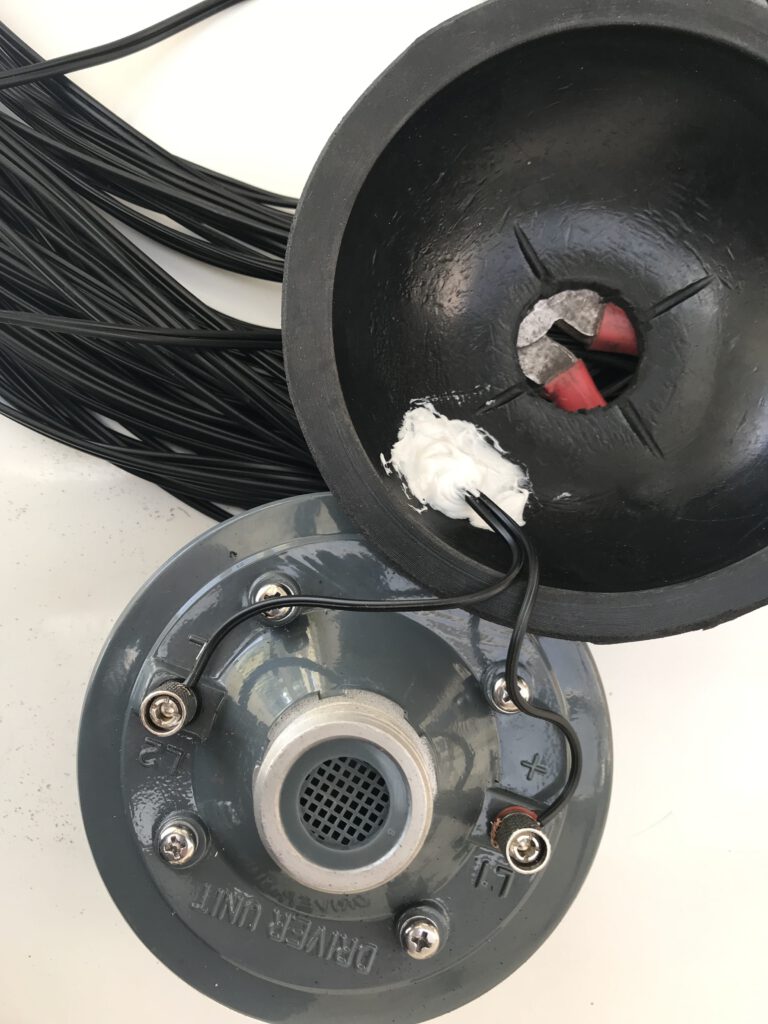
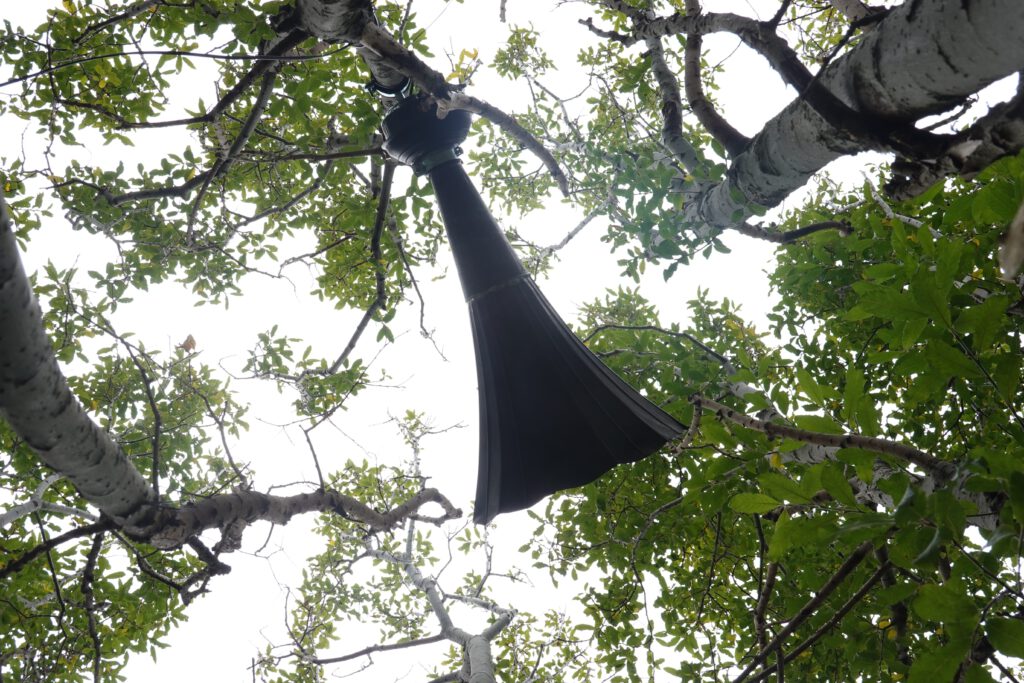
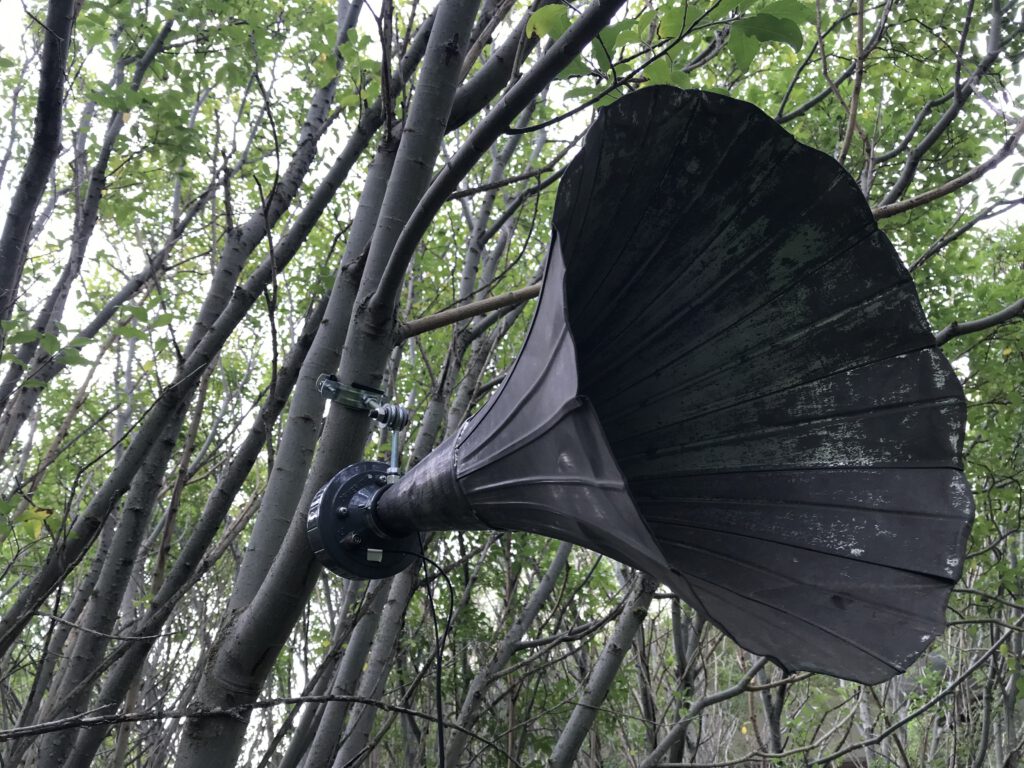
In the installation that recording is played back to the place via a phonograph horn – with the same acoustic characteristic as the horn which recorded the voice almost exactly 100 years ago. A QR code will lead to an online archive documenting the research and granting access to comparative listening examples of the effect of environmental conditions on speech comprehension.
duration: 09:40 min. year: 2024 single channel video HD, stereo (English with Spanish subtitles)
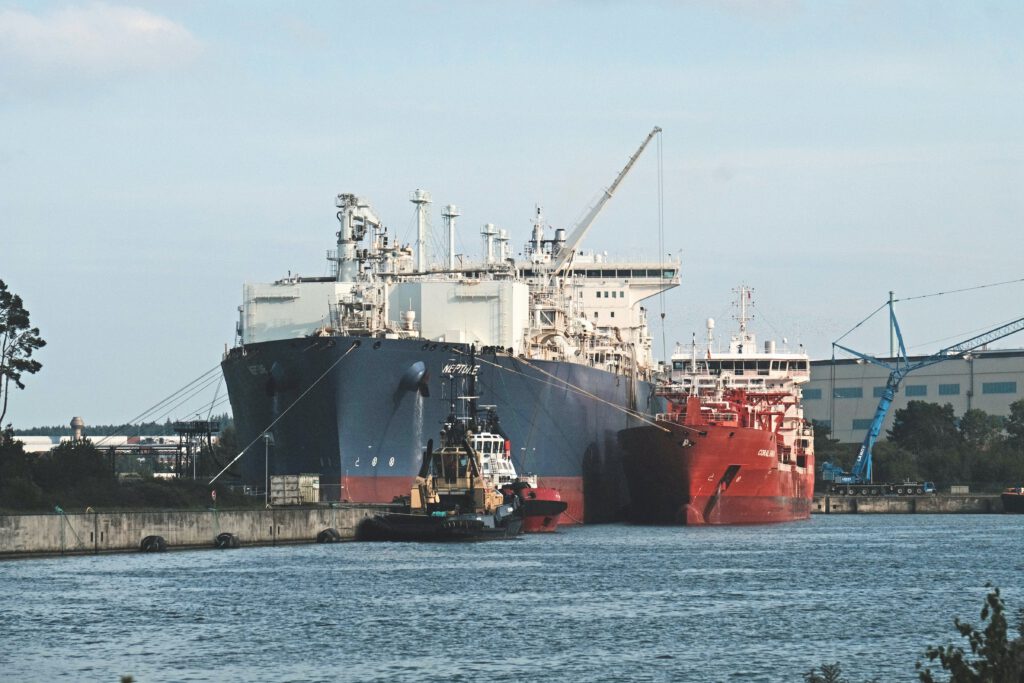
Kerstin Ergenzinger, Jasmine Guffond and Raviv Ganchrow speak about their individual encounters and project approaches at Terra Ignota Forum (TIF) field lab & forum (Yendegaia National Park, March 2023) and the geographically mirrored field lab in Northern Germany (Rügen, September 2023). Footage includes discussions of experimental somatic approaches to situated sense-making and poly-temporal methods of site-transduction in Tierra del Feugo, as well as the political agency of tuned listening and signature sound monitoring in the context of Rügen’s controversial development of LNG regasification infrastructures mirroring unfolding gas fracking developments in Tierra del Fuego.
duration: 48:22 year: 2018-2021 single channel video HD, stereo
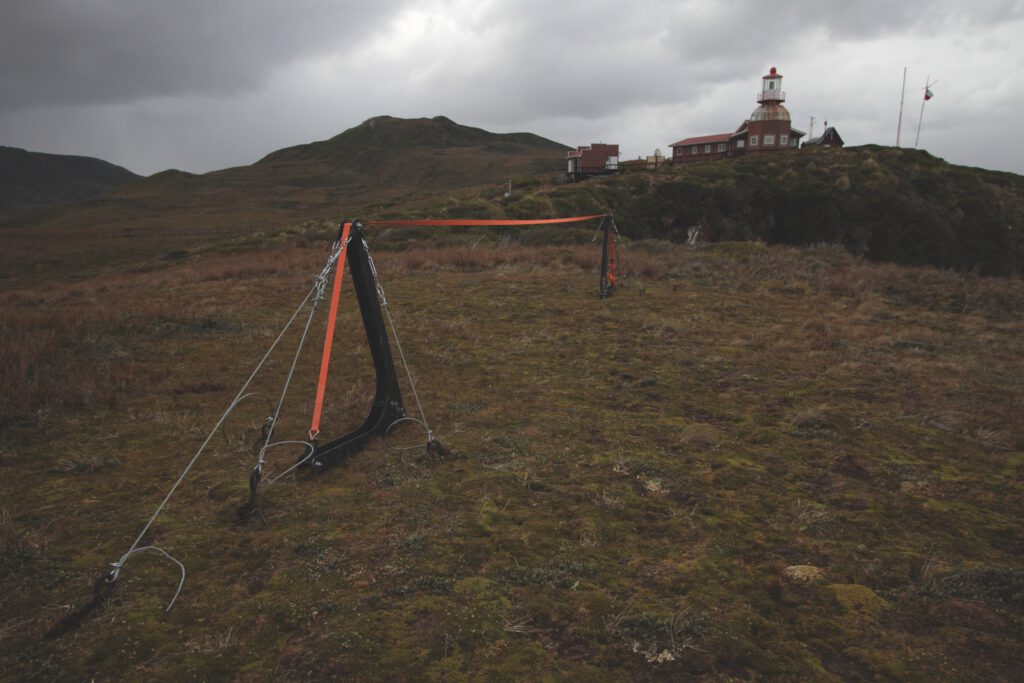
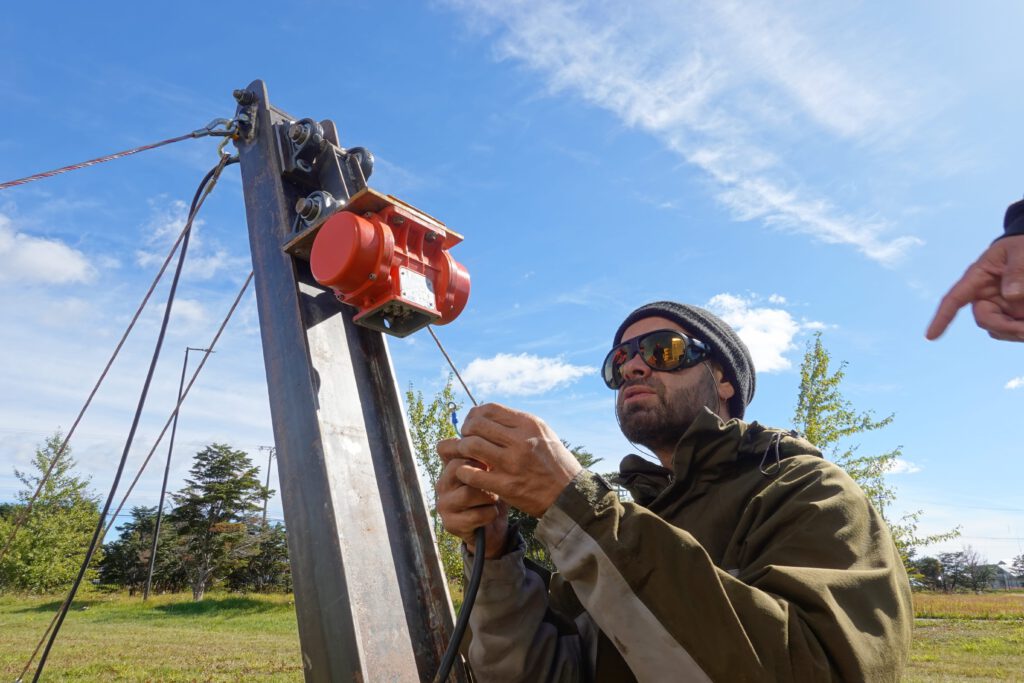
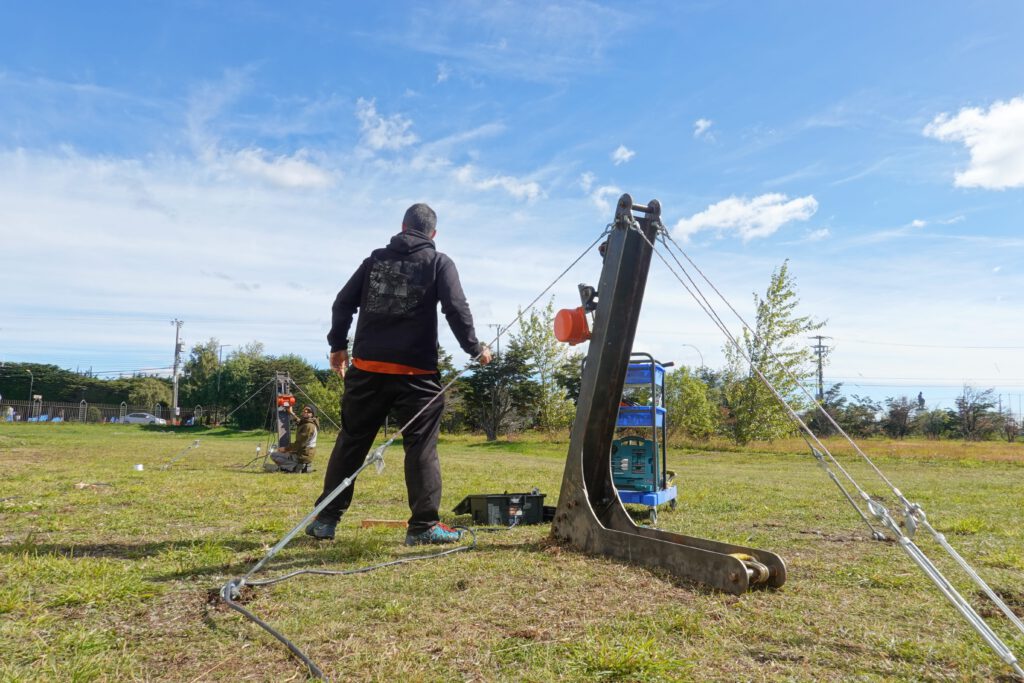
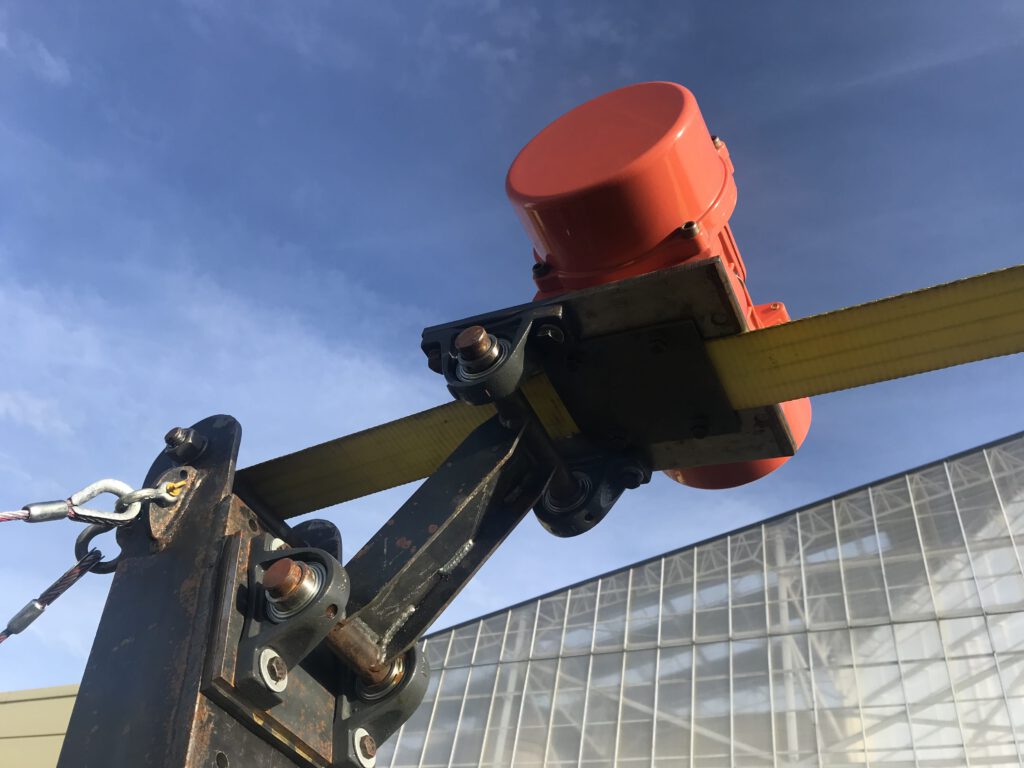
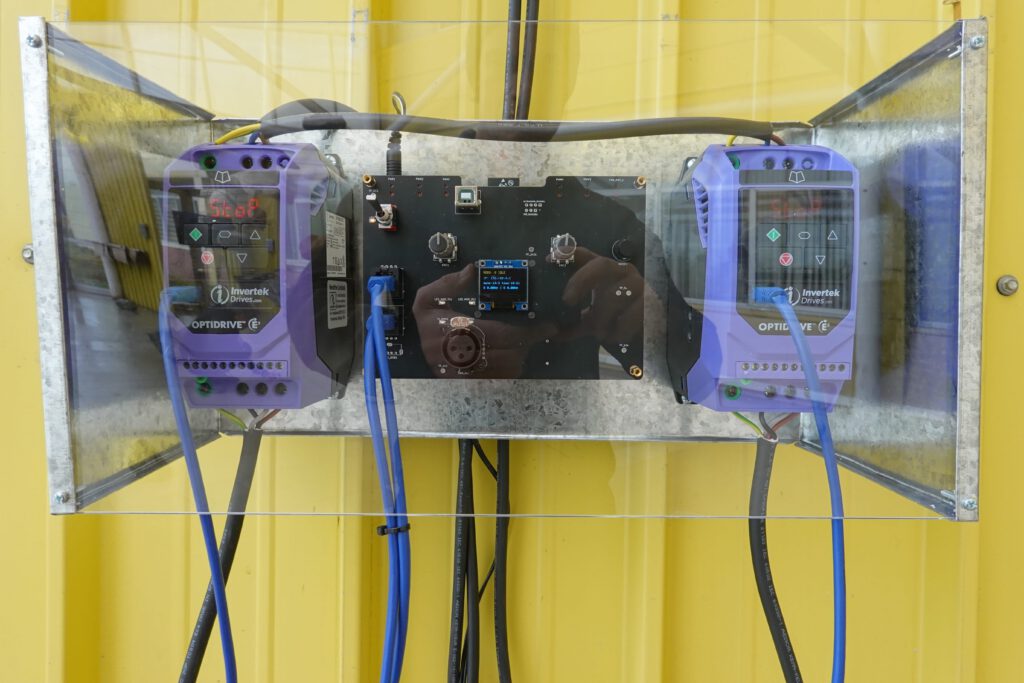
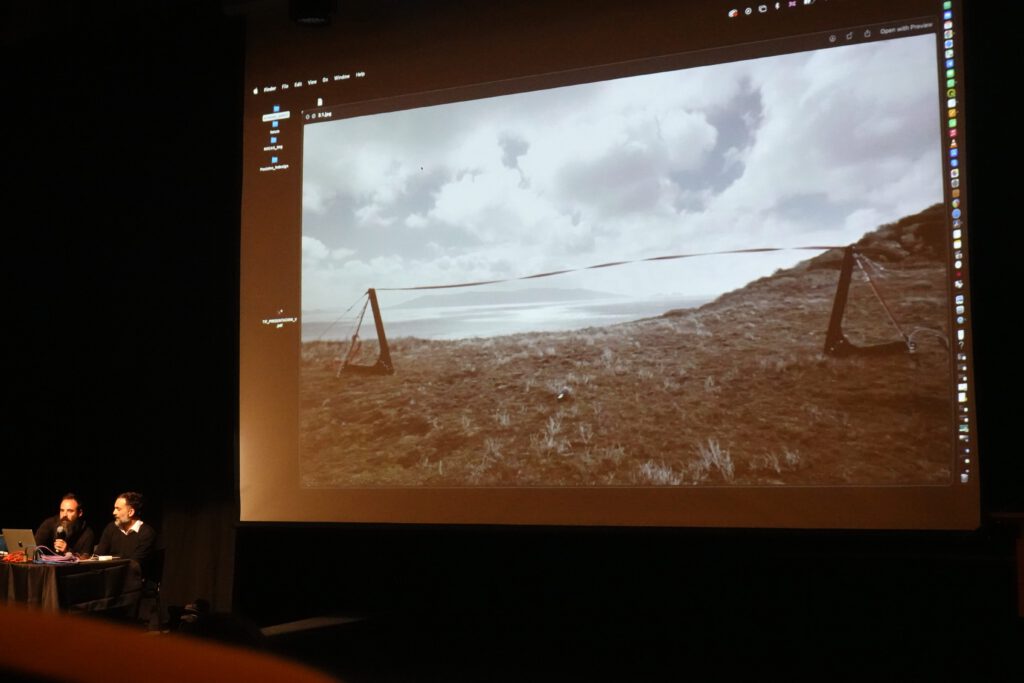
El Oscilador de viento is a tool that considers this natural force as a cultural object that gives indications of human activity in the place where it resonates.
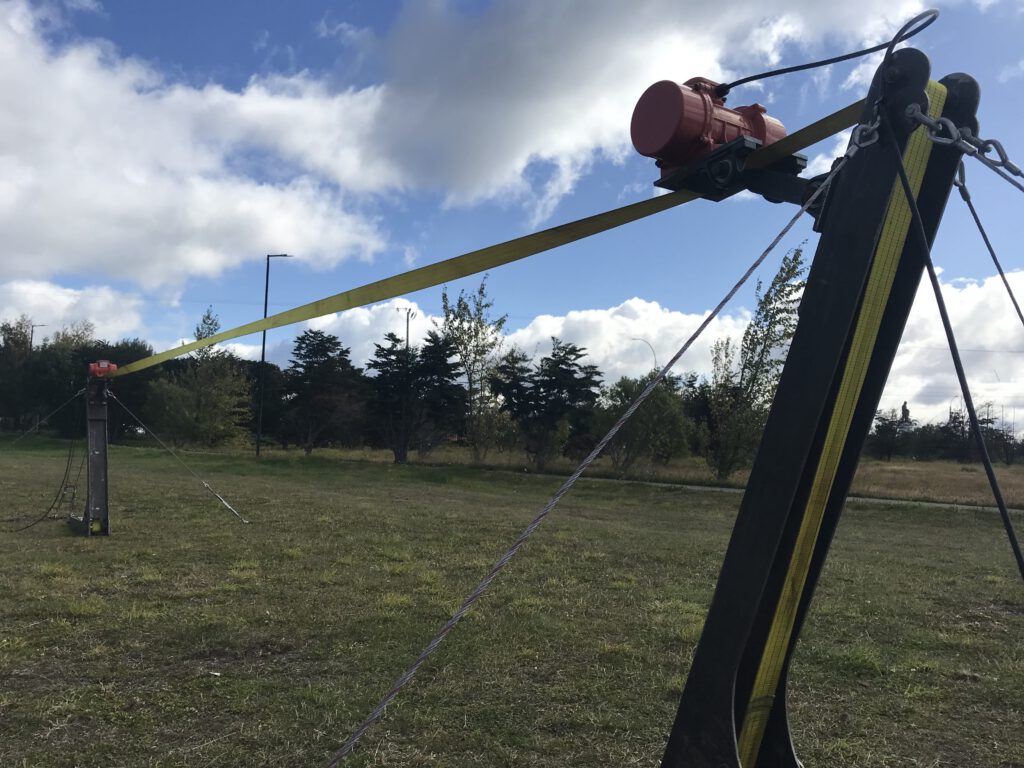
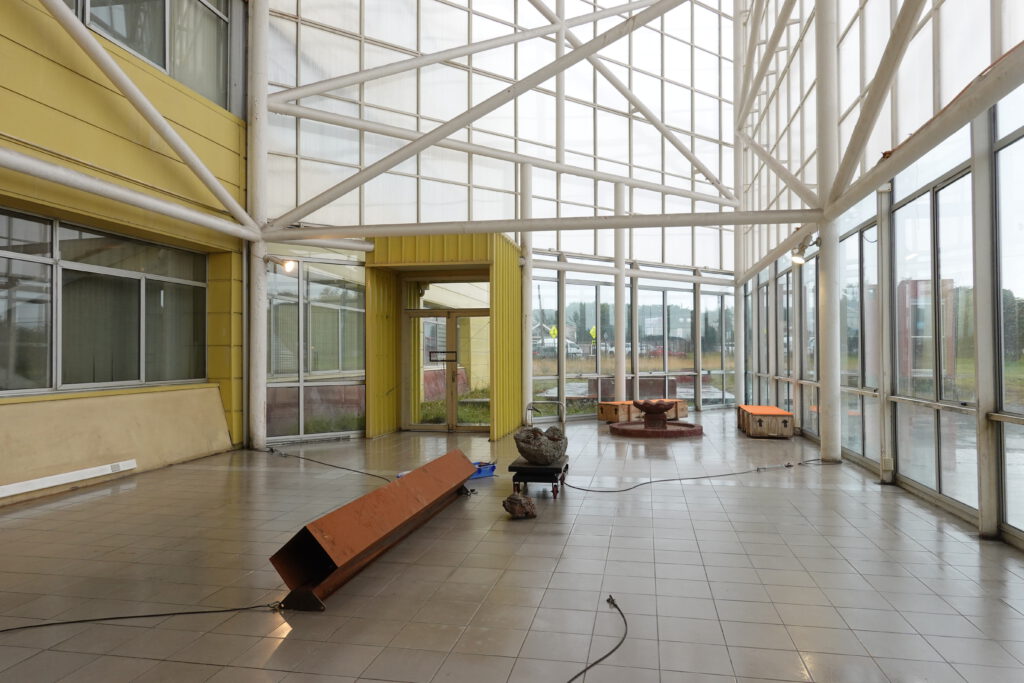
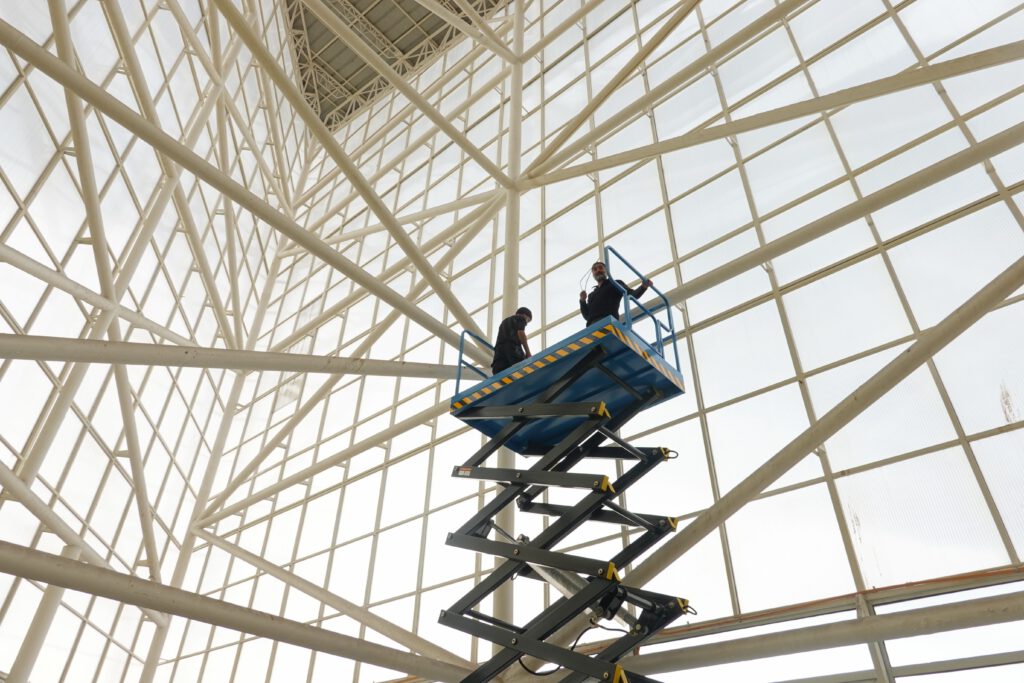
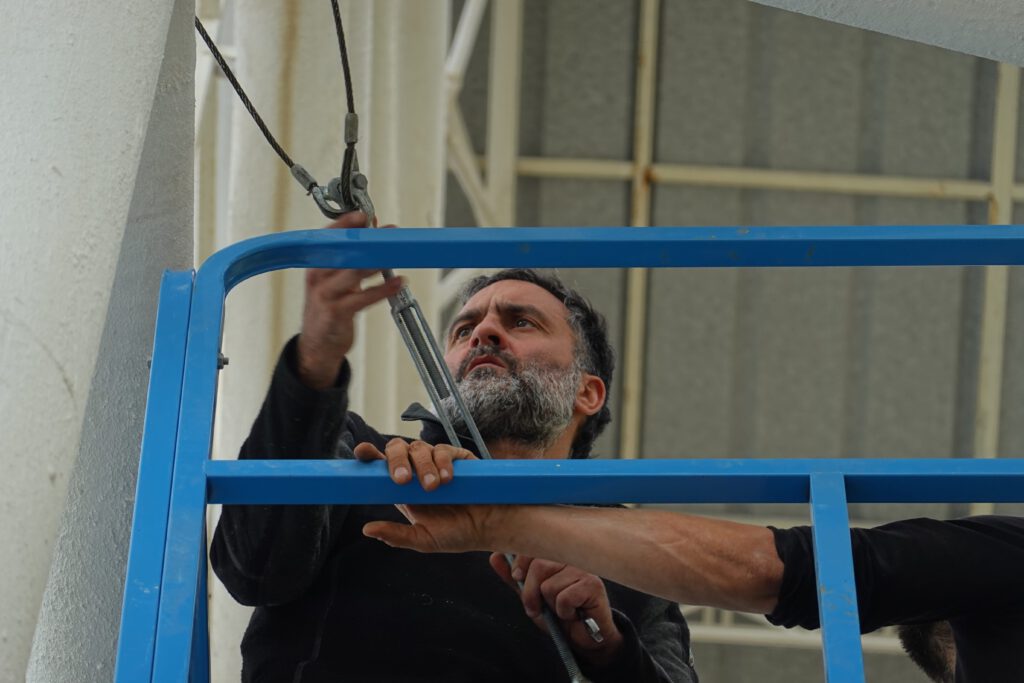
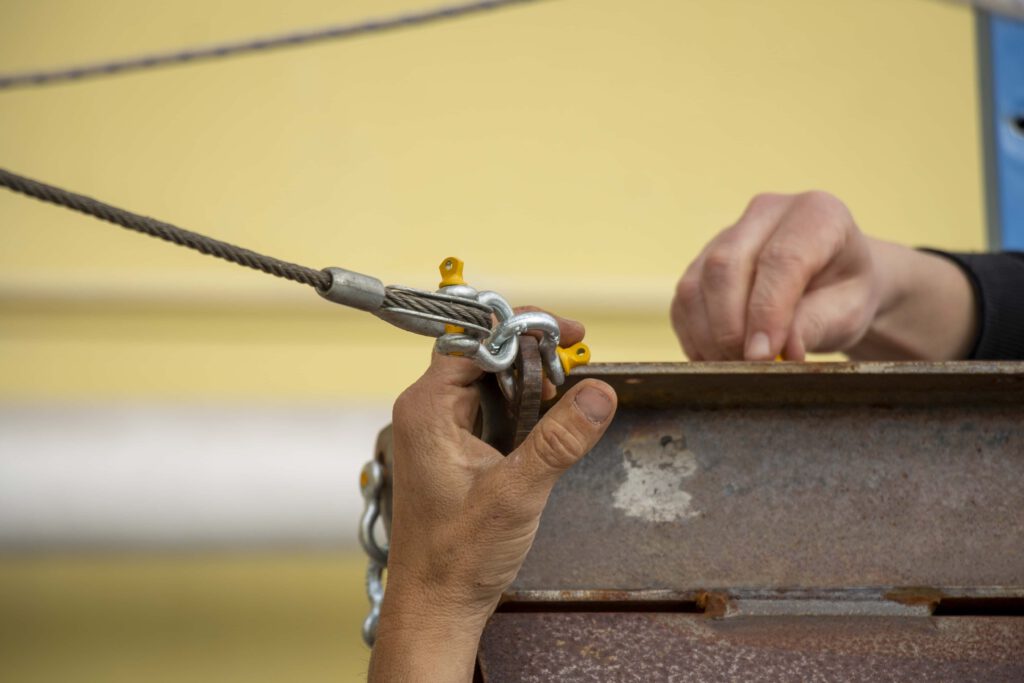
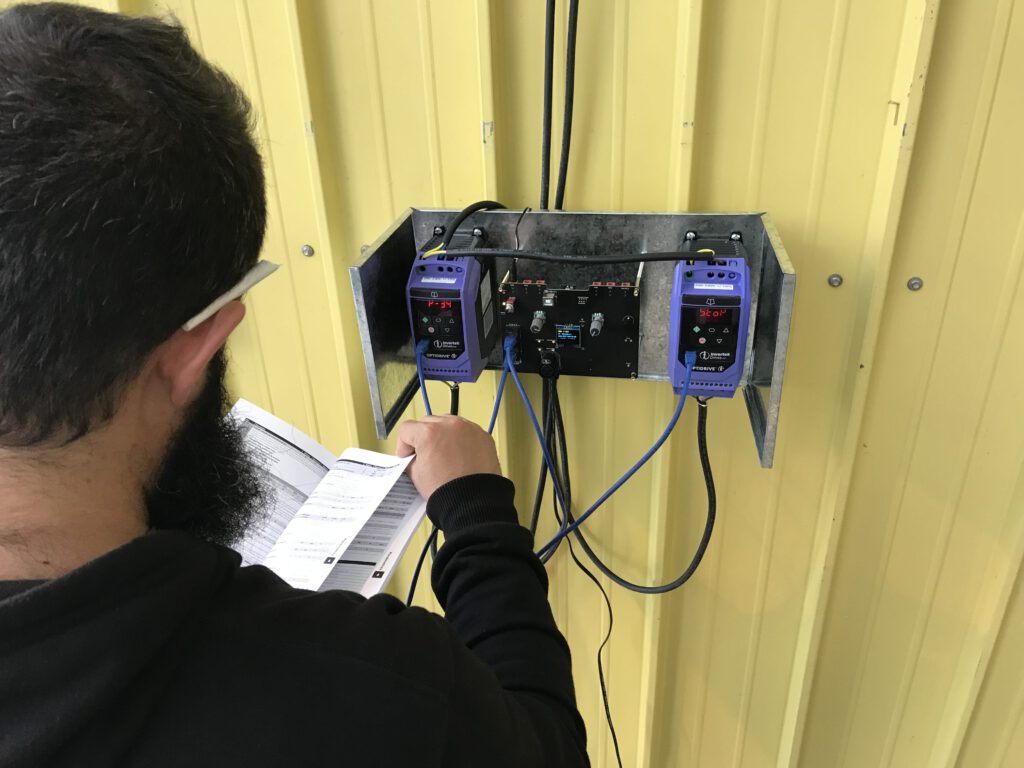
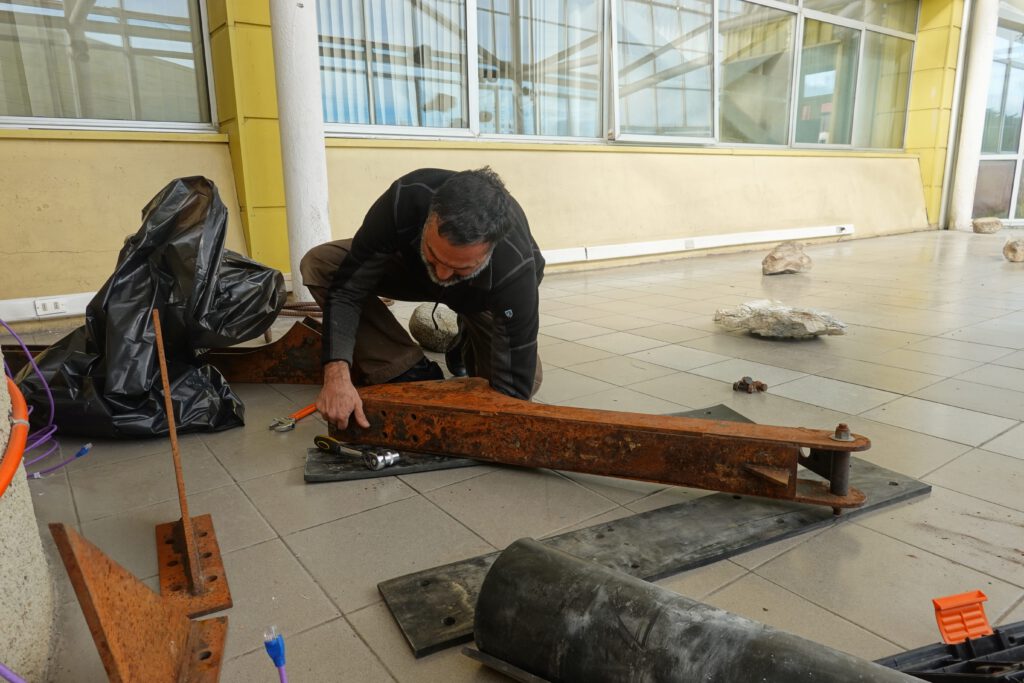
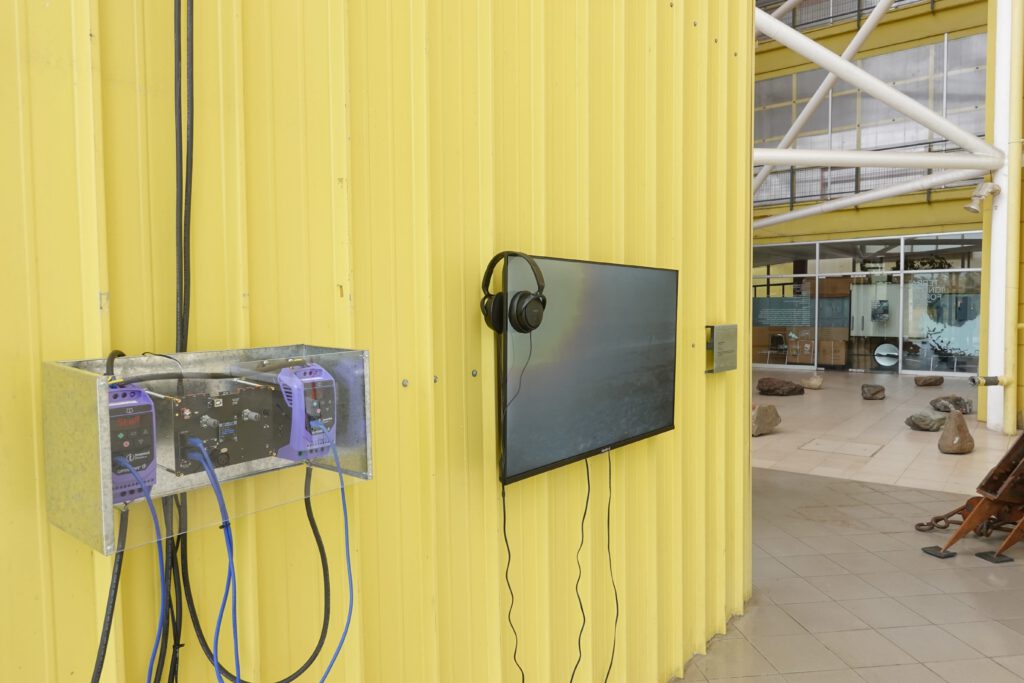
installation materials: Metallic steel arms 8”, Electro vibrator motor 300/3, centrifugal force of 321Kg, Electro vibrator motor 200/3 with centrifugal force of 187 Kg, printed circuit board 32-bit microprocessor Xtensa LX6 de doble núcleo, modbus RJ45, sling 3” 988 cm. year: 2022 – 2024
The Oscilador is a tool that generates resonances on architectural structures by means of technological devices.
The first interactions of these oscillators were mechanical devices exposed to hurricane gusts of fire-patagonian wind. In this installation the wind force is replaced by sinuous waves generated by electromechanical oscillations. While the wind version is stimulated by the local winds, this time it is the resonance frequencies, calculated and executed by a self-built digital control, which are transmitted from industrial motors to the architecture of the site.
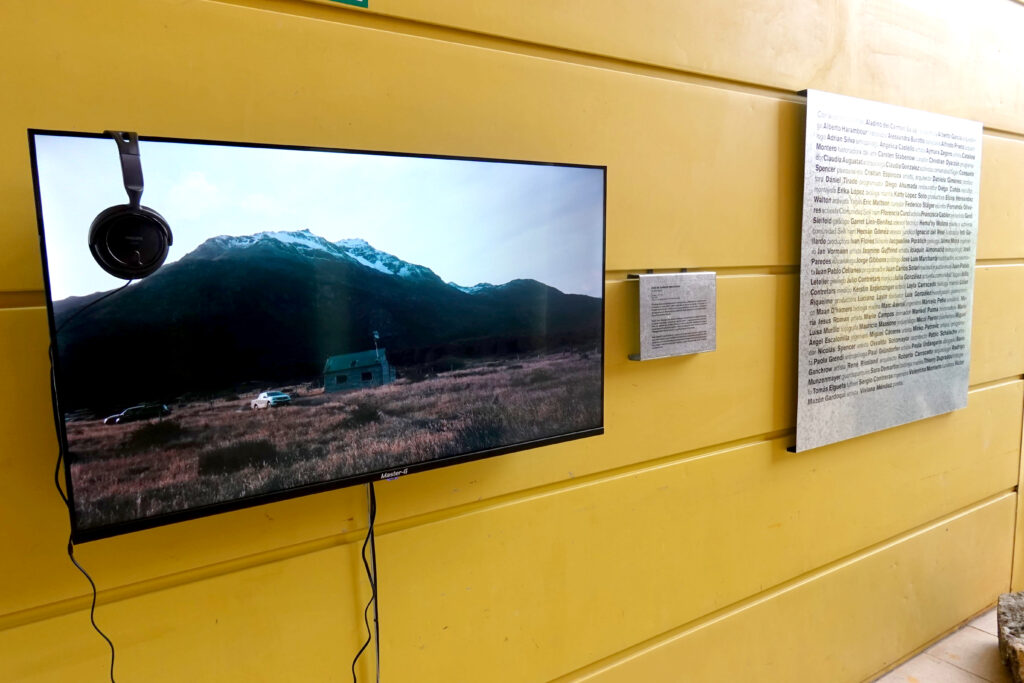
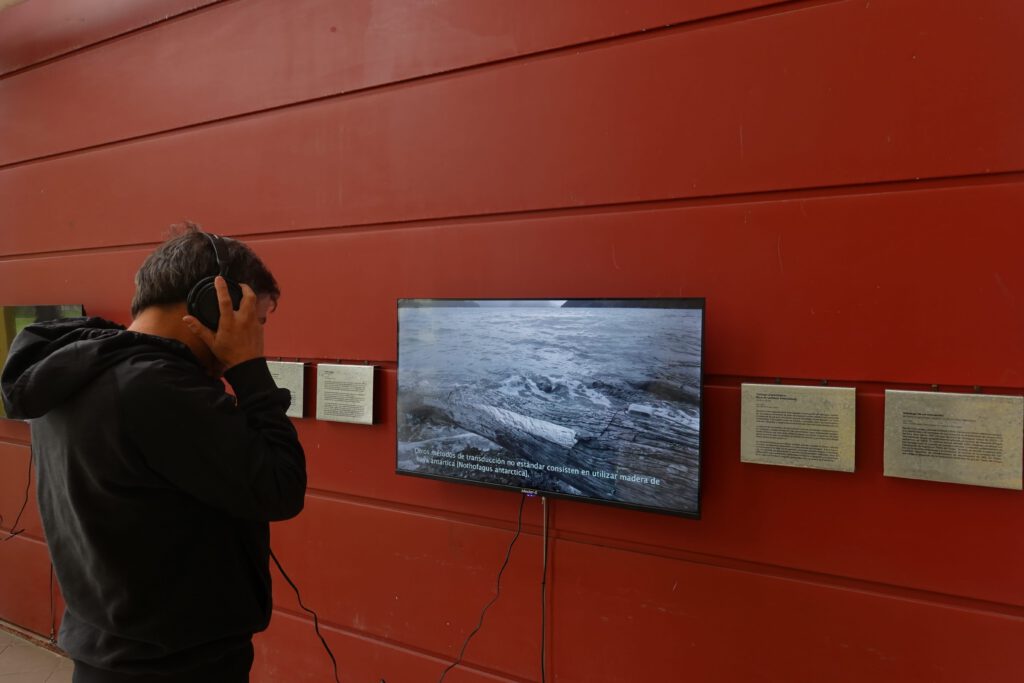
28 videos recorded in the region of Magallanes and Chilean Antarctica, from the Iceberg Iceberg Fjord (northern limit of the region) to the Yelcho Antarctic Base. The videos give the viewer a subjective view of the region.
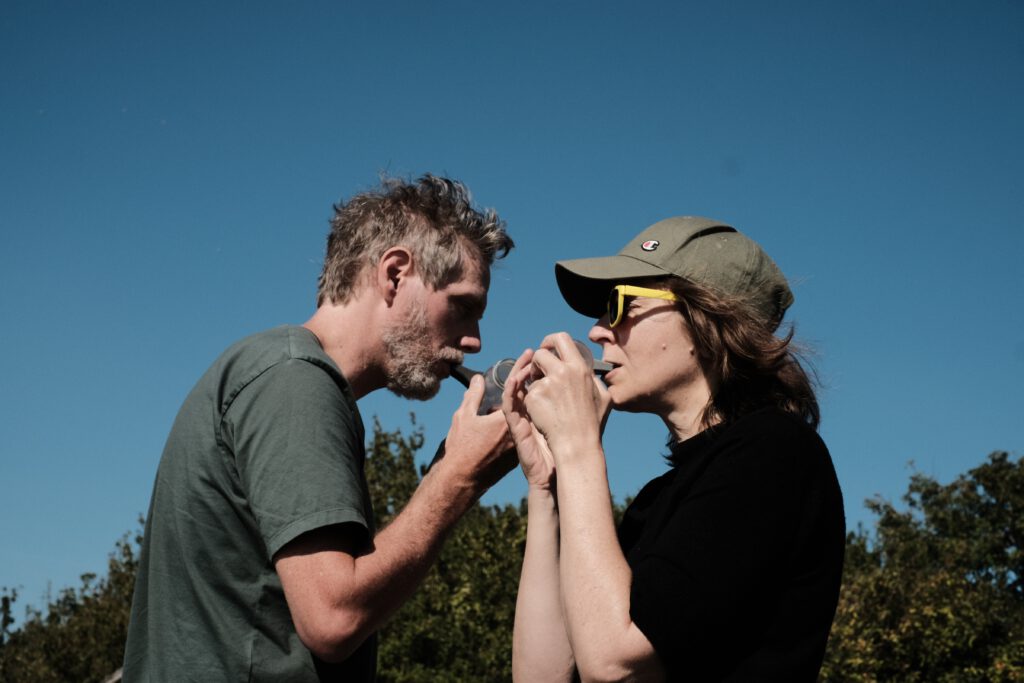
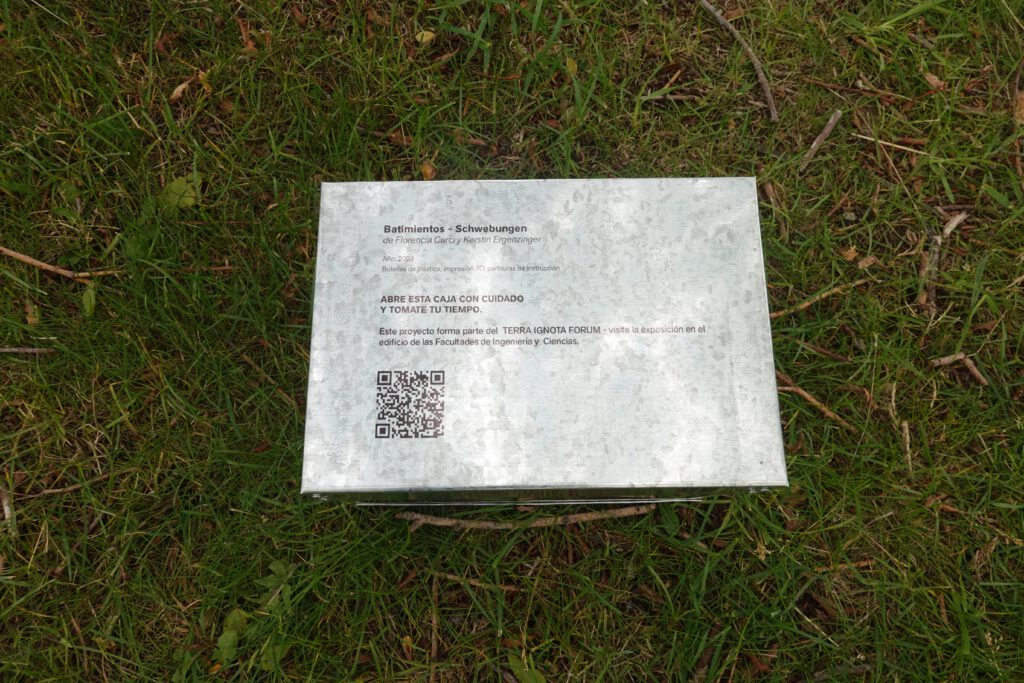
Año: 2023 plastic bottles, 3d printed mouthpieces, scores
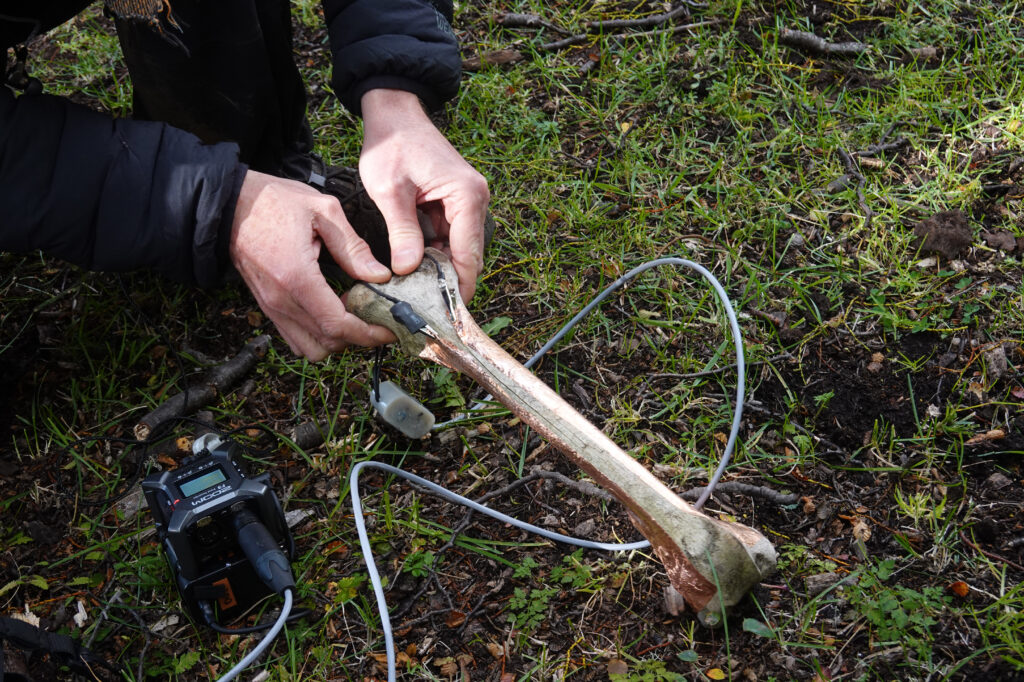
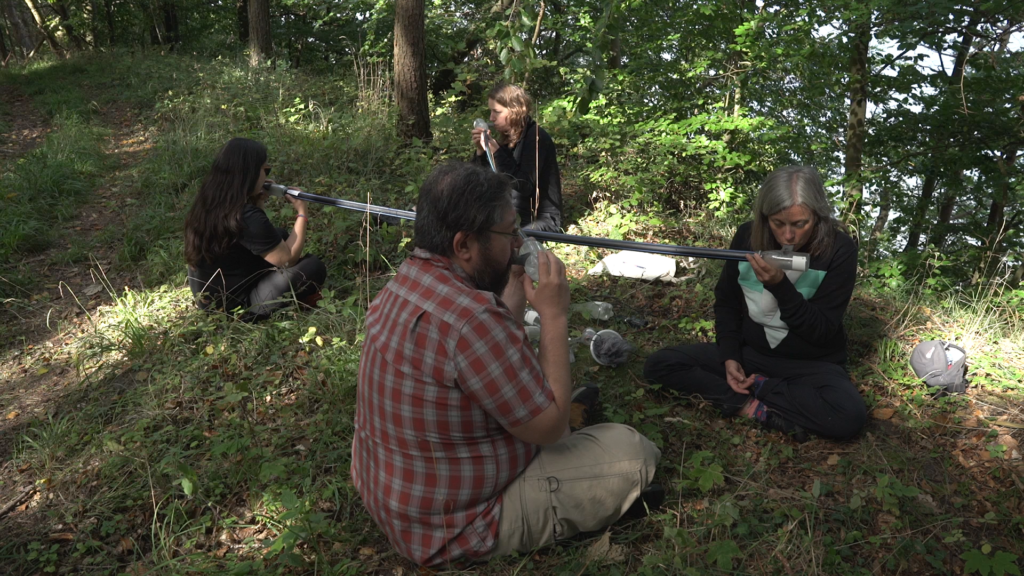
The Lapataia valley’s resonance space is an external void. Its prevailing elements are water and wind. Imagine bodies and voices in the winds. Imagine joining with your breaths, sounding tones without semantics.
Take a fragmentary wind instrument – a mouthpiece for PET bottles printed in Berlin, PET bottles from the flight to the southern hemisphere – the ubiquitous resonance chambers of our times.
Imagine to start separated in two groups from different entry points into the valley. Aim to meet at the Lapataia River and continue together to Bahia Blanca. When and how will you actually manage to meet?
The valley is part of the so-called “intercultural contact zone” (Selk’nam, Kawesqar and Yagán) located in Yendegaia National Park (YNP). What is a contact zone? A zone where prior separated entities have a possibility to meet. The valley is a walkable cut in the ice covered mountain ranges. A passage between different communities in the past. A meeting, a hike along the old suggested passage to activate its cultural presence. A collective practice of an interdisciplinary and intercultural contemporary group upwards the Lapataia river.
What would one essence or principle of contact be? Batimientos – Schwebungen – Sounding tones without semantics. When two close-by frequencies physically meet, they start to beat and a prior non existing third entity emerges.
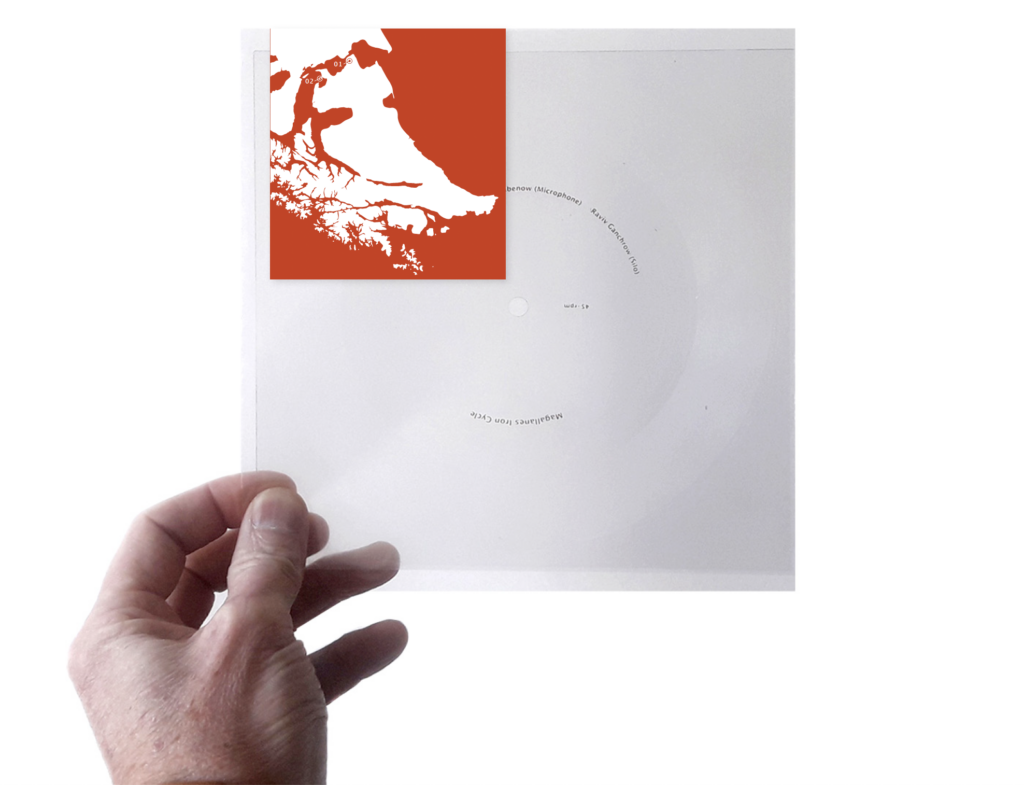
Magallanes Iron Cycle + Nordstream Resynthesis
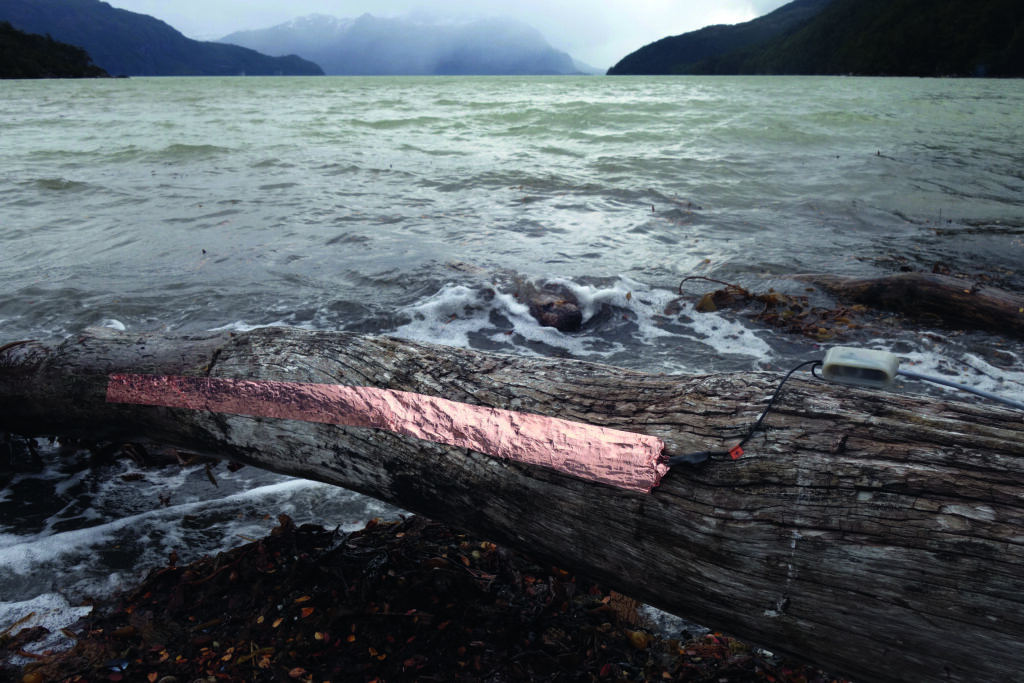
Traces of human cultural activities, conducted and carried by material and media, resonating through useless hollow infrastructures of oil extraction on a global scale.
flexi record duration: 5:29 min. year: 2021 audio on vinyl, stereo
and video duration: 1:39 min. year: 2022 single channel video, HD, stereo
Recording of a swing-gate on lighthouse access road, route 257, played back in an abandoned petroleum tank, Puerto Percy, during the onset of a windstorm.
duration: 5:51 min. year: 2023 single channel video HD, stereo
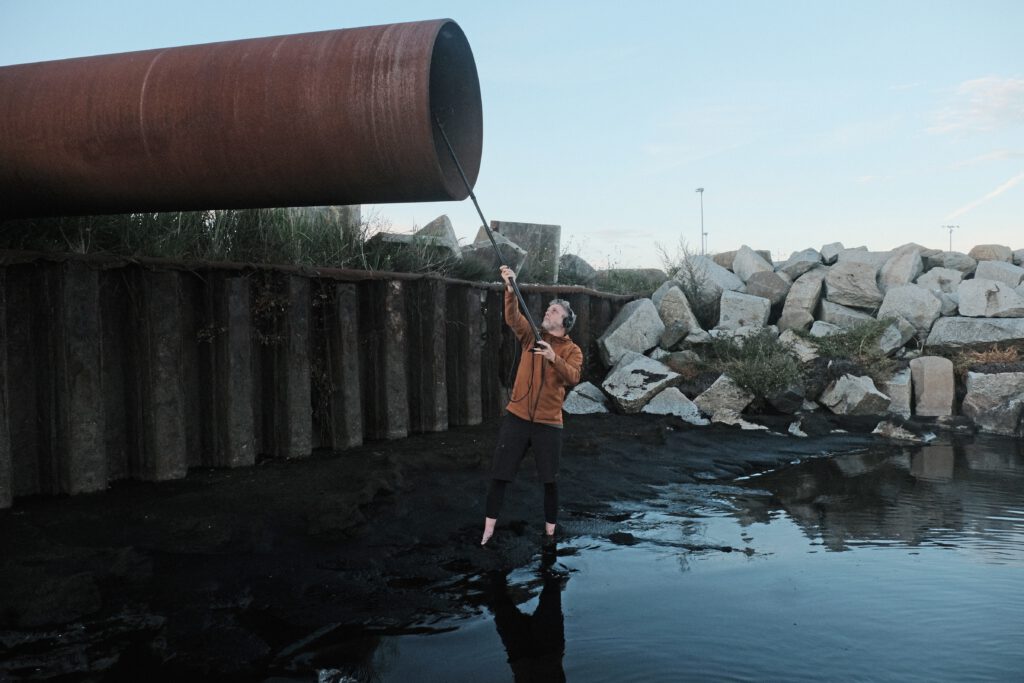
Playback / recording of seismogram resynthesis from Nord Stream pipeline explosion, September 26, 2022, through a 21.5 meter-long section of the Nord Stream pipeline at the port of Sassnitz-Mukran.
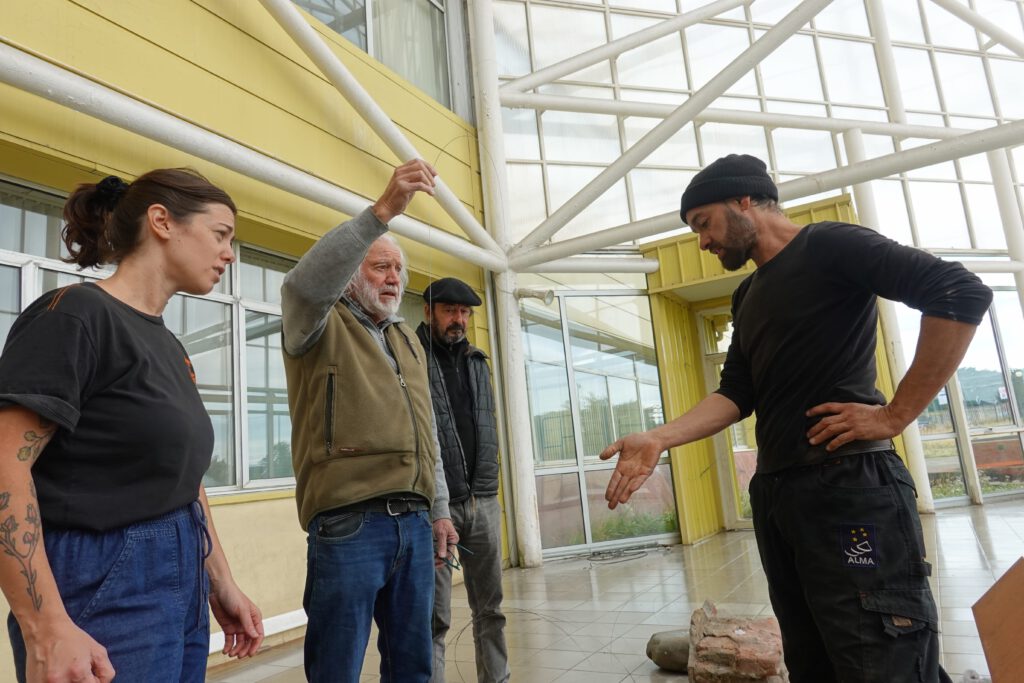
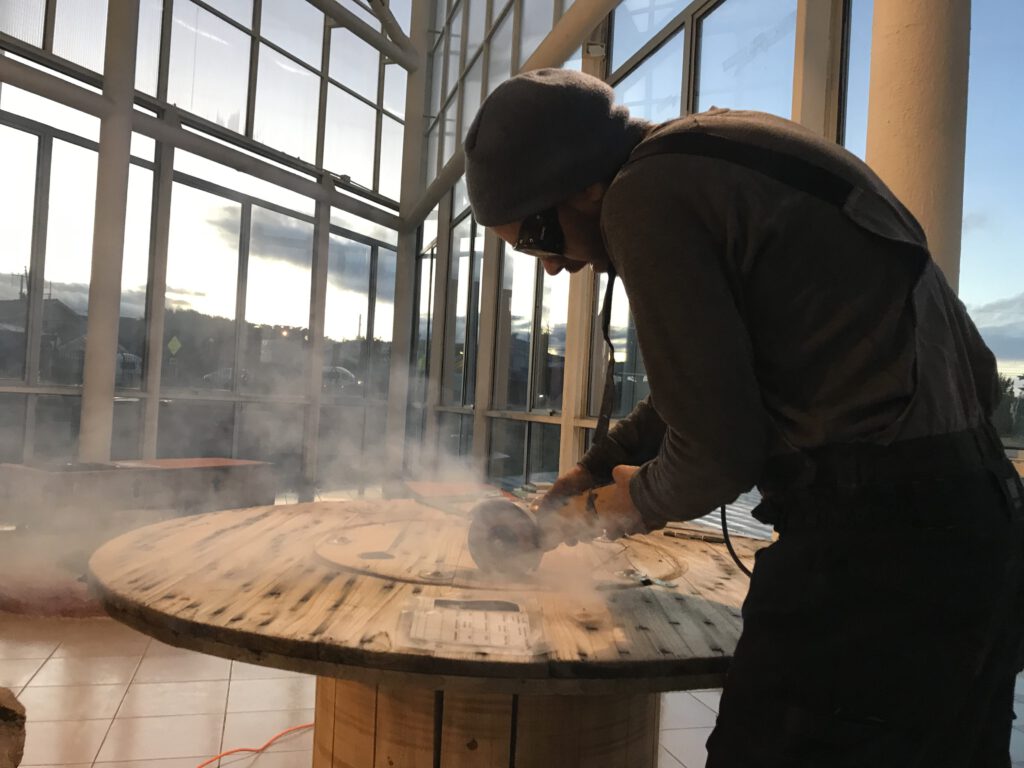
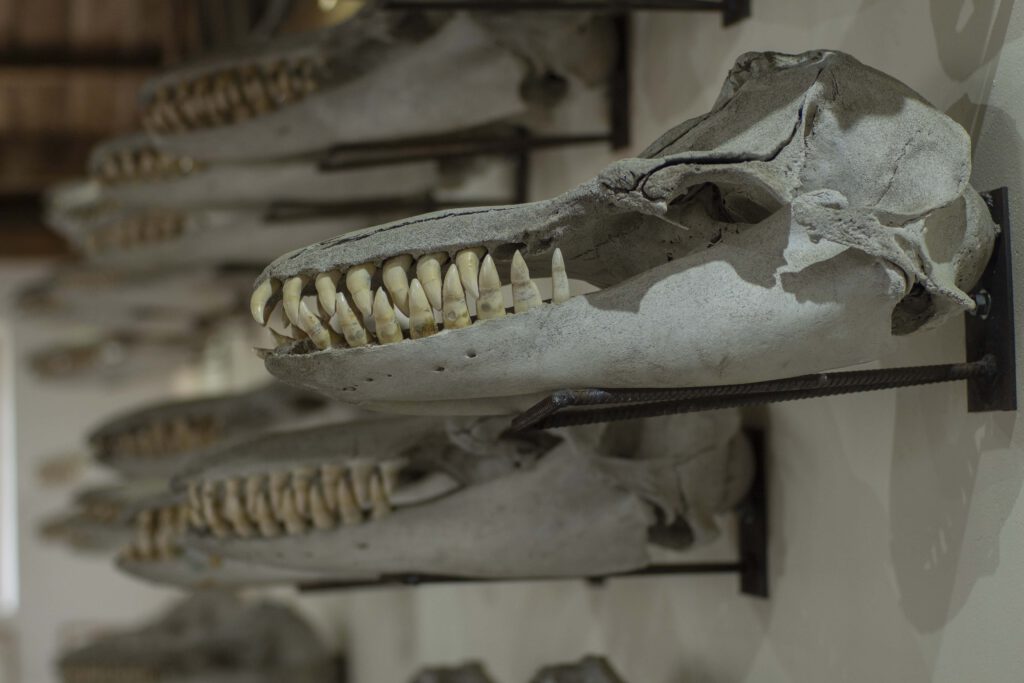
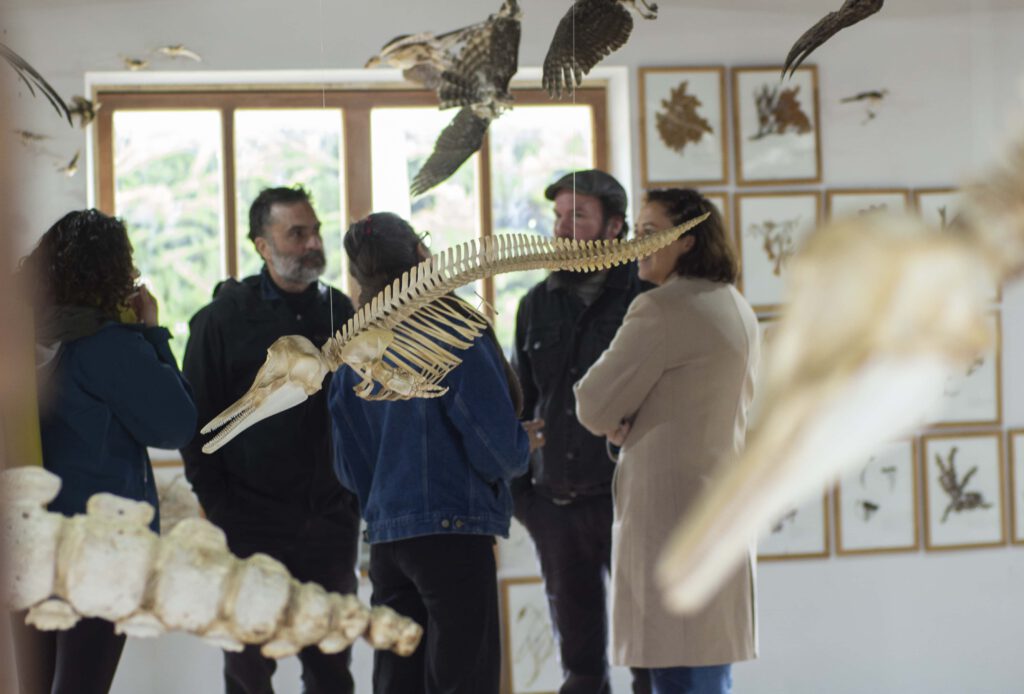
Below a few impressions from the exhibition and set up.
Ideas and strategies to address a challenging question of heritage and environmental responsibility will be discussed. Terra Ignota Forum proposes to conceive spaces as dynamic and adaptable fields with the power to regenerate and reprogram themselves in relation to those who inhabit them, emphasising the importance of exchange and participation in the creation and shaping of reality.
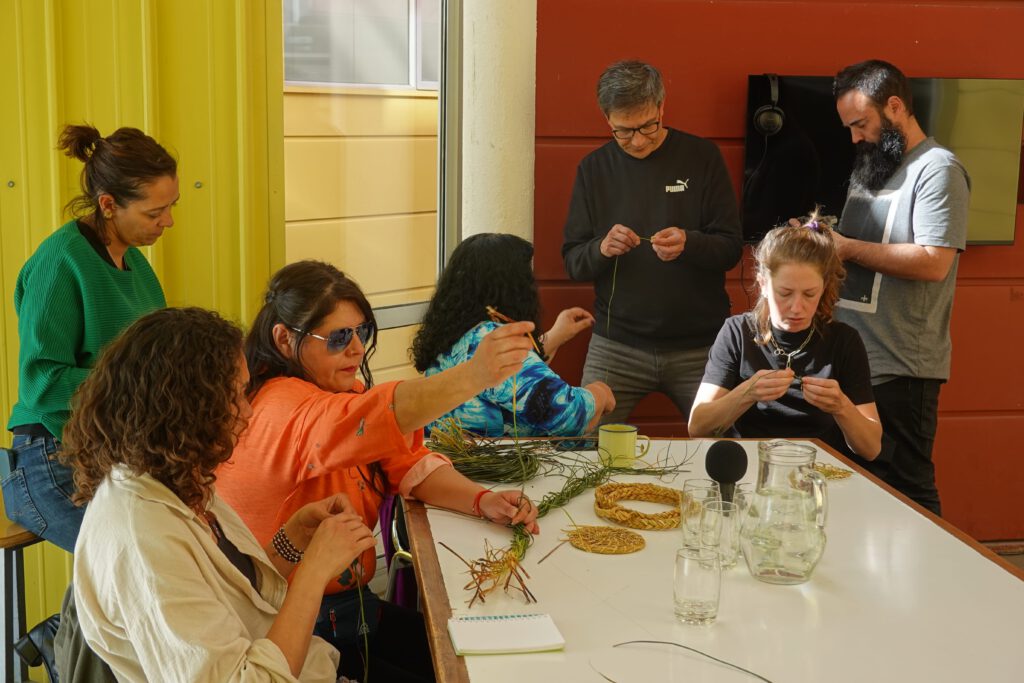
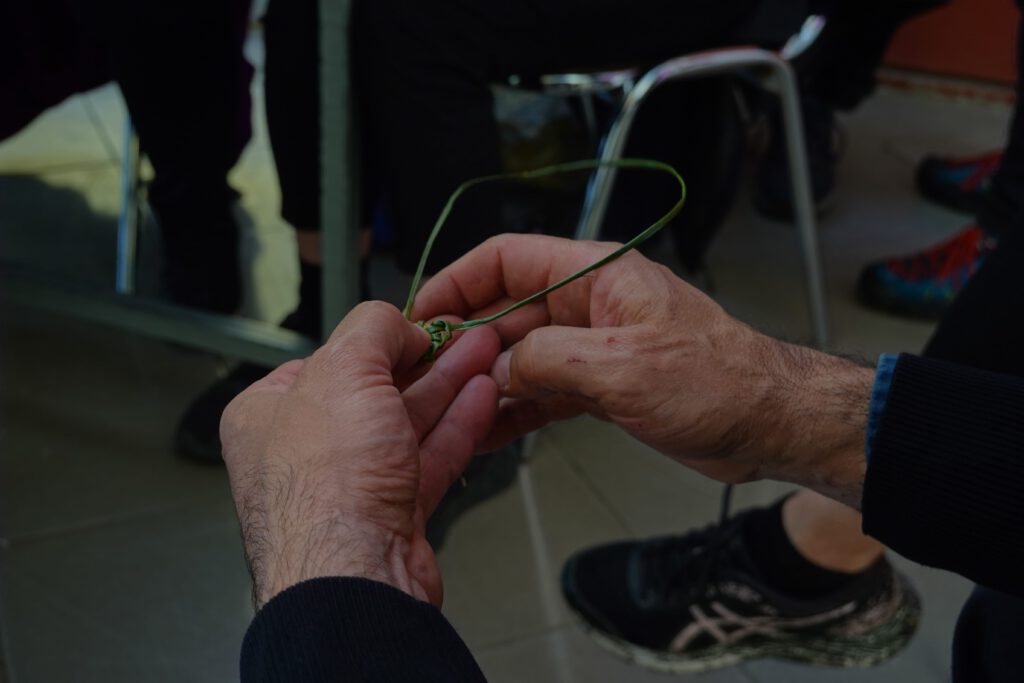
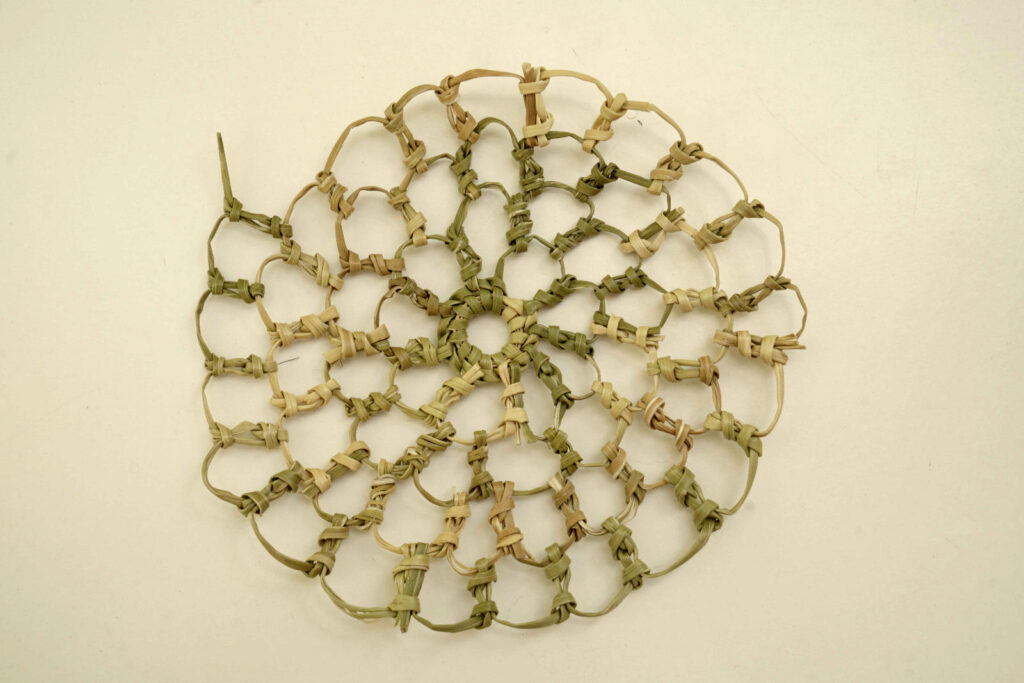
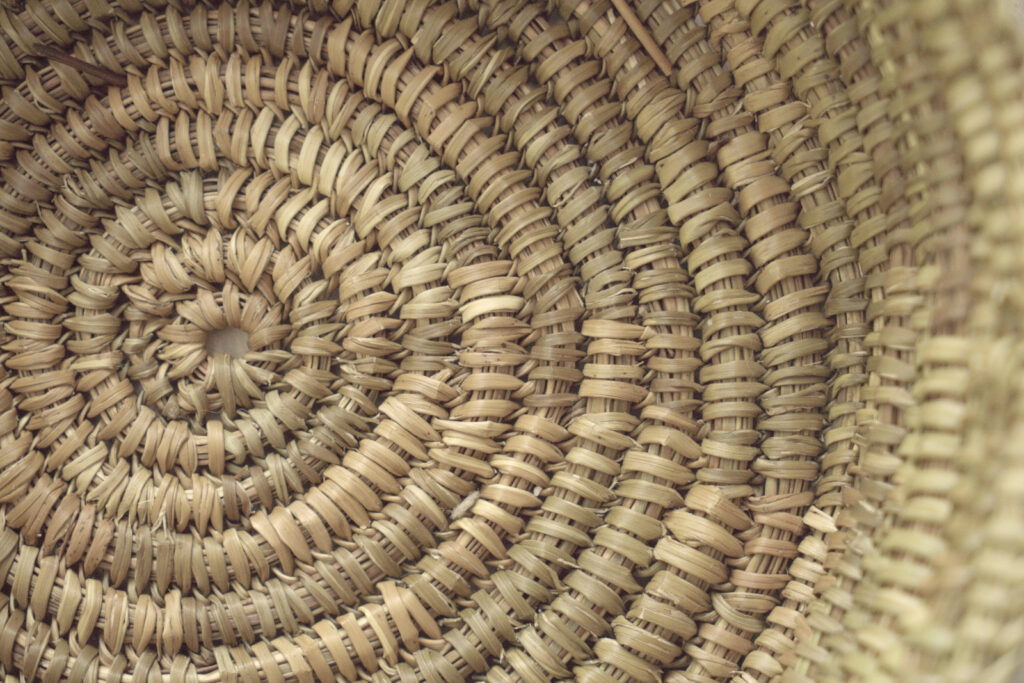
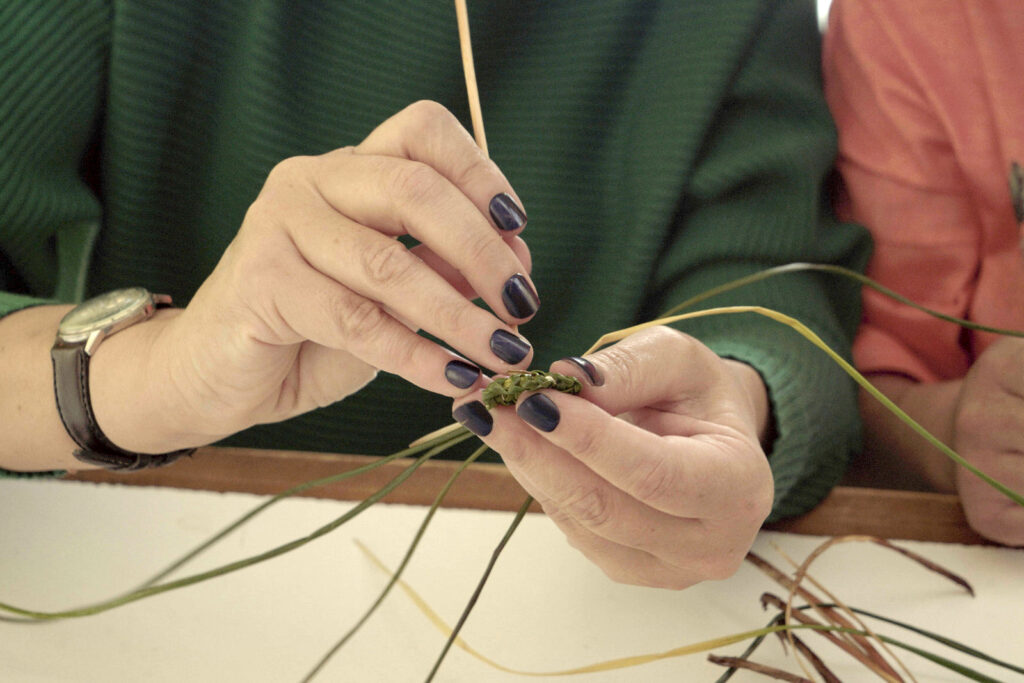
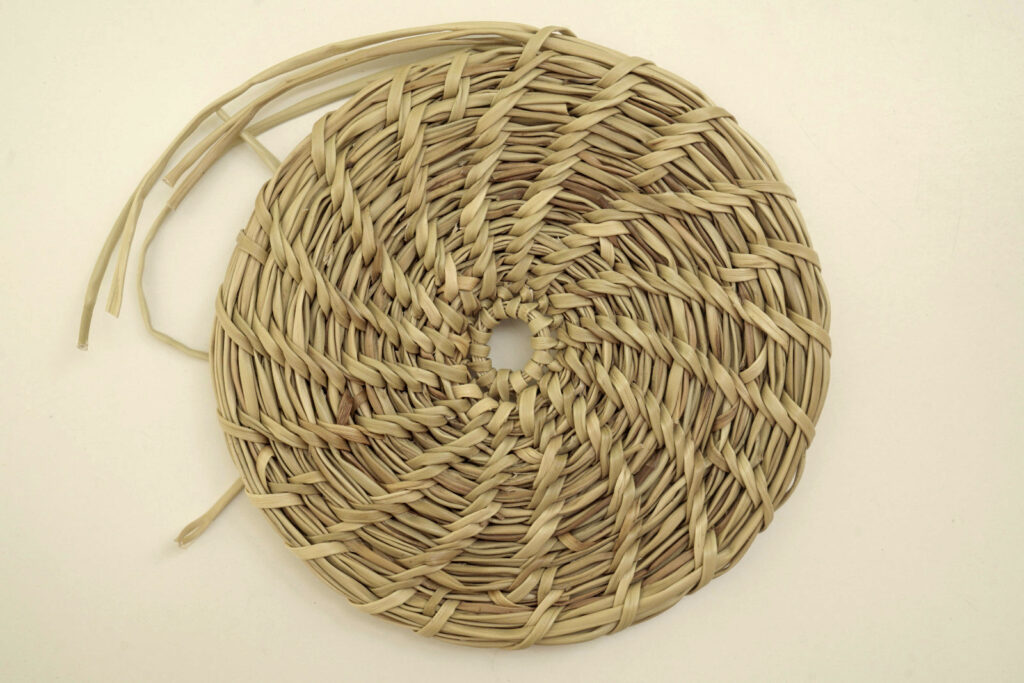
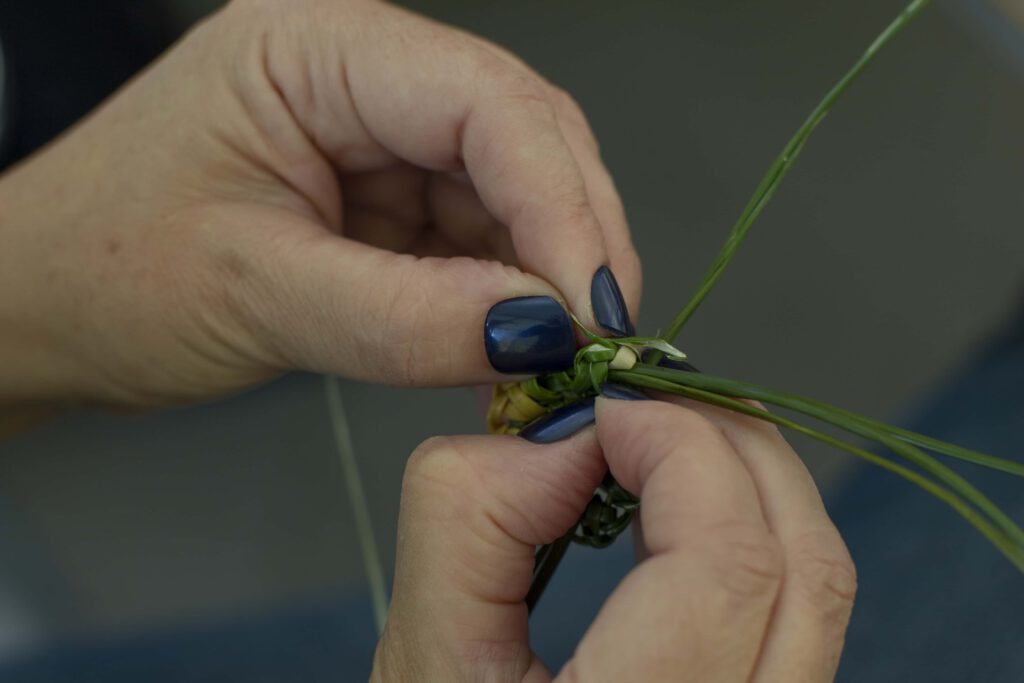
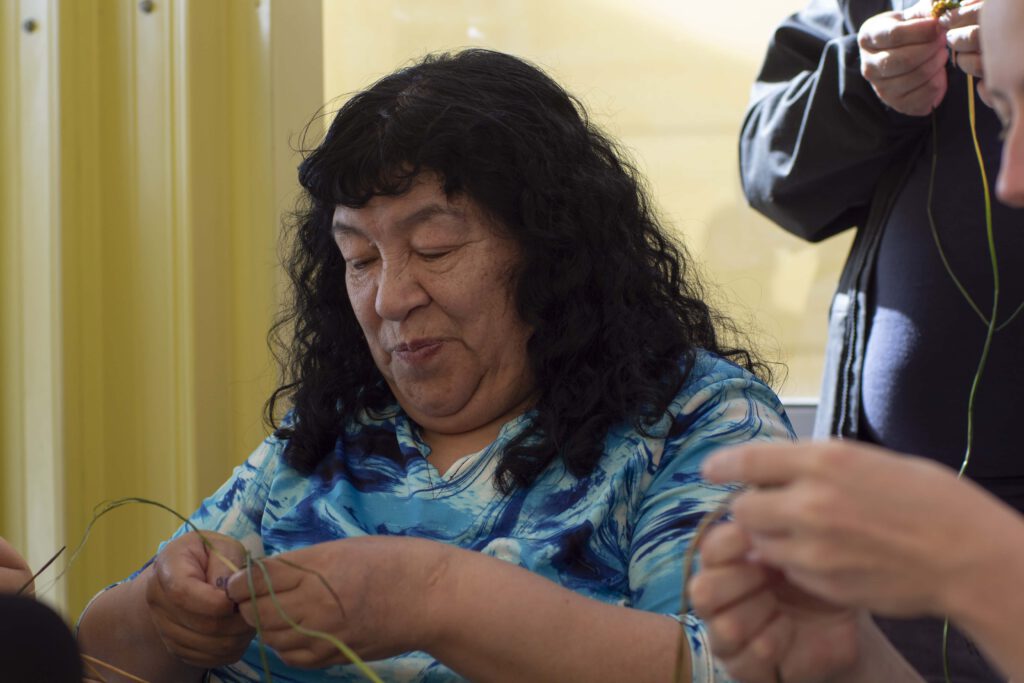
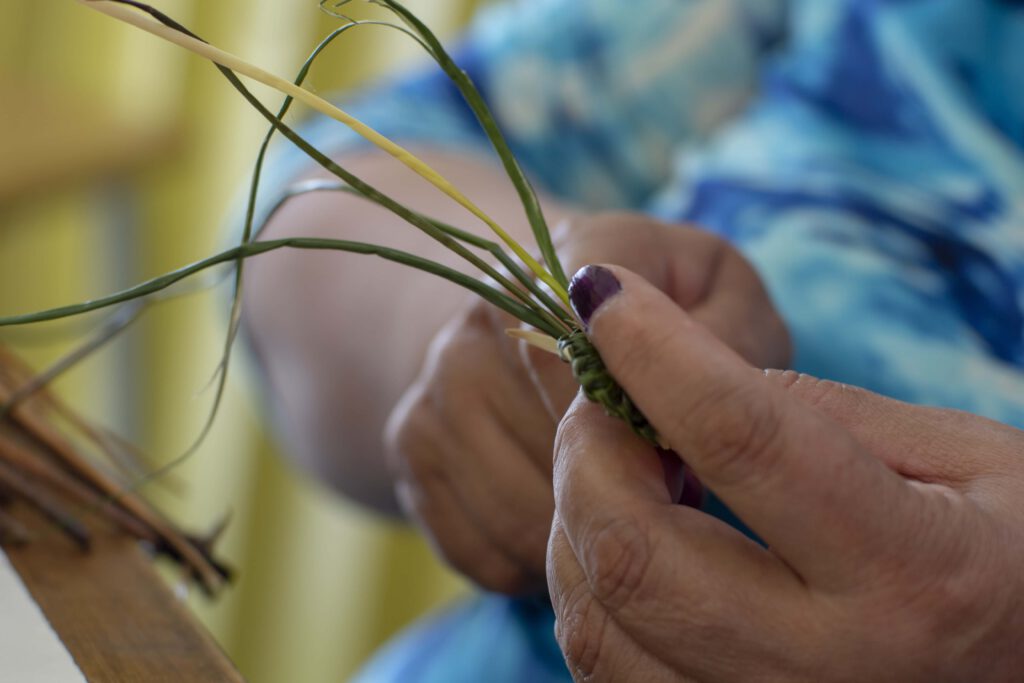
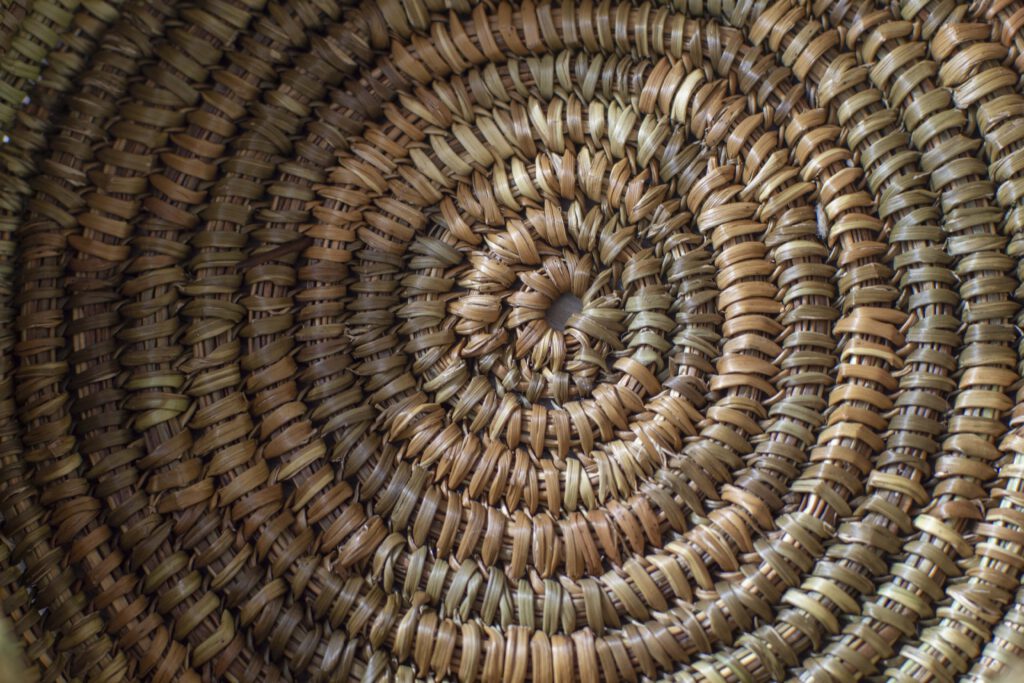
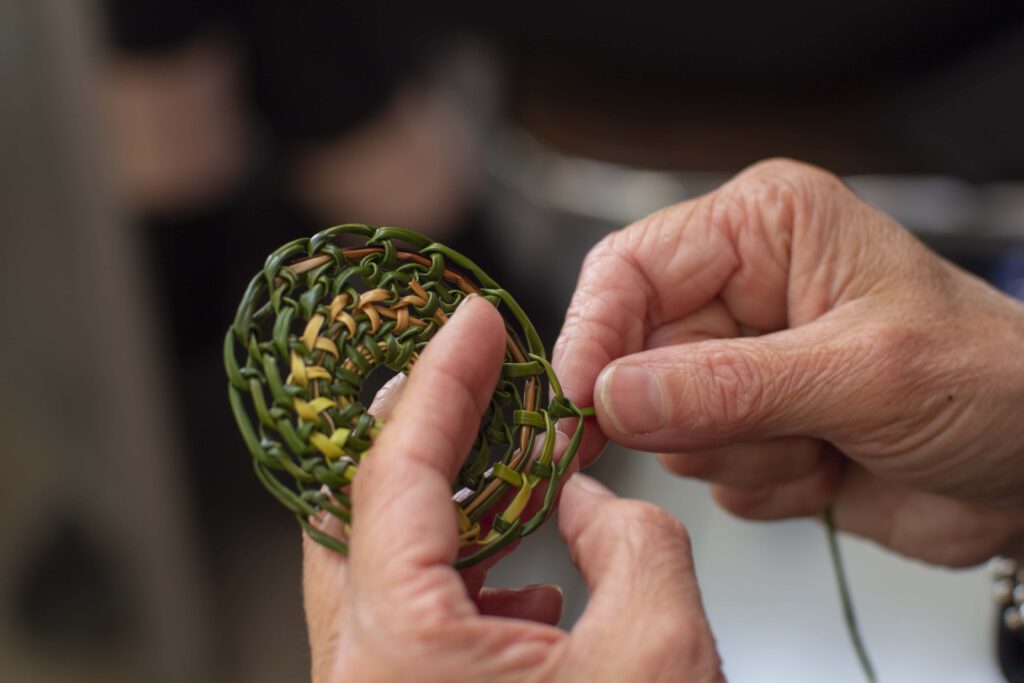
3 p.m. – Tejidos orgánicos Basket weaving with natural fibres and conversation – Elcira Hernández Walton, Claudia González (artists of the Yagán people) and Paula Urdangarín (Lawyer). Location: Terra Ignota Forum Exhibition Hall. Faculties of Engineering and Science. UMAG. Av. Manuel Bulnes 01855, Punta Arenas.
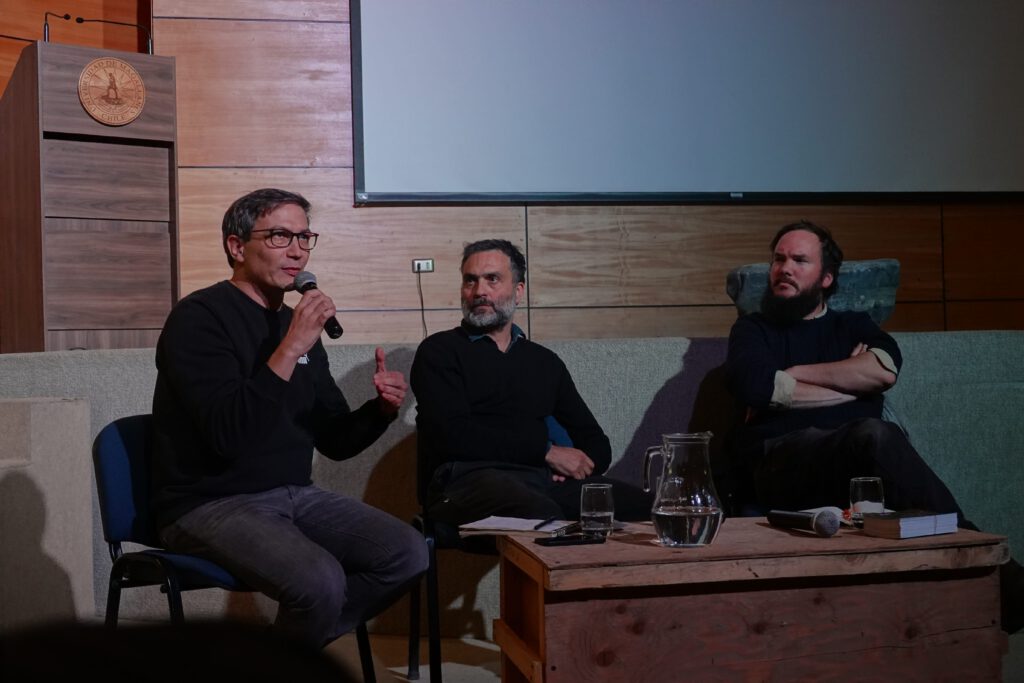
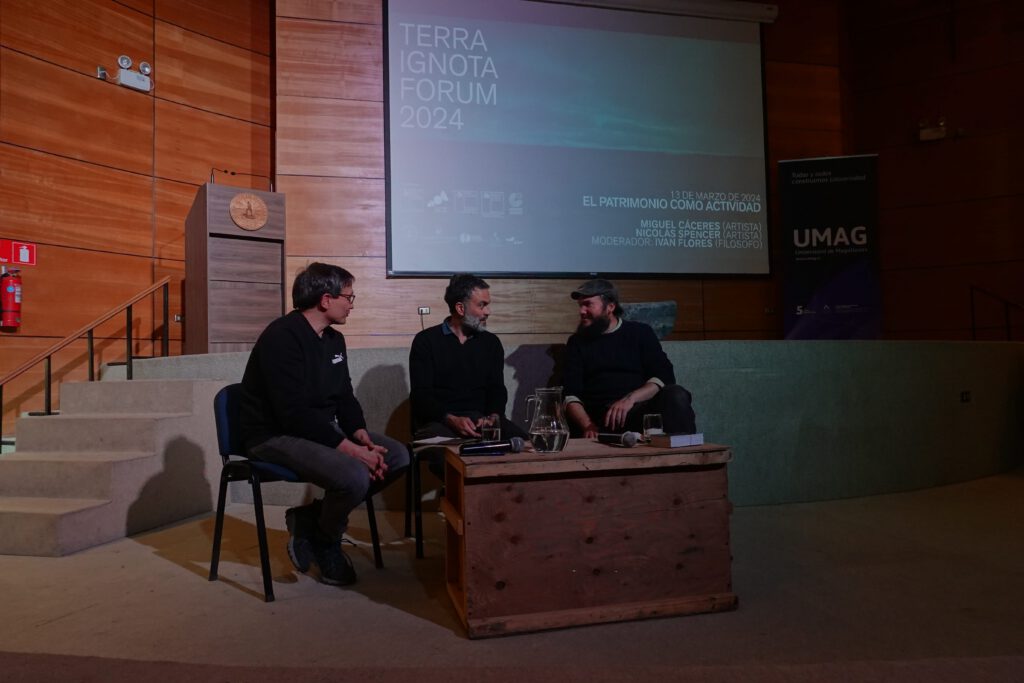
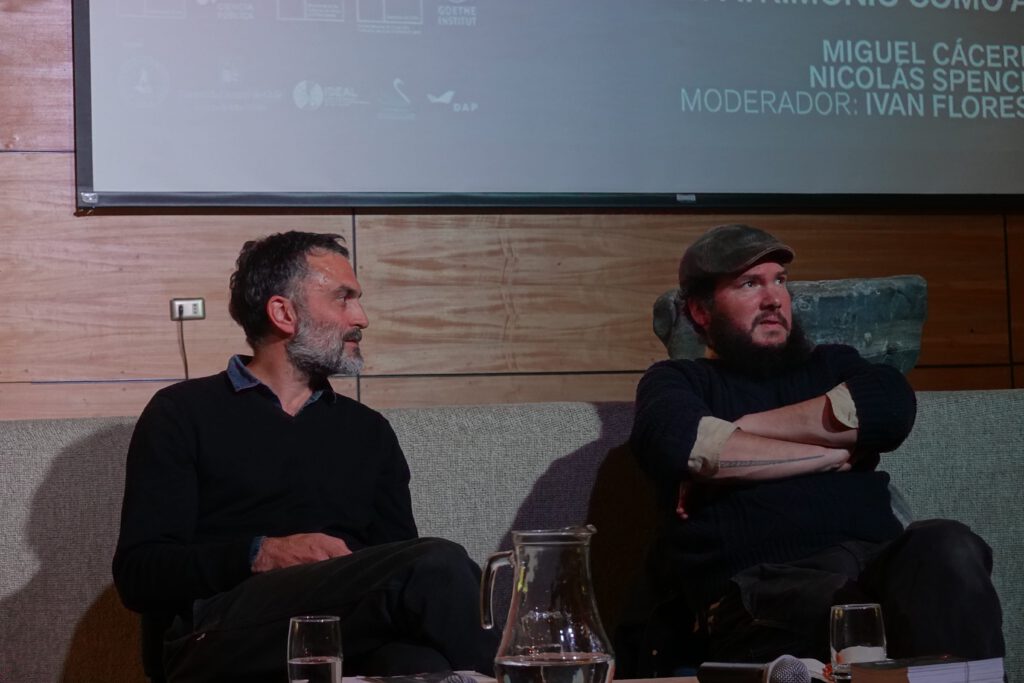
6 p.m. – Conversation: Heritage as an activity. Miguel Cáceres (artist), María Luisa Murillo (photographer), Nicolás Spencer (artist). Moderator: Ivan Flores (Philosopher, Director of the Institute of Visual Arts of the UACh), Location: Ernesto Livacic Auditorium. UMAG. Av. Manuel Bulnes 01855, Punta Arenas.
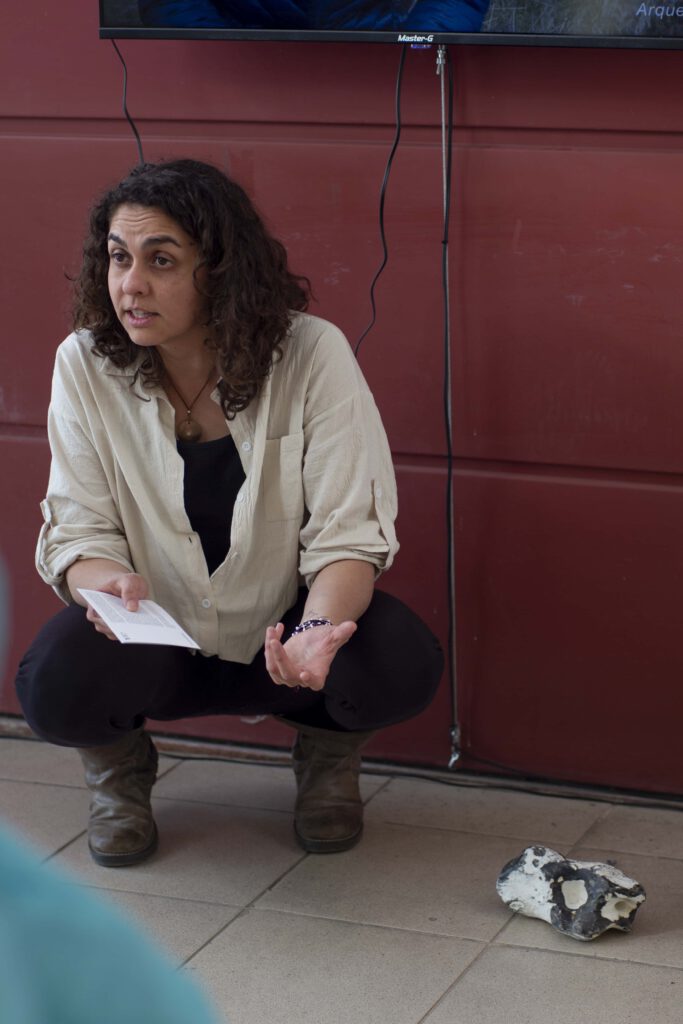
7 p.m. – Opening of the exhibition In addition to the opening of the exhibition, there will be a performative activation of the Rocas installation. Location: Terra Ignota Forum Exhibition Hall. Faculties of Engineering and Science. UMAG. Av. Manuel Bulnes 01855, Punta Arenas.
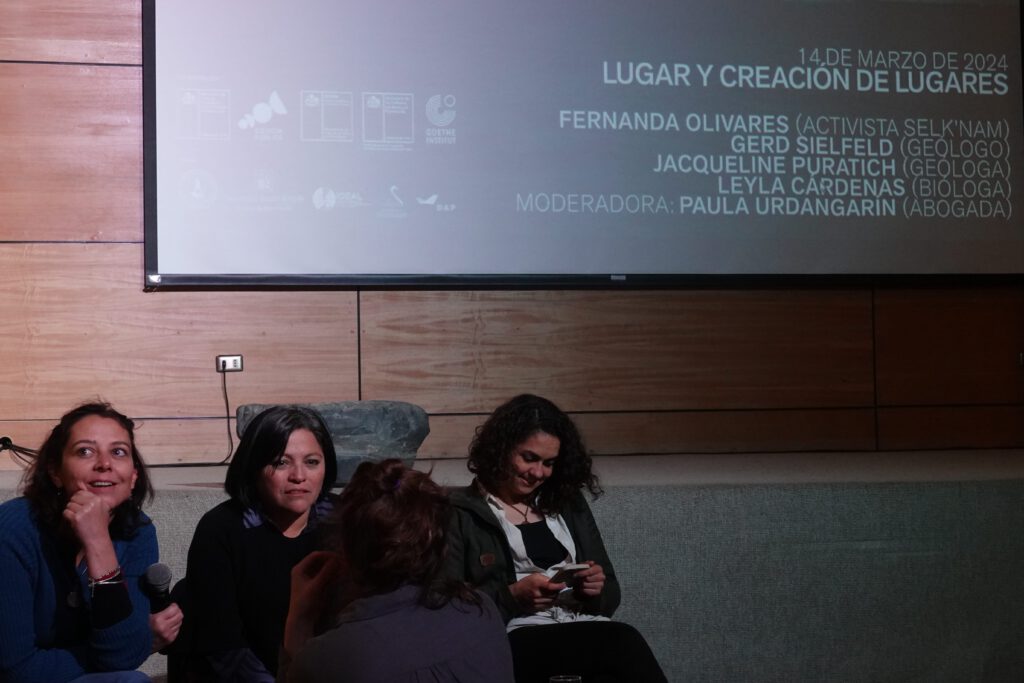
14.3.24
Connection: Place and Place-Making
From geophysical and biological materiality to the history of human settlement, the entanglements of natural and cultural heritage will be addressed in the context of the Intercultural Contact Zone.
11 a.m. – Assemblage and fiction. Participatory visit around possible new heritages by Miguel Cáceres and Aymara Zegers. Location: Río Seco Natural History Museum. Juan Williams 012812, Punta Arenas.
3 p.m. – From anthropic to geogenic listening Listening mediation – by Víctor Mazón Gardoqui (artist) and Florencia Curci (artist). Venue: Terra Ignota Forum Exhibition Hall. Faculties of Engineering and Science. UMAG. Av. Manuel Bulnes 01855, Punta Arenas.
4:30 p.m. – Rocks/Oracles A workshop linking terrestrial processes with the depths and variations of human perception, by Jacqueline Puratich (Geologist). Location: Terra Ignota Forum Exhibition Hall. Faculties of Engineering and Science. UMAG. Av. Manuel Bulnes 01855, Punta Arenas.
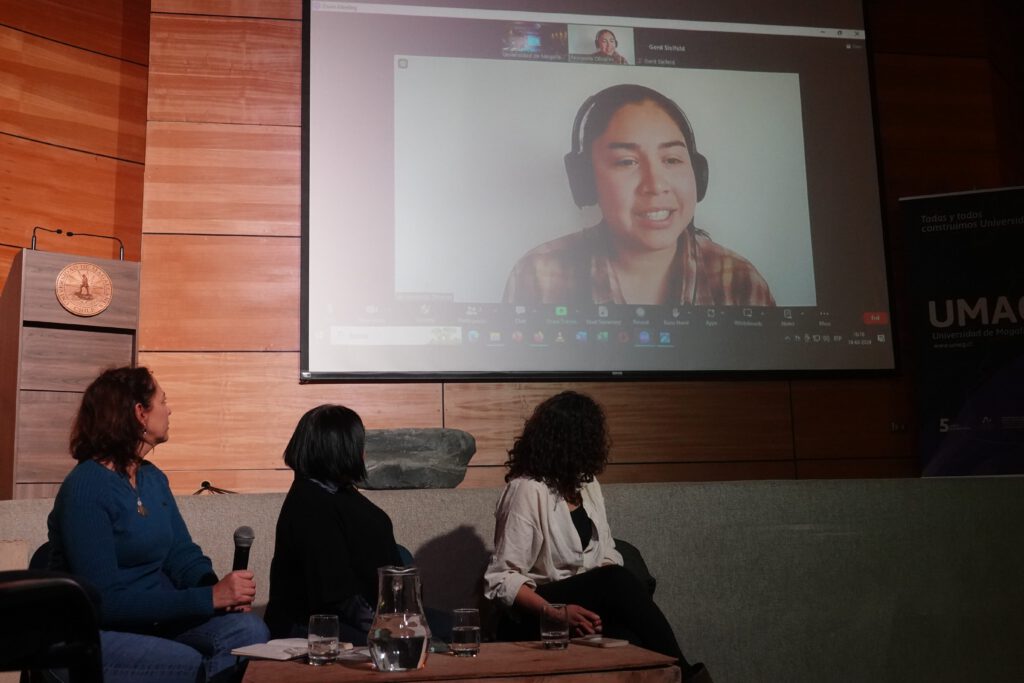
6 p.m. – Conversation: Place and place making Fernanda Olivares (Selk’nam activist), Claudia González (artist of the Yaghan people), Gerd Sielfeld (Geologist), Jacqueline Puratich (Geologist), Leyla Cárdenas (Biologist, Dean of the Faculty of Sciences of the UACh). Moderator: Paula Urdangarín (Lawyer) Location: Ernesto Livacic Auditorium. UMAG. Av. Manuel Bulnes 01855, Punta Arenas.
7 p.m. – Presentation of listening workshop results Location: Terra Ignota Forum Exhibition Hall. Faculties of Engineering and Science. UMAG. Av. Manuel Bulnes 01855, Punta Arenas.
15.3.24
Encounter: Findings in the Inner Zone
Based on the archaeological findings in the interior zone in the TIF2023 expedition, a critical reflection on the opportunities for collaboration in the fields of art, science and civil society is proposed.
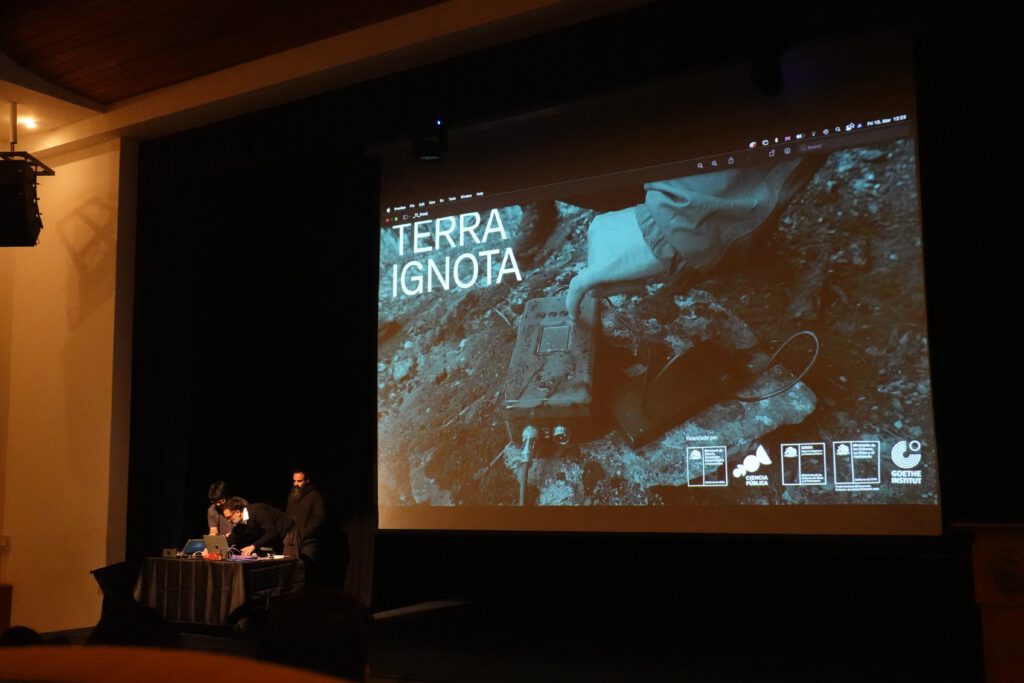
10.30 p.m. – Presentation of Terra Ignota Forum at the Punta Arenas 2024 Art and Science Meeting Location: Claudio Paredes Chamorro Cultural Centre (Route 9, Punta Arenas).
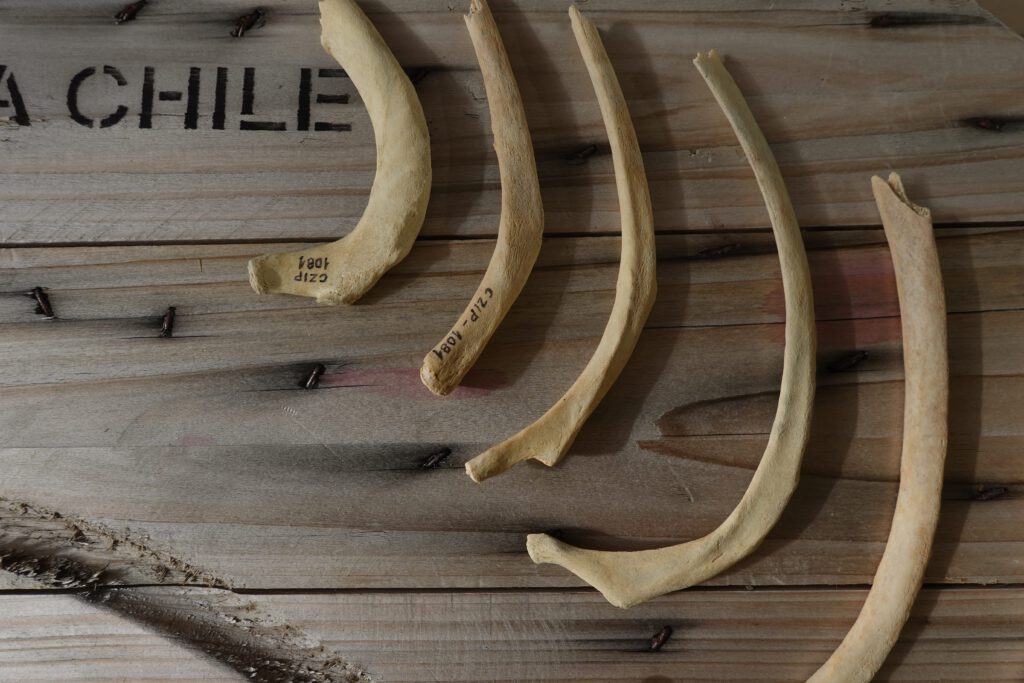
15 h Non-invasive methodologies for scientific research Interactions between humans and coastal dolphins with Jorge Gibbons (Zoologist, Instituto de la Patagonia, UMAG), Maan D’hamers (Marine Biologist), Sara Demartini (Marine Biologist) Location: Terra Ignota Forum Exhibition Hall. Faculties of Engineering and Science. UMAG. Av. Manuel Bulnes 01855, Punta Arenas.
4:30 p.m. – Guided Tour: Contact Zones Introduction to the research processes, mediation archive and artistic works by the participants and curators of the exhibition. Florencia Curci, Víctor Mazón Gardoqui, Nicolás Spencer, Carsten Stabenow Location: Terra Ignota Forum Exhibition Hall. Faculties of Engineering and Science. UMAG. Av. Manuel Bulnes 01855, Punta Arenas.