lines of inquiry

> projects / 2026 / caz / Projects / Participants

Cultural Accretion Zone
© Robert Carracedo Recasens

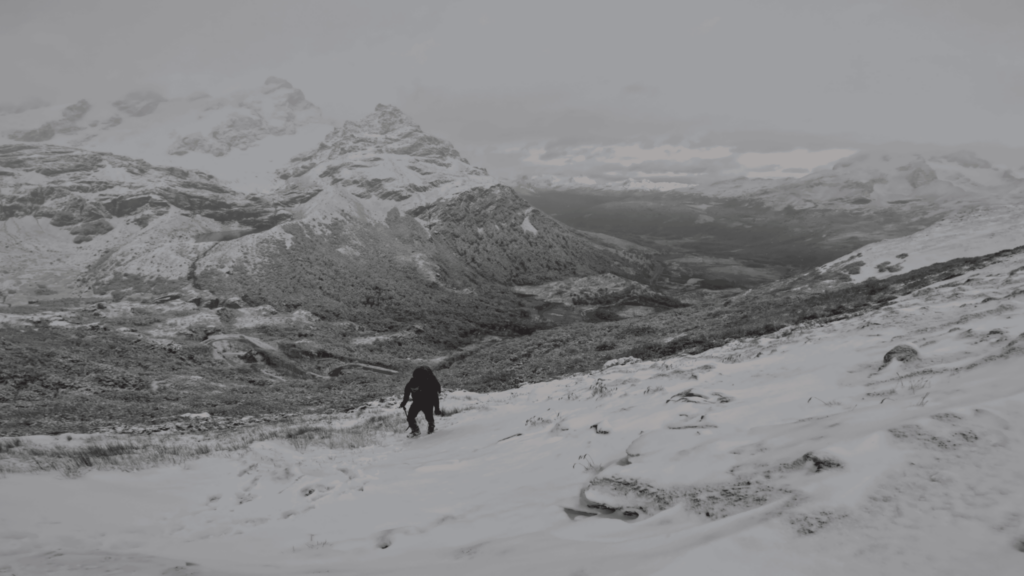
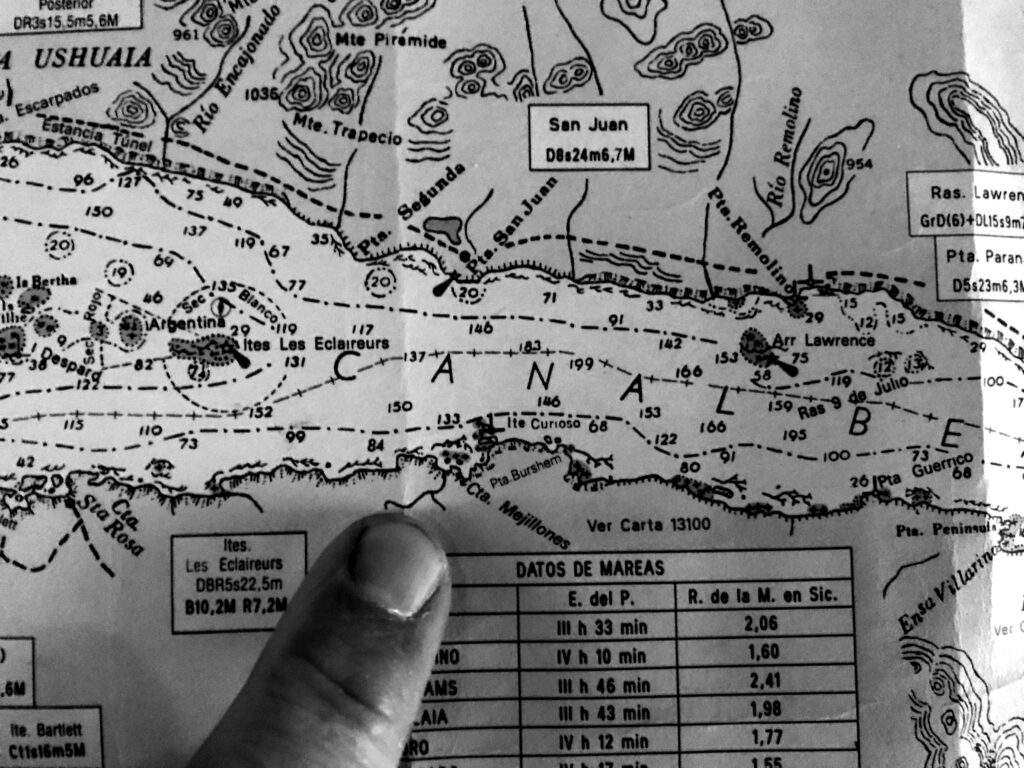
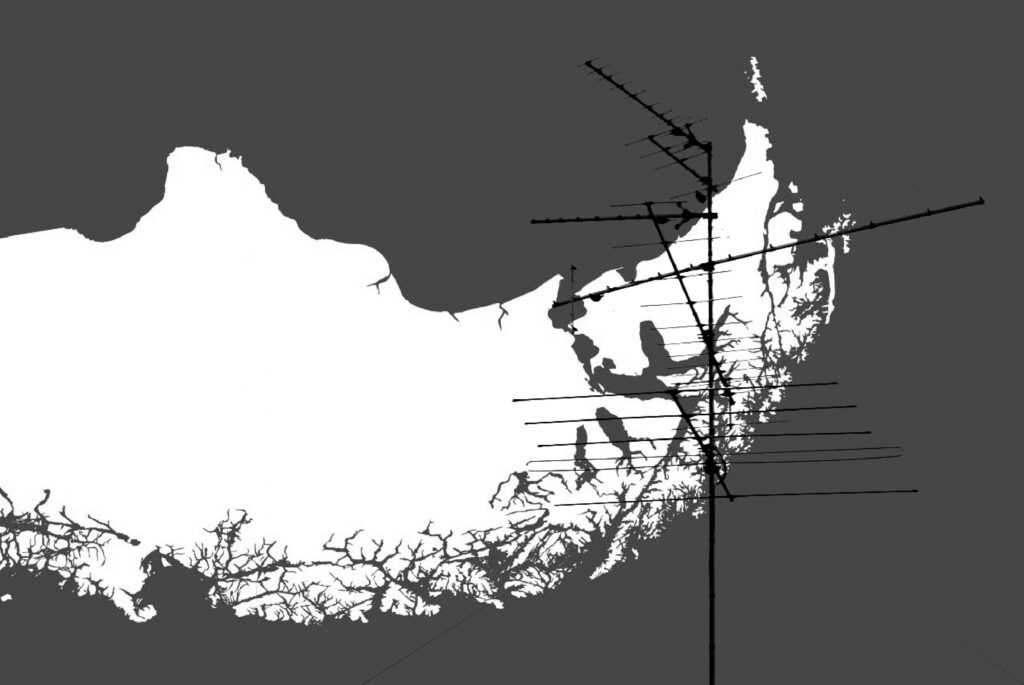
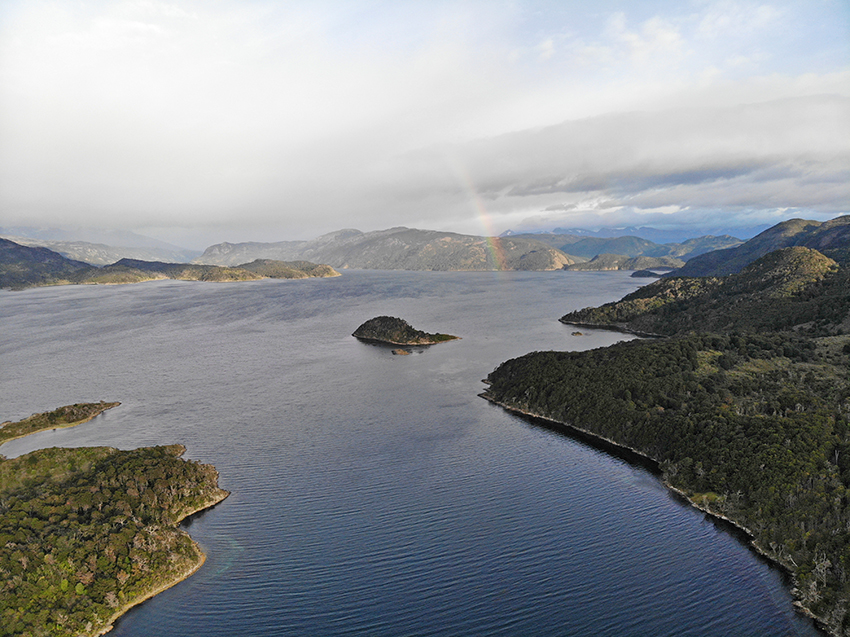
This research proposal is a direct continuation of the project Zona de Contacto Intercultural / Radiales (2019–2025). Building on studies of how canoeist communities have historically inhabited the region—examining their settlement strategies, mobility patterns, and ecological relationships—the project advances the hypothesis that patterns of occupation in the Cape Horn area are more appropriately conceptualized as a megalopolis, that is, a dynamic and fluid urban-like formation, rather than as a strictly nomadic system.

Different methodologies are applied to carefully approach a territory shaped by historical and cultural complexities and rapid transformations, fostering a dialogue between ancestral knowledge, scientific approaches, and artistic practices to understand how these communities inhabited the channels of Cape Horn.

Deep Cartographies: Interactive Vertical Mapping Systems
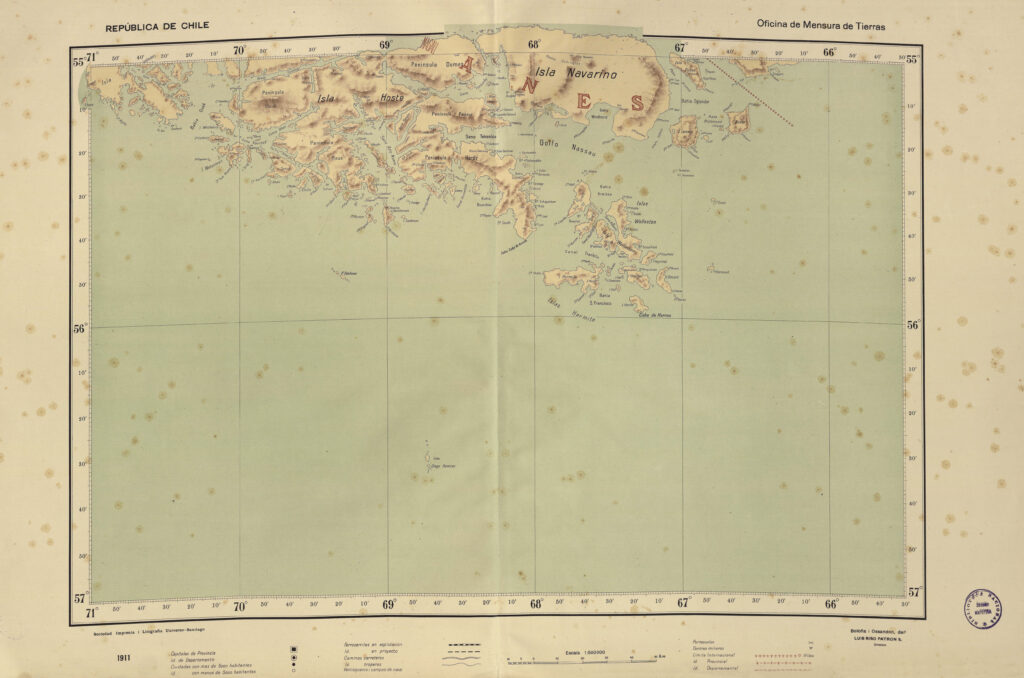
1910 Nicanor Boloña y Dañino, Luis Ossandón y Cressy, Luis Risopatrón (Public Domain)

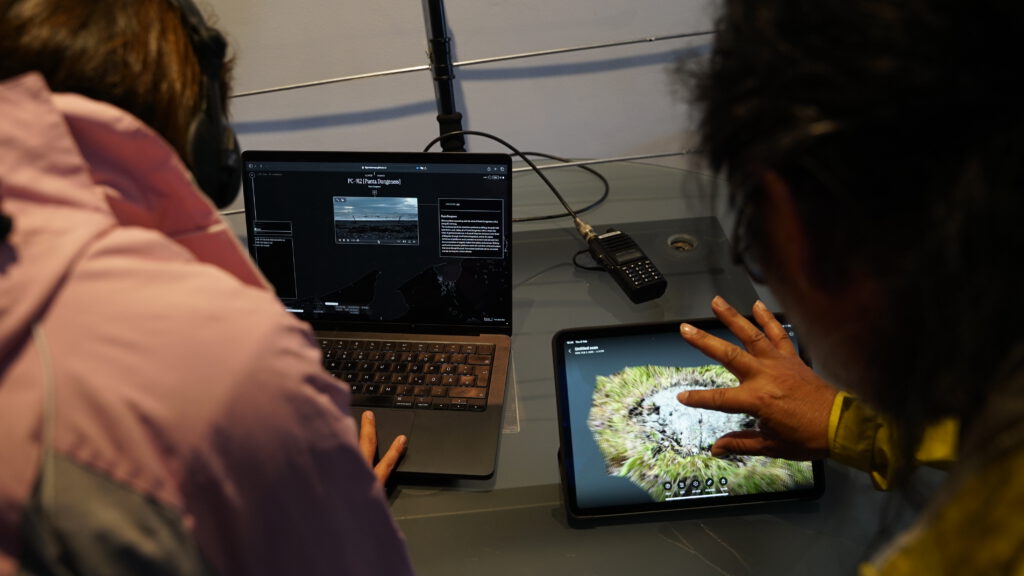
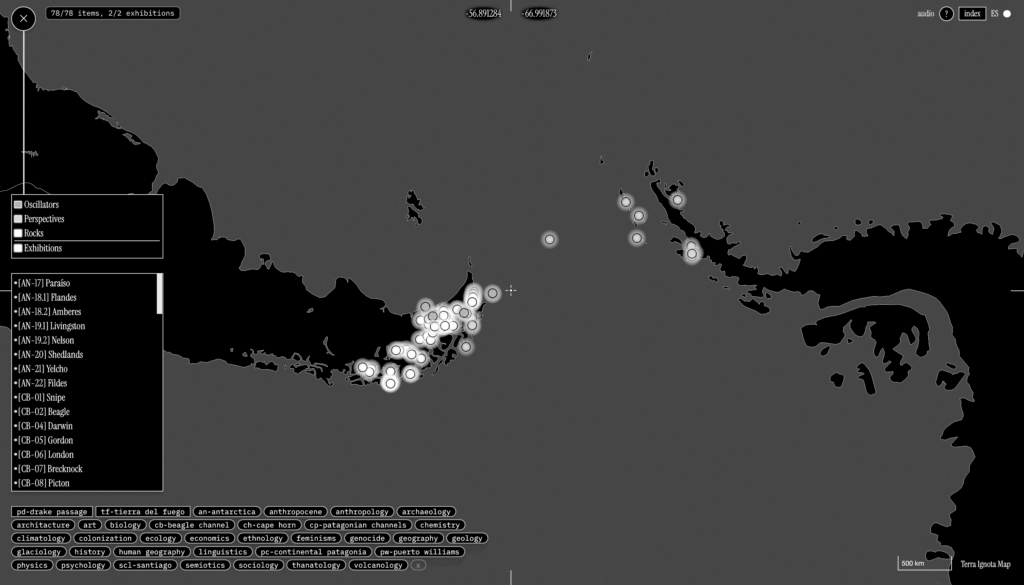
This project proposes to develop a digital interactive cartographic platform designed to archive and provide access to systematized, georeferenced knowledge and data in the Cape Horn archipelago. The cartography is conceived both as a tool for consultation and collaboration—serving artists, scientists, and the local community—and as a dynamic, evolving outcome that will continuously integrate new research, including archaeological findings, historical records, ecological data and actual developments.

The platform will be participatory and educational, co-created with the community. A mobile version will allow the public and the community to continuously enrich and update their spatial memory. This approach acknowledges the complexity of the territory, marked by historical and cultural layers and rapid transformations, and seeks to integrate local, scientific, and artistic knowledge to generate a dynamic archive that serves both heritage preservation and reflection on possible futures.

Annan: The Canoe as an Epistemological Vehicle
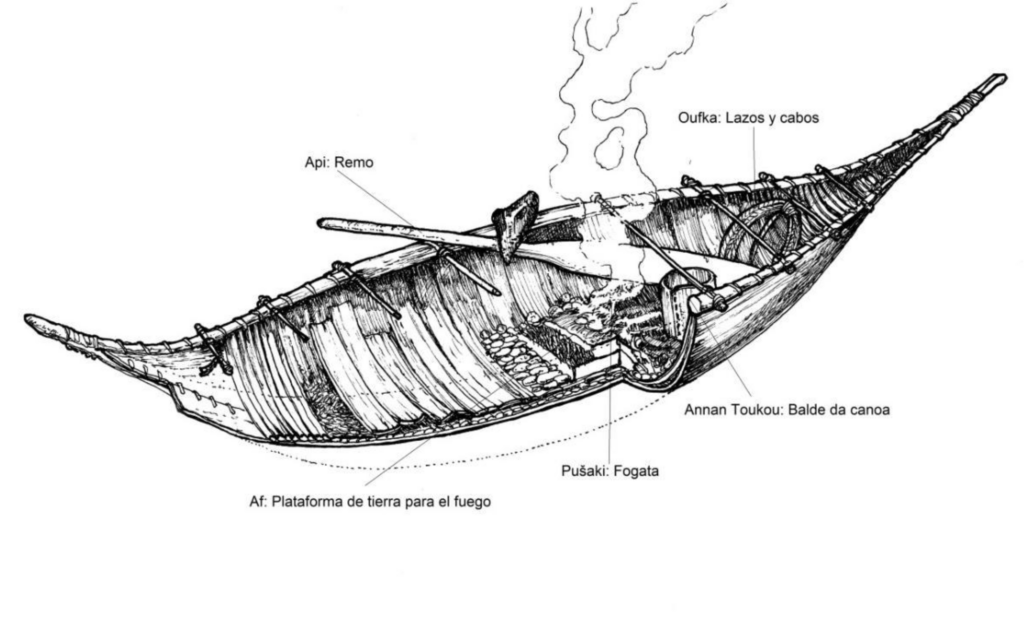
Museo Maggiorino Borgatello (drawing by Rodrigo Soto), in Aguilera Águila 2023

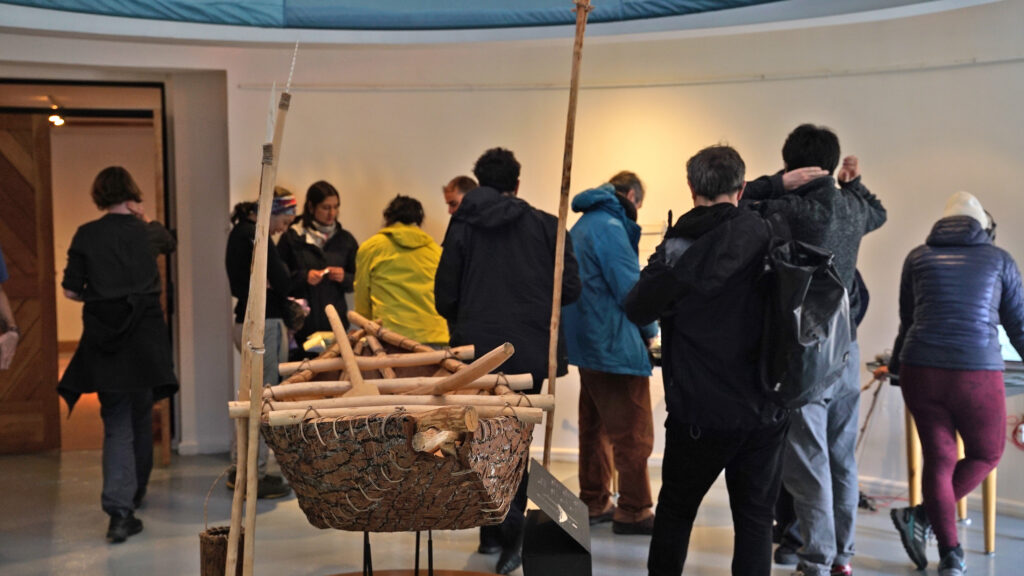
This project proposes the construction of a Yagán canoe—combining ancestral techniques with contemporary practices—as a methodological tool for exploring cultural traditions and forms of knowledge. Conceived not merely as an object, the canoe functions as a site of encounter between different epistemologies, an active organism within the cultural ecosystem that enables investigation of the Yagán relationship with the sea, while also raising critical questions about why a technology sustained for over 7,000 years is now prohibited.

In the first phase a scaled model will be developed in the laboratory of UACH, designed for contemporary technical testing. This will allow the exploration of navigation and maritime knowledge through the canoe’s functionality, understanding heritage conservation not in the object itself, but in the practice of navigation and in the reflection generated through these reconstruction processes.

Whale Refractions: Heritage in the Age of Mammals

Project description is comming soon! >>> Please refer to the old page for information until then.

Environmental Linguistics: Links between Language and Landscape
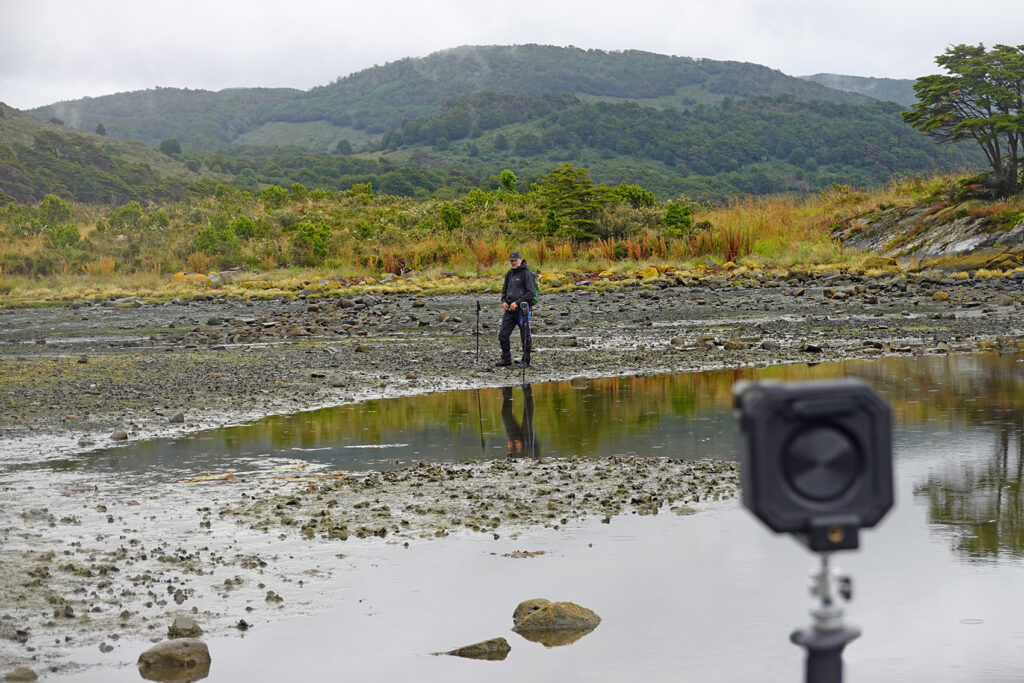
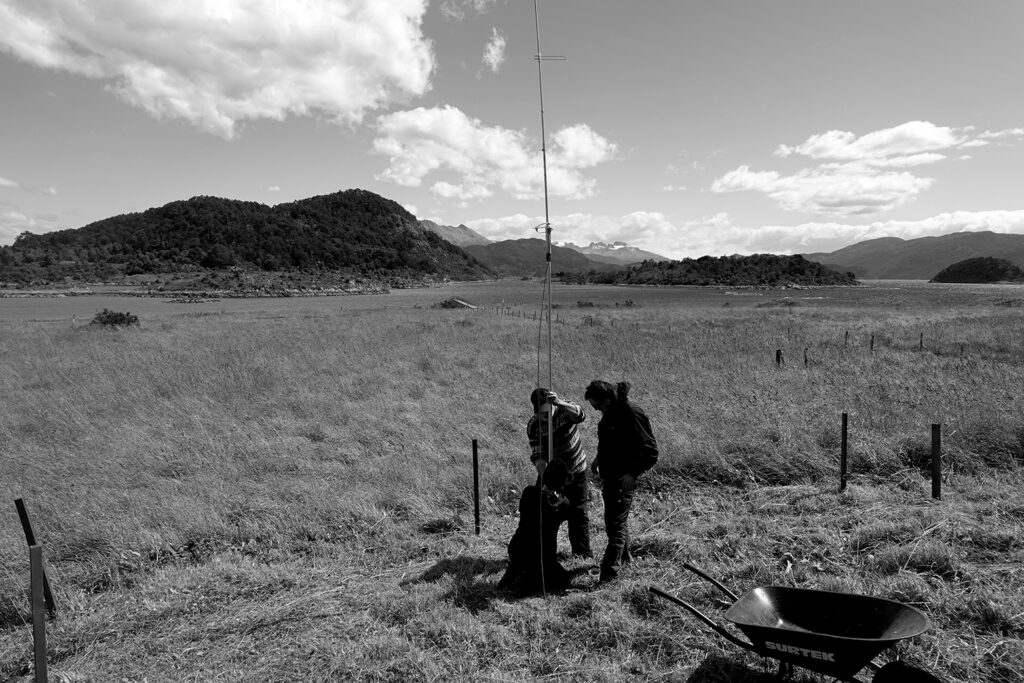
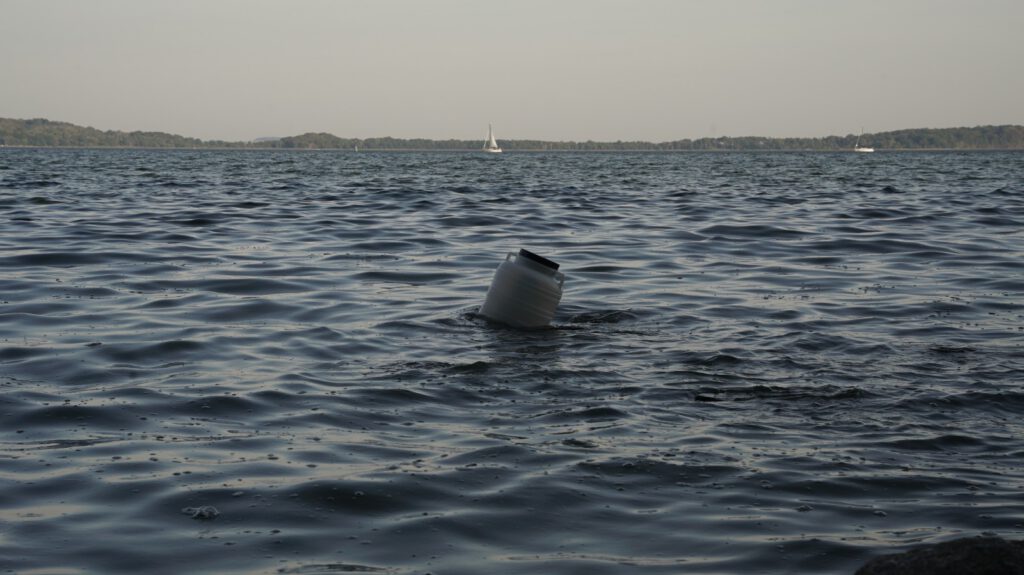
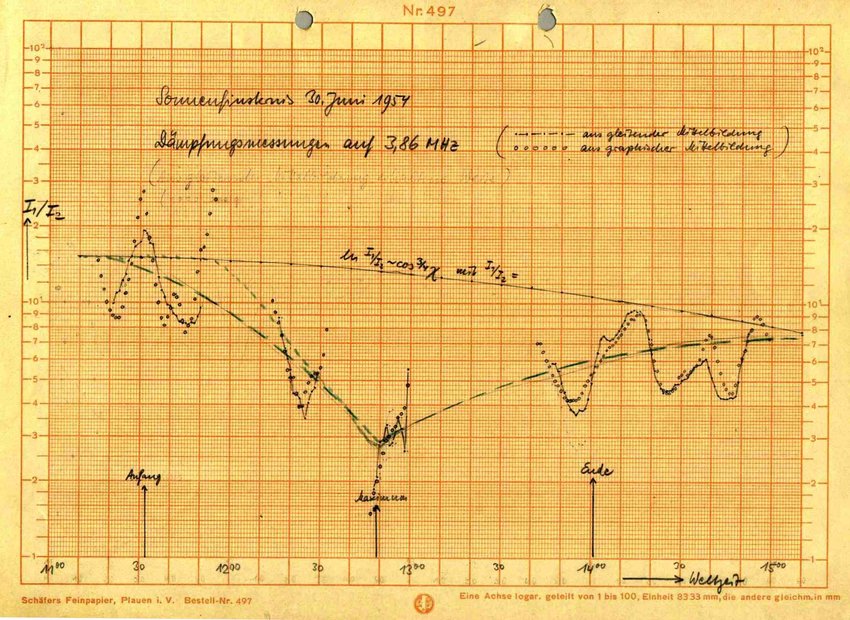
This ongoing project is an investigation of the relationships between language development, landscape and climate. Based on historic phonographic recordings (Gusinde, Koppers, Furlong) we developed an experimental empirical approach that allows us to conduct a systematic comparison of speech propagation and intelligibility in diverse field conditions. In the second research strand, we examined the practical and technical dimensions of historic recording techniques. This included a detailed analysis of the recording and playback characteristics of the wax cylinder phonograph, as well as an investigation into the potential application of AI systems for denoising archival recordings and conducting pattern comparisons.

Based on those findings this study will be extended to the special coastal conditions and context of the archipelago. As suggested by members of the communities, we aim to re-record language patterns in collaboration with contemporary speakers, in particular commands in relation to activities of navigation and communications over water (water to land interactions) and continue and improve the systematic test applications.

Radiales: Transmission as Conservation Technology
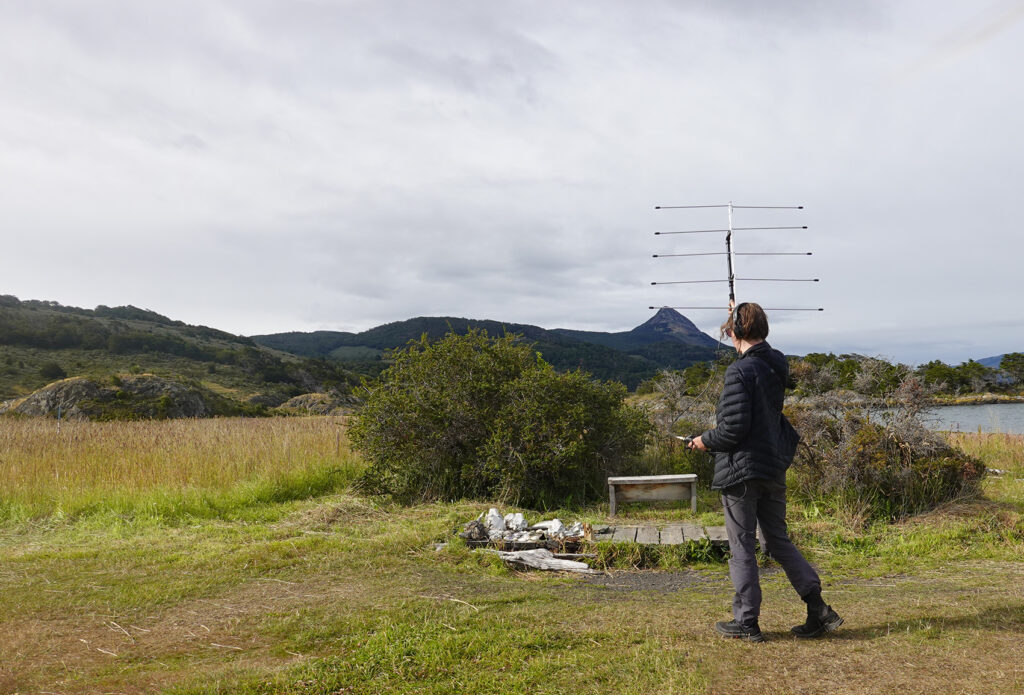
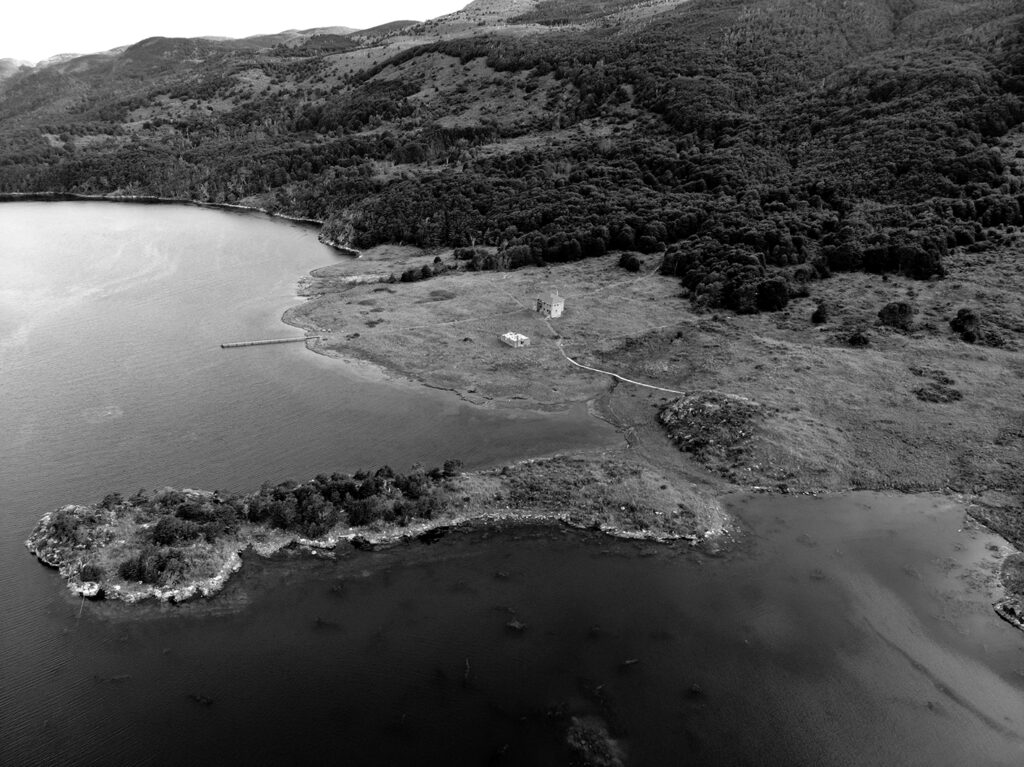
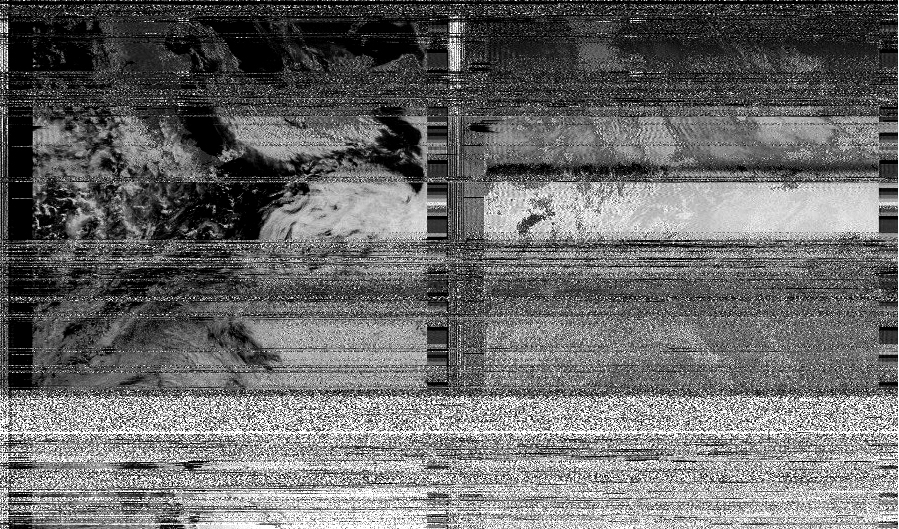
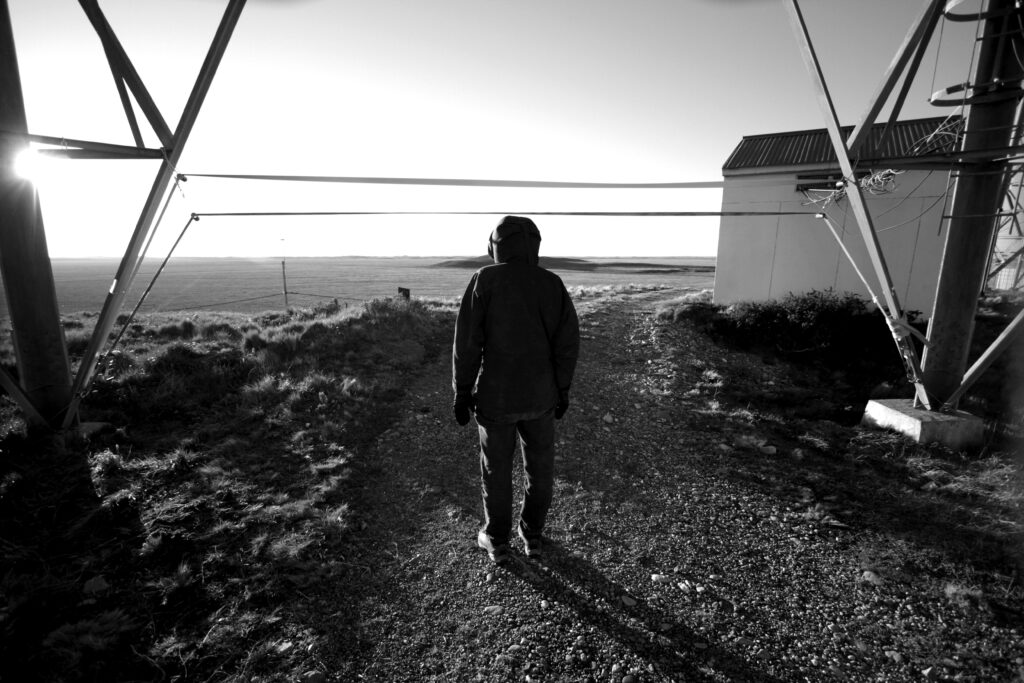
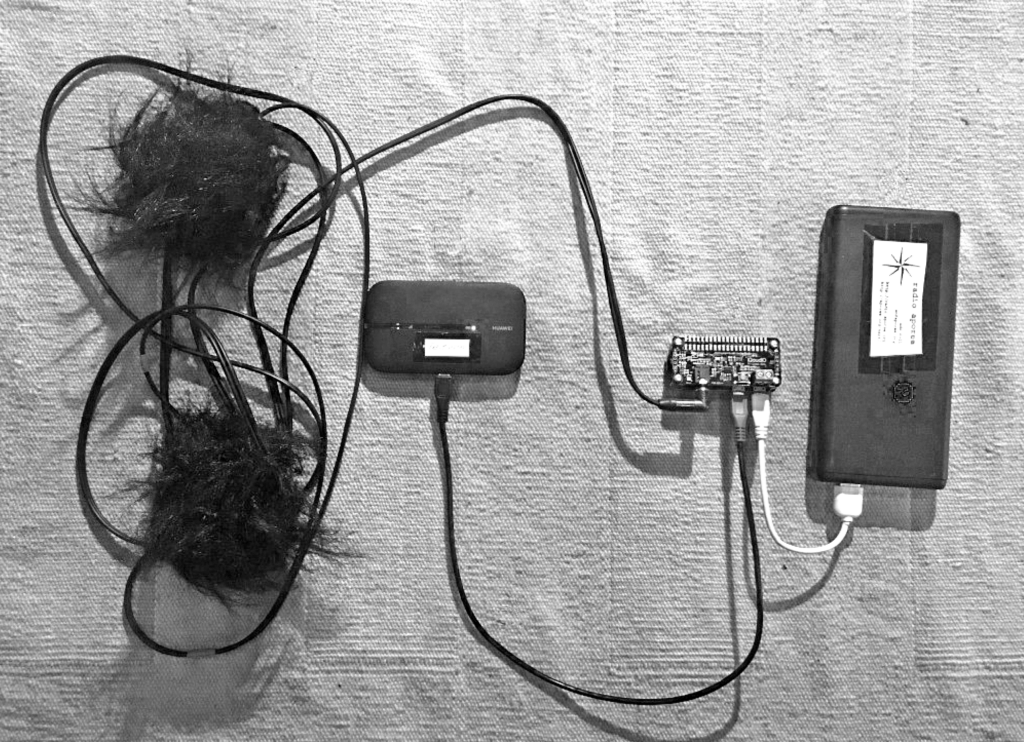
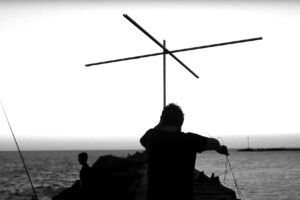
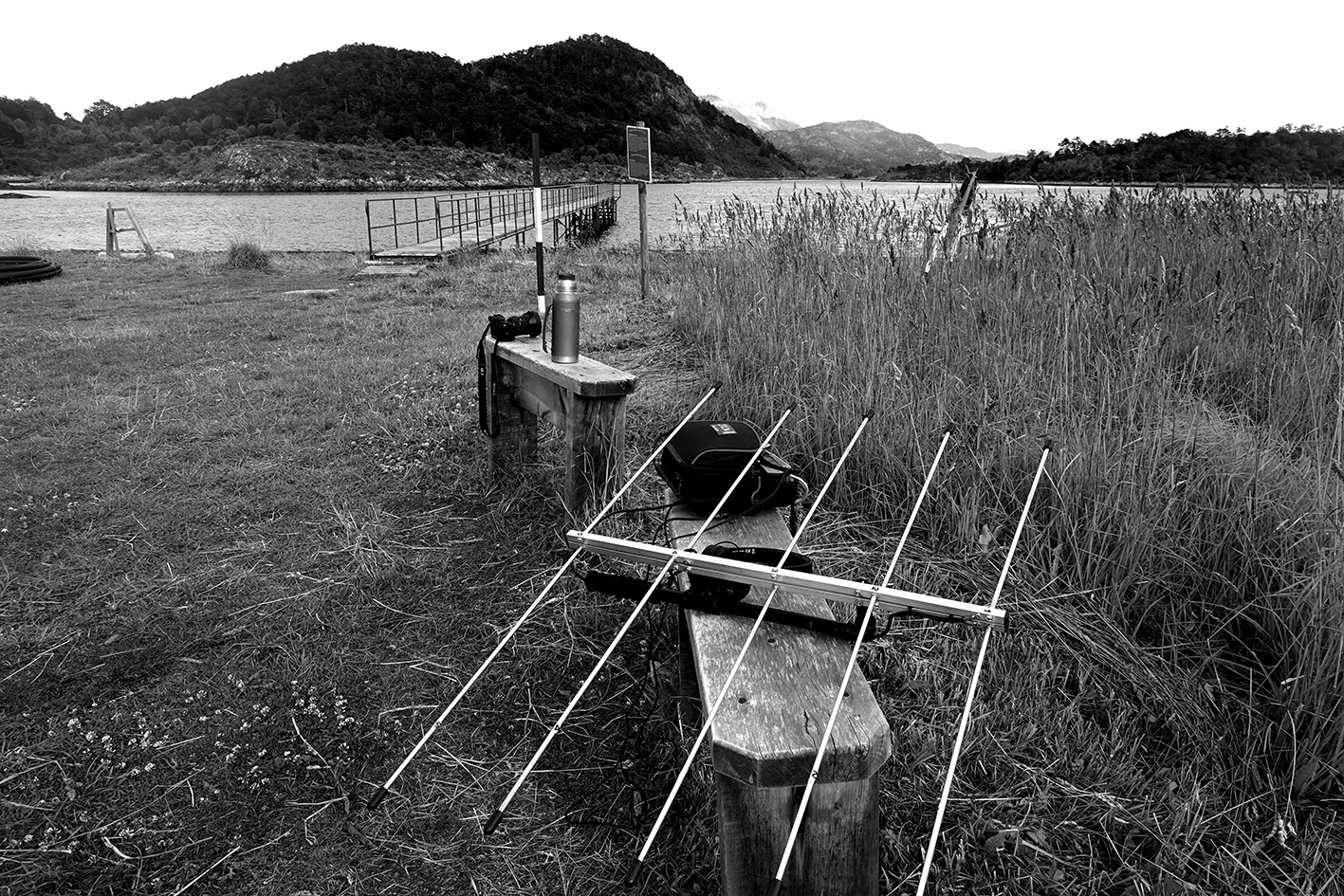
Radiales understands Bahía Wulaia and Seno Ponsonby as a living archive, where landscape, wind, water, and rock record signals of cultural and natural information. The project interprets heritage as a dynamic process of transmission: the place becomes both receiver and transmitter of experiences, knowledge, and memories, able to connect with the community and transcend the physical and temporal limits of the territory.

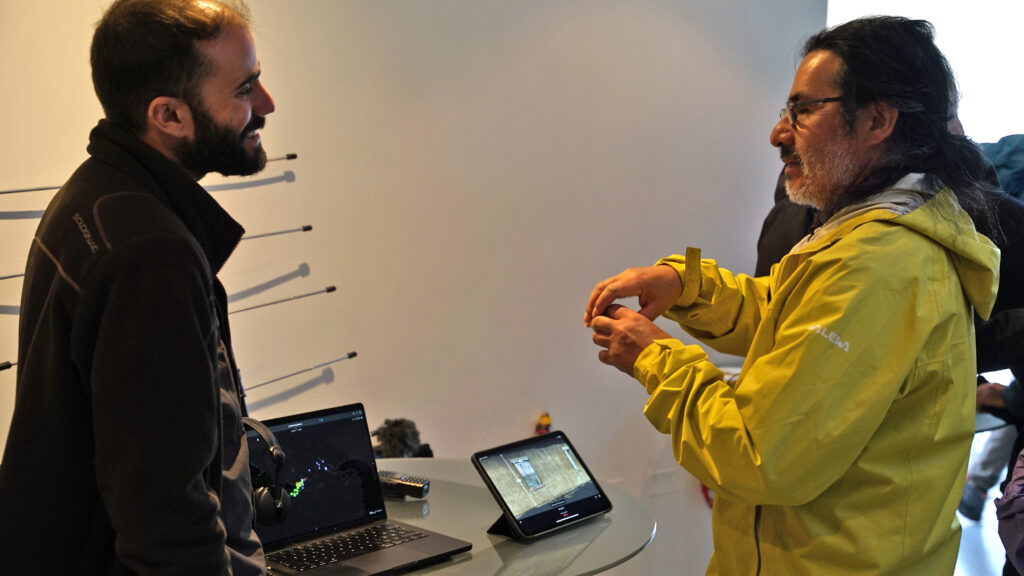
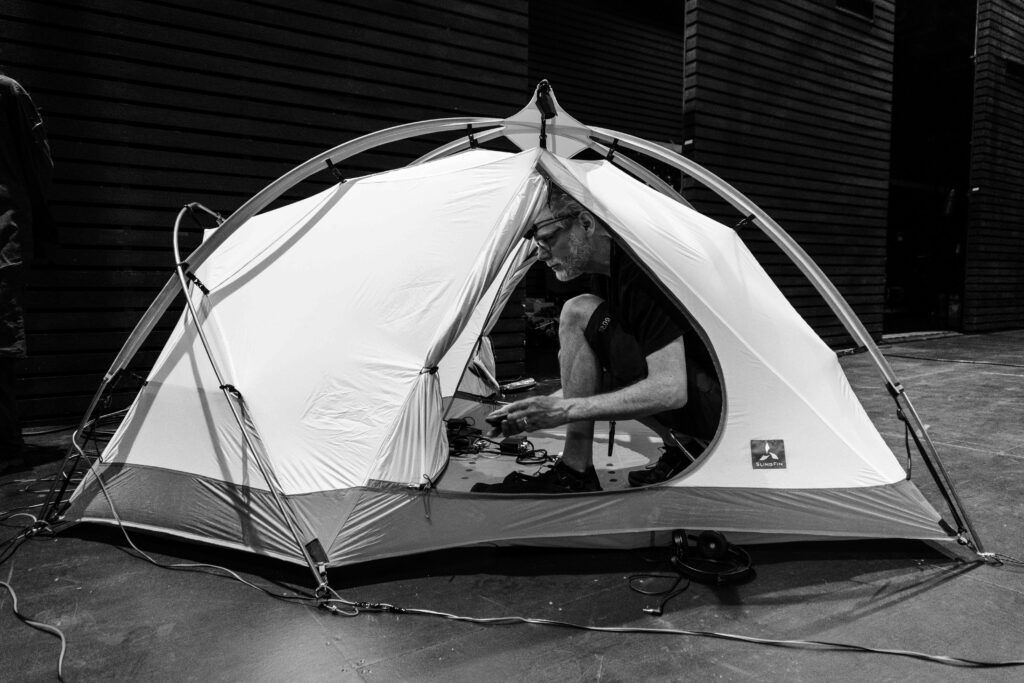
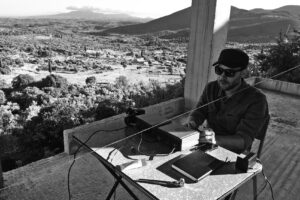
During this year’s exploration, we will install a radio studio in the former Wulaia station and broadcast daily. We will continue the research in situ, offering listeners a perspective on different projects while experimenting with the radio format itself. Live transmission is proposed as a methodology: a way to release the research at the very moment it unfolds, opening the possibility for the process to be affected by the resonances and encounters that may arise in the territories it reaches.

BIG REANIMATION CEREMONY:  Thu. Feb 5th from 15 to 19H CL / 19 – 23H EU (GMT +1)
(soon the show will be archived here)

Landscape Echoes by Claudia Augustat
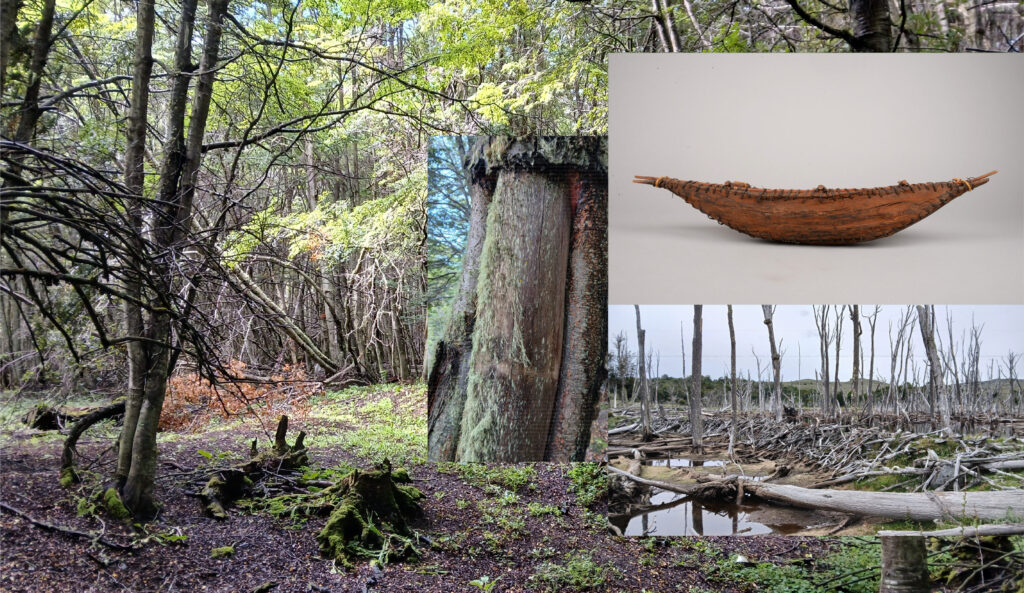
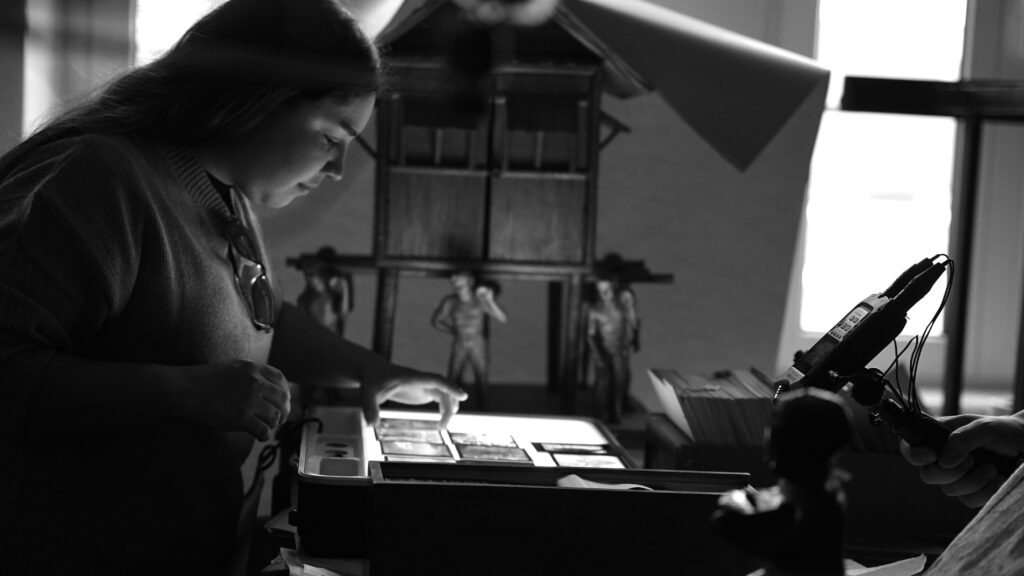
In my project Landscape Echoes I am using landscape as a framework to open new ways for a reconnection between ethnographic objects and their former environment.  Objects from the collections of the Weltmuseum Wien, where I am working as the curator for the South American collection, are reconnected with the landscapes they once came from. Asking how these landscapes changed since the objects left them, open a space for new narratives about change, loss and the precarity of the planet.

In the frame of Terra ignota I use this approach and focus on the materiality of the ethnographic objects from the Yaghan collection in our museum. The objects – collected between 1878 and 2008 – are mainly made from organic material: wood, bark, plant fibre or bones and skins and feather. These materials are like echoes from trees, shrubs, grasses, whales and birds. Following the traces of these material back to Isla Navarino connects them with the dynamic archive that this landscape represent. In this way, it is possible to embed the historical objects in the flow of time and to create sometimes unexpected narratives.
The narratives will be documented in an assemblage of text and photography. Short video clips of the shores of streams, swamps, rivers finally flowing into the sea are connecting the different narratives and give voice to the water that is essential for the landscapes of Isla Navarino.

Complexities of the Wind
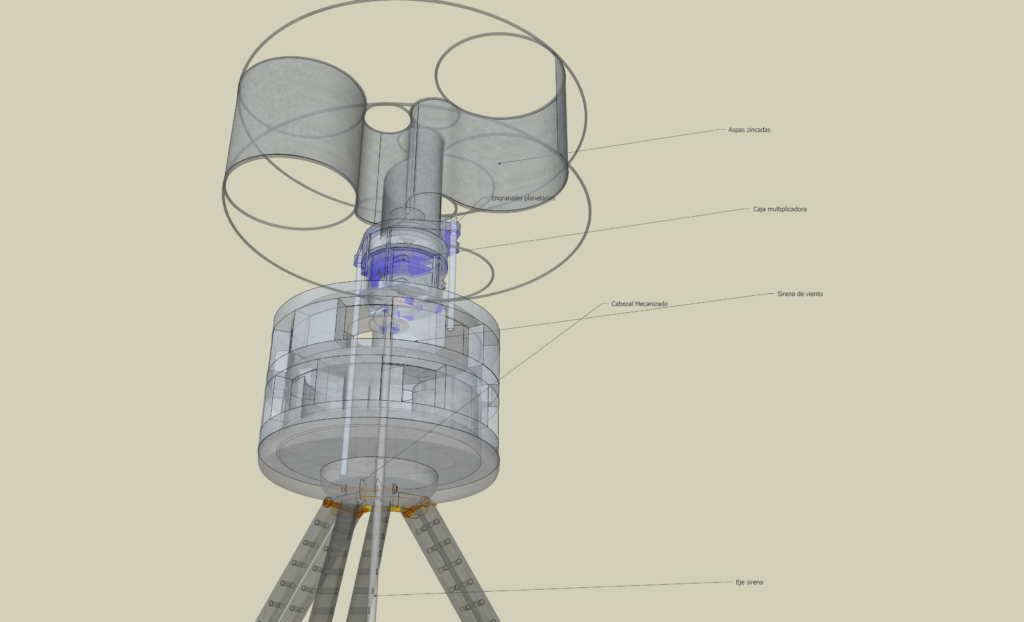
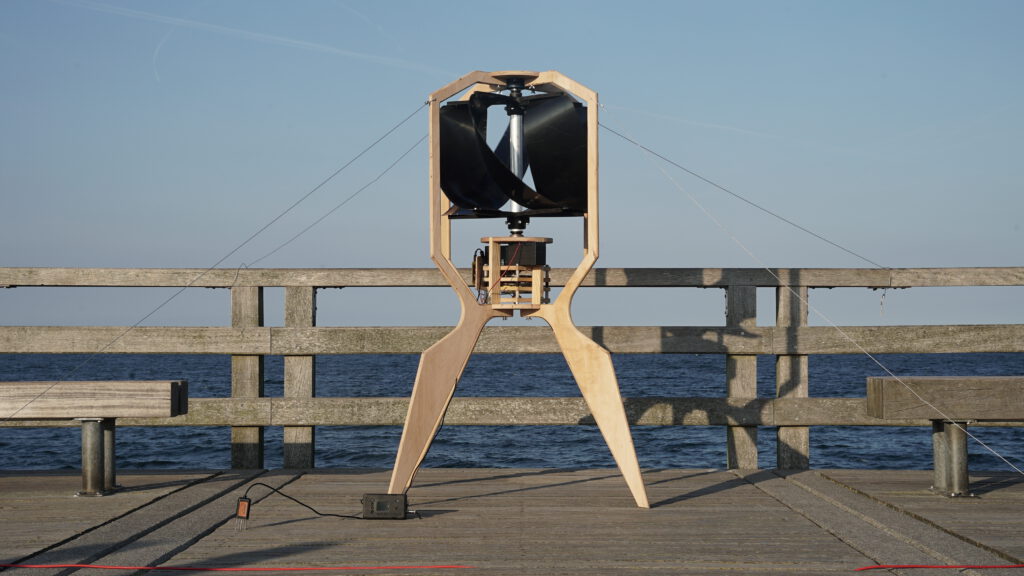
This research aims to attune to the intensities, turbulences, and heterogeneity of moving air masses based in Wulaia/Ponsonby. From this starting point, we seek to generate experiences that allow us to engage with the complexity of the chaotic movements that make up the winds and with how this invisible activity shapes not only the physiognomy of the landscape but also the biological activity inhabiting its surface.

With this purpose, the construction of a device is projected that, through mechanical elements, will make it possible to record, compare, and reflect on the relationship between atmospheric turbulences, ecological discontinuities, and dynamics of human occupation. These records and comparisons will serve to feed back into the design of Telúrica, a prototype installation scheduled for 2026.

Forum: Traces and Encounters II
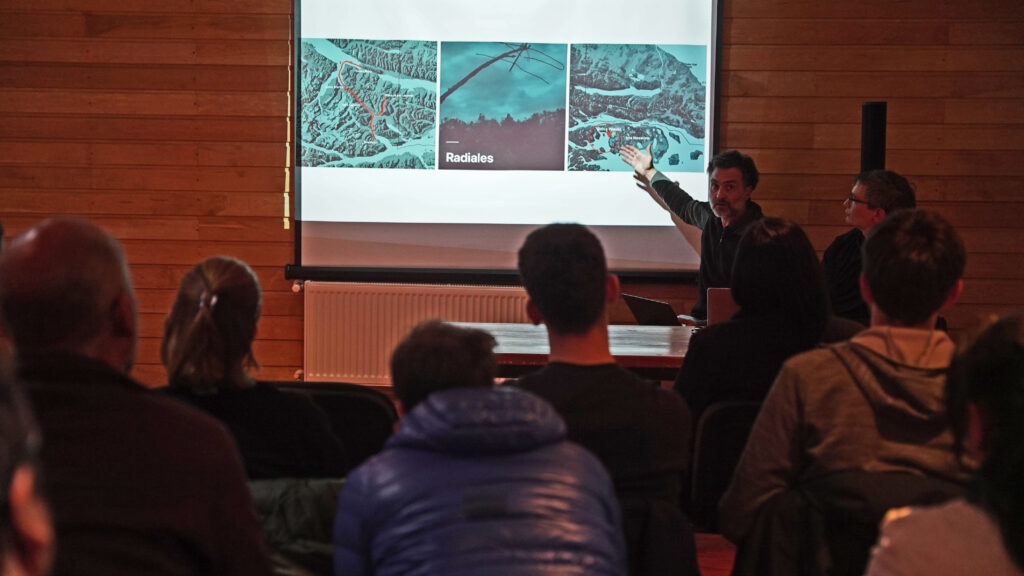
Traces and Encounters II continues the exploration initiated in the first forum (2025), consolidating the dialogue between art, science, and museological practices in Isla Navarino. The project focuses on creating spaces of encounter and resonance, integrating research on natural and cultural heritage with strategies of observation, documentation, and experimentation in the territory.

Through an interdisciplinary approach, knowledge is mediated and co-created with local actors, exploring how landscape, history, and ecosystems influence cultural practices and perception of the environment. The project aims to establish foundations for future research, generating dynamics of transmission and circulation of information that strengthen understanding of heritage as a living, constantly transforming process.

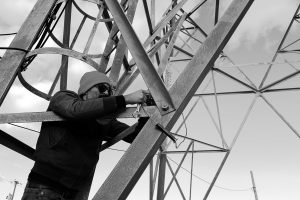
participants caz

> projects / 2026 / caz / Projects / Participants

All participants and contributors of the project Cultural Accretion Zone 2026:

more about

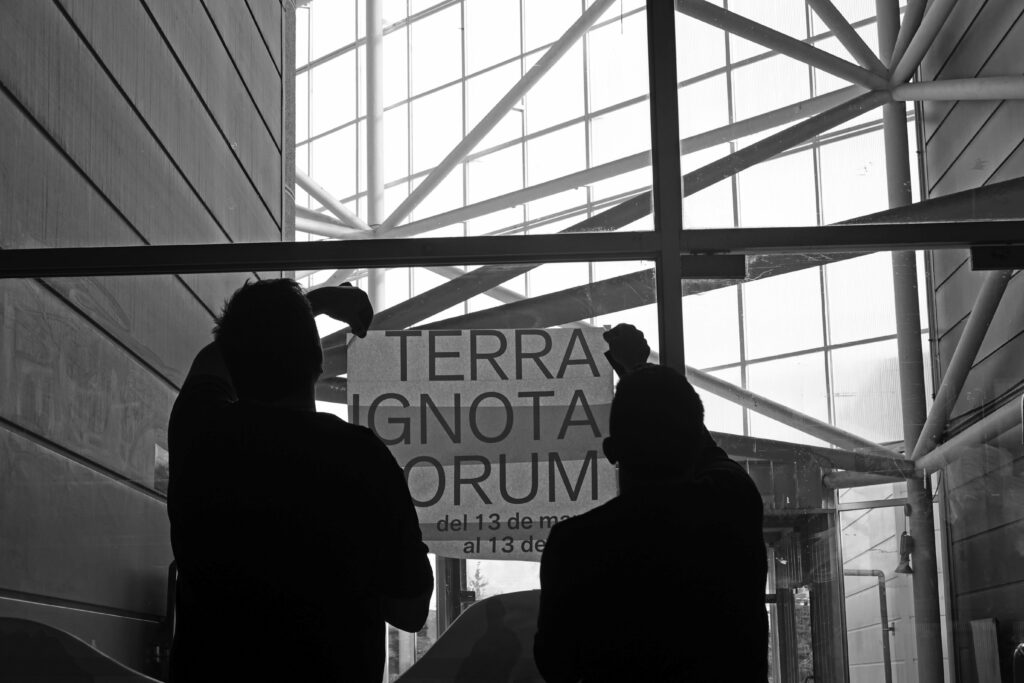
The ideas of meeting and encounter sparked the Terra Ignota project, initiated in 2015 by and for a dynamic group of Chilean and international artists, scientists, curators and producers as a recurrent nomadic lab in Patagonia and Tierra del Fuego.

The transdisciplinary research platform studies the relationships between culture, nature, knowledge and their different forms of representation. Terra Ignota is a concept used in maps to designate places unknown to mankind. We propose the extension of this concept to refer to the little or erroneous knowledge we have as a society of the territory beyond the geographical confines of the extreme south of the planet.

Terra Ignota is informed by archeology, (colonial) history, (indigenous) practices, nature and climate of the region and is aiming to connect that to urgent global questions. It is rhizomatic, it moves slowly, listens, zooms in and out, and connects.

In a modular way – through small-scale and interconnected encounters and thematic clusters – it facilitates artistic alliances and interdisciplinary learning that is strongly rooted in the local. Terra Ignota aims to develop and grow organically from the local context while it is conscious of its outside perspective and embraces a non-extractivist attitude. Endorsing omitted native and historical knowledge, Terra Ignota aims to stimulate and contribute to new entangled narratives, artistic production and mediation. The dialogue and encounters it facilitates, feed into the wider practice of the participating artists, curators and scientists.

Terra Ignota’s periodic encounters continuously (re)shape the direction of the project. The outcomes are critically evaluated and research questions and methods are addapted. The process is driven by the constant feedback of the place and it’s communities and based on trust and mutual inspiration. The various results are verified and presented as artistic and scientific publications, performances, interventions, installations, workshops and discourse formats in the very direct local as well the international context. Central to our work is the question of representation – the mediation and translation to different audiences.

The project evolves in the current backdrop of massive local and global developments. Chile, and many other places, are in crisis, in a historical moment in which the prevailing economic system and the laws that support it have been exhausted. The idea of development linked to unlimited material progress has nullified our core values and has amalgamated our society in a purely utilitarian pragmatic mindset. Progress has replaced the ideas of equality and respect for maximization and extraction. We are in a historical moment in which economic and social models are becoming increasingly obsolete and the poor understanding of our relationship with the environment has led us to a general state of fear and instability.

Terra Ignota will have to adapt to these new realities. It is even more important now that new sociocultural-, resource utilization and distribution paradigms are being explored, and that cultural and educational platforms are developed that are inclusive, decentralized and not extractive. Approached in careful steps and small research groups, with slow pace but in-depth, in order to search for the right dialogue with a place. A search that starts from the Southern tip of Chile but that relates to the planet, acknowledging that these are global issues and that a re-listening is necessary that involves all and everyone.

projects

radio (Wulaia)

radio (Wulaia)

During this year’s exploration, we will install a radio studio in the former Wulaia station and broadcast daily. We will continue the research in situ, offering listeners a perspective on different projects while experimenting with the radio format itself.

Magallanes Signaling @ Festival Tsonami 2026

Magallanes Signaling @ Festival Tsonami 2026

Magallanes Signaling by Carsten Stabenow and Raviv Ganchrow was presented at this years Tsonami Festival. Perfromative spatial-sound configurations, culled from unedited location recordings of a research journey through Chile’s southernmost regions (Tierra del Fuego and Navarino Island) to the decommissioned radio station at Wulaia Bay. 

Cultural Agglomeration Zone (CAZ) 2026

Cultural Agglomeration Zone (CAZ) 2026

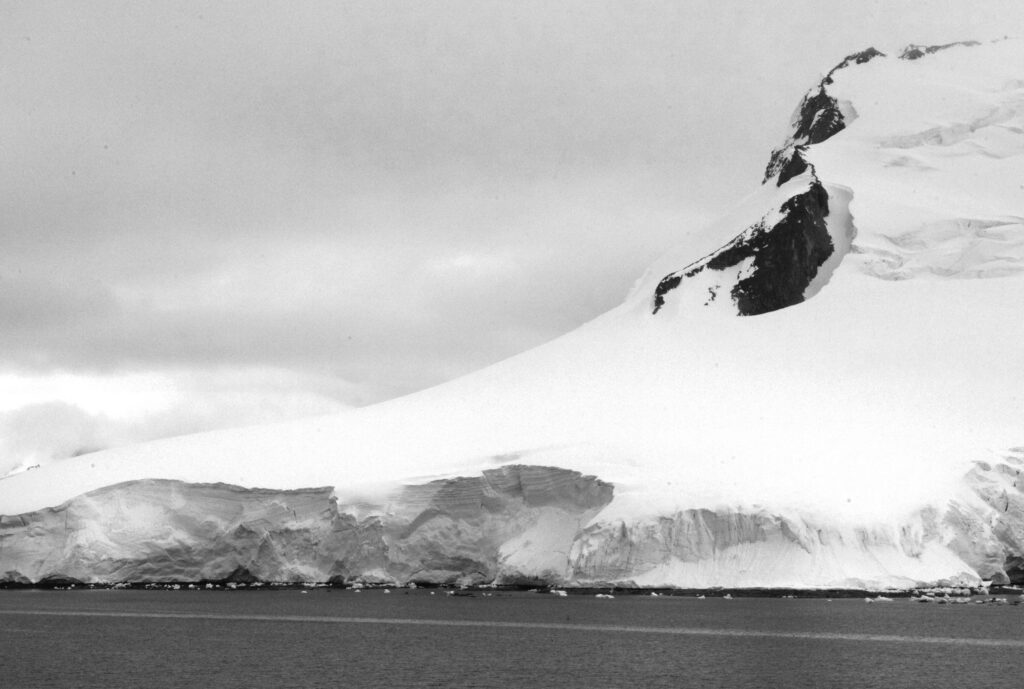
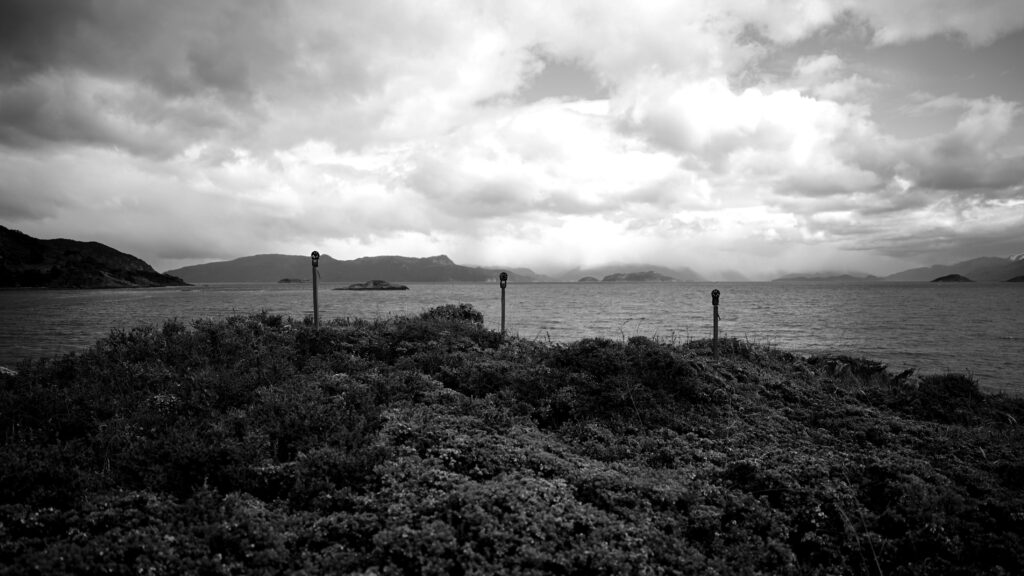
The Cultural Agglomeration Zone project investigates the accumulation of cultural, historical, and environmental layers in Bahía Wulaia and Seno Ponsonby (in the Cape Horn archipelago).
Indigenous habitation, over prolonged periods of time, is also understood as a sustainable model from which to gauge current transformations in the region. The effects of climate change in Ponsonby can be observed in real-time through precipitation patterns and vegetation as well as the rapid growth in maritime logistics and expanding Antarctic route linked with the politics and economics of the thawing polar region. This increasing global pressure threatens the fragile local heritage and its uniquely rich sub-Antarctic oceanic ecosystem. Ancient forests, lichen cultures, peat- and wetlands, rivers, and marine habitats and migration channels become increasingly vulnerable in a geopolitical zone that has long been shaped by territorial disputes that ignores this ecological fragility.

Deutschlandradio Kultur – Navigating Radiales

Deutschlandradio Kultur – Navigating Radiales

This audio montage consists of raw location recordings, with no added audio effects, tracing a research journey through Chile’s southernmost regions (Tierra del Fuego and Navarino Island) to the decommissioned radio station at Wulaia Bay.

DAP revista 2025-2026

DAP revista 2025-2026

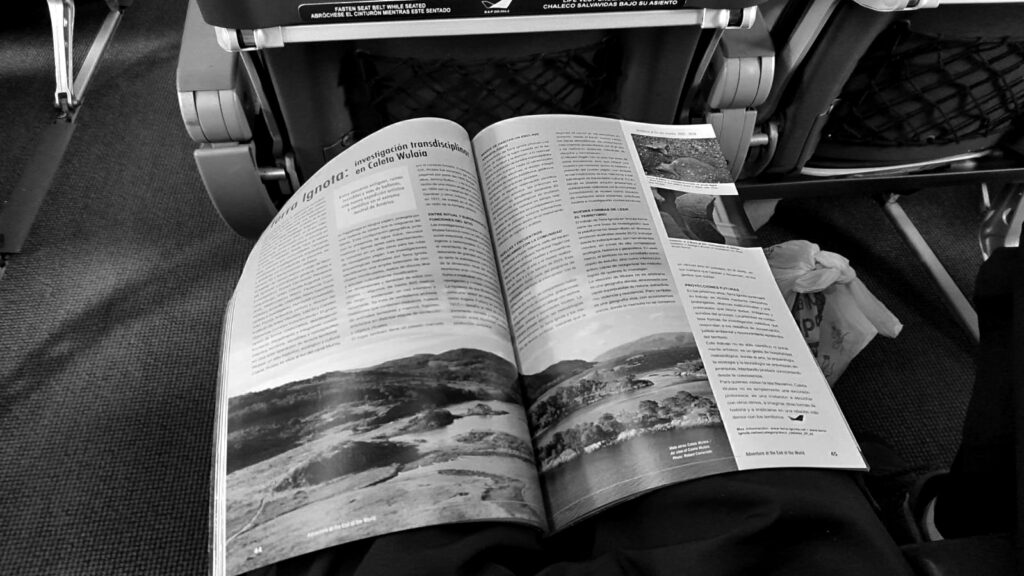
DAP Airlines is supporting Terra Ignota since quite some time. This year the project is featured in their annual magazine. (page 44 )

Antarctic Congresses 2025

Antarctic Congresses 2025

During the last week of July, Valdivia will host the X Latin American Congress of Antarctic Science (CLCA) and the XII Chilean Congress of Antarctic Research (CCIA), two key events for scientific knowledge about the white continent. On this occasion, the transdisciplinary platform Terra Ignota has been invited to participate with an audiovisual intervention during the opening ceremony.

EM GUIDE: TERRA IGNOTA – Walking, Listening and Mapping the Unknown in Southern Chile

EM GUIDE: TERRA IGNOTA – Walking, Listening and Mapping the Unknown in Southern Chile

This interview is part of the southernests series, which explores how certain artistic gestures – through listening, drifting and publishing – activate community or affective bonds across South America. Each piece begins by revisiting personal materials from the interviewee’s archive.

Presentation at Weltmuseum Vienna

Presentation at Weltmuseum Vienna

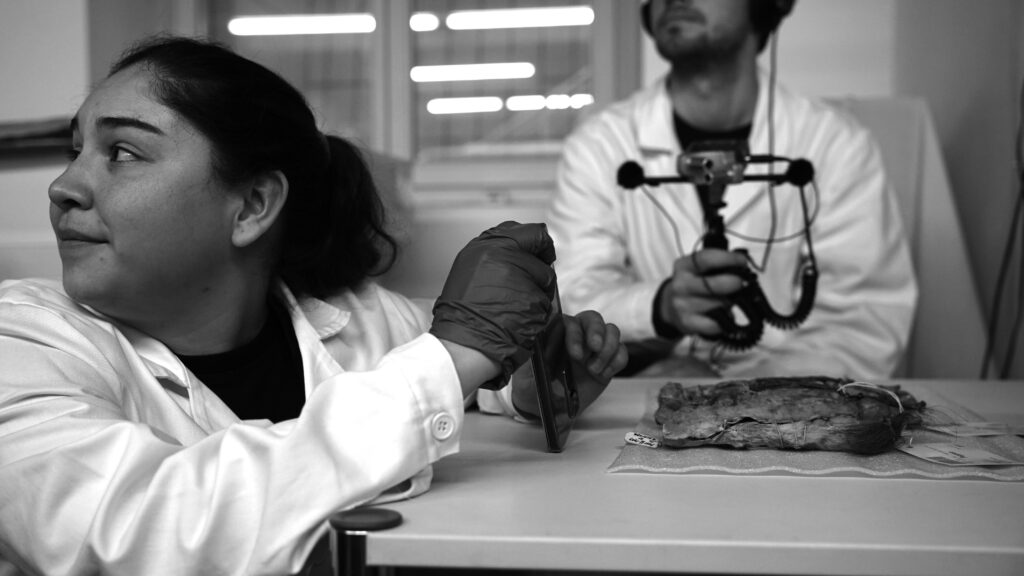
On July 18th, we presented the Terra Ignota platform along with several of our recent research initiatives at the Weltmuseum Wien. On this occasion, we also visited the museum’s depots—the collections of the Weltmuseum Wien comprise around 200,000 objects, of which only 1.5% are on public display. Accompanied by Claudia Augustat, curator of the South America Collection and member of the Terra Ignota team, we had the opportunity to conduct an in-depth exploration of the museum's archives.

Archaeology in the Backyard

Archaeology in the Backyard

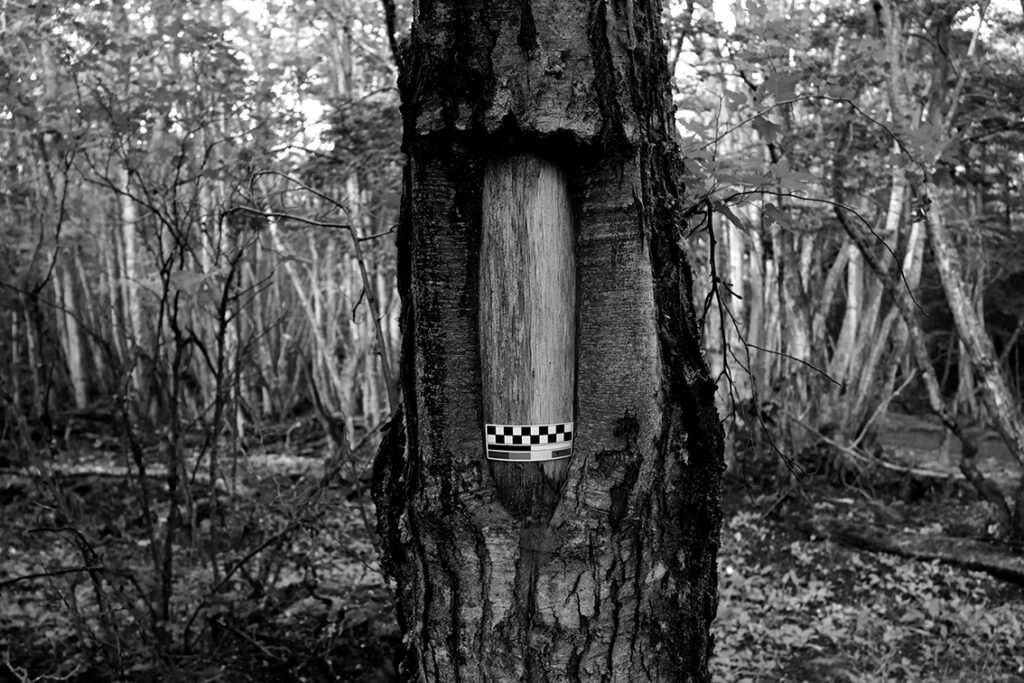
Since 1967, Villa Ukika —founded as part of state relocation policies— has been the main Yagán settlement on Navarino Island, in the heart of the Fuegian archipelago. In its surroundings, the Ukika Municipal Park stands out as a true living archive of ancestral knowledge and history, thanks to the presence of at least 103 documented Culturally Modified Trees (CMTs) to date.

Videogam 144

Videogam 144

How do shifting relations between mammals, climate and geology refract through whale sounds and what interlinks those sounds with seabed topographies and ocean structure?

Interfacing Ecologies

Interfacing Ecologies

Raviv Ganchrow is going to present Wahle Refractions at Interaction Design @ Zurich University of the Arts.

map

map

This application is designed to distribute the content stored in rocks, wind, and the gaze of a subjective observer along 1000 km of the fire-patagonian territory. The platform functions as a map that transcends the three Cartesian planes that delimit it, managing information that integrates spatial, temporal, and sensory dimensions.

Inauguration of the UACh Academic Year 2025

Inauguration of the UACh Academic Year 2025

The Faculty of Architecture and Arts at the Universidad Austral de Chile (UACh) will kick off its Academic Year 2025 with an inaugural event to be held on Wednesday, April 3, starting at 2:15 p.m. in the university's Aula Magna. The event will feature Terra Ignota.

Remote Listening

Remote Listening

During my stay in Wulaia, I repeatedly imagine the scene of the first radio transmission. I playfully extrapolate that late 19th-century moment in the United Kingdom, where a sound generated in Bristol (England) resonated in Pernath (Wales): for the first time, I can hear something happening simultaneously but outside my immediate surroundings. It is not just an acoustic phenomenon; in some way, time and space are transformed. Something happening elsewhere, in real time, reaches my ears, challenging the physical boundaries that once defined my daily experience.

Complexities of the wind

Complexities of the wind

This research aims to get in tune with the intensities, turbulence and heterogeneity of the the masses of moving air based in Wulaia/Ponsonby. I would like to generate experiences that allow us, in a sensitive way and with rudimentary technologies, to tune in to (1) the complexity of chaotic movements that make up the winds (2) and how this invisible activity shapes not only the physiognomy of the landscape but also the biological activity that inhabits its surface.

Whale Refractions

Whale Refractions

Whale Refractions is a research project currently underway at the Centre for Advanced Study inherit based at the Humboldt-Universität zu Berlin. Questions of addressing ‘heritage at large’ grew out of previous itterations of the Terra Ignota platform while observing oscillatory interrelations between humans and marine mammals and evolutions of cetacean underwater hearing in the historical and geological and climate contexts of the Magallanes Region.

Forum: Traces and Encounters 2025

Forum: Traces and Encounters 2025

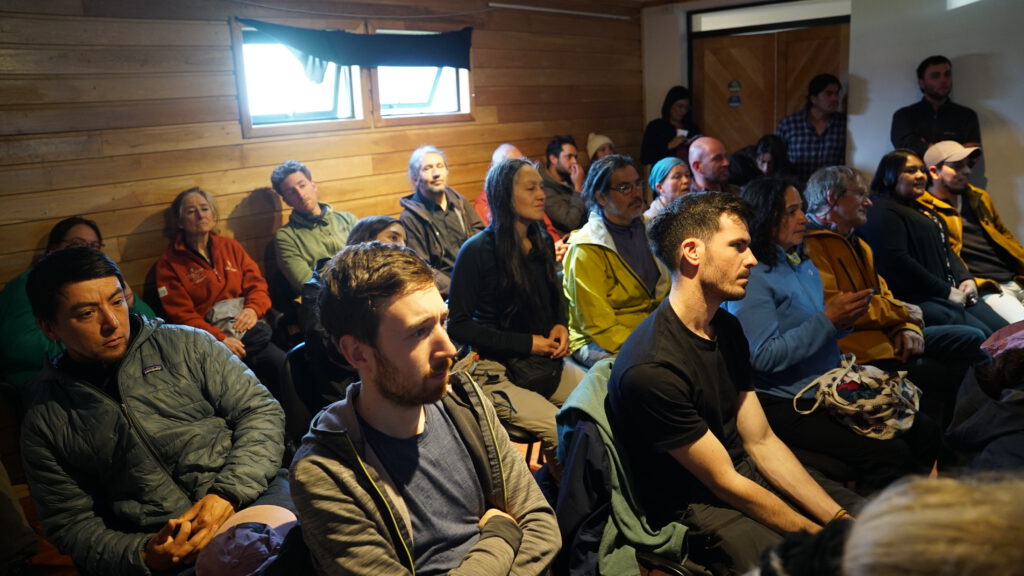
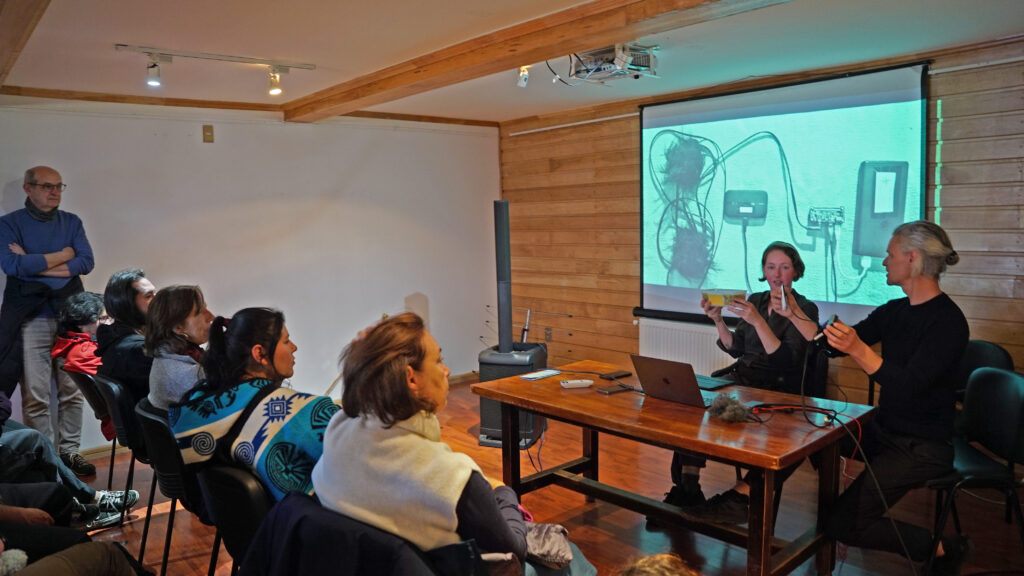
The interdisciplinary group Terra Ignota invites dialogue on present and future ways of caring for the natural and cultural heritage on Isla Navarino, through a two-day programme of presentations, listening and workshop sessions @ Museo Territorial Yagán Usi - Martín González Calderón

Videogram 138

Videogram 138

Nicolás Spencer will share the creation and research processes of Terra Ignota, a transdisciplinary research platform that explores the relationships between culture, nature, knowledge, and their different forms of representation.

Cultural and historical background of the Wulaia area

Cultural and historical background of the Wulaia area

The Murray Channel, formerly known as Yagashaga or Yagán Channel, is a silent witness to a vast cultural heritage that stretches from the ancestral past to the recent historical past. Its legacy spans from the original people who gave the bay its name, dating back over 6,000 years, to the colony and the European exploration and exploitation processes of the 19th century.

Radiales 2025

Radiales 2025

Radiales is the name of the new project by Terra Ignota, extending the geological research "Intercultural Contact Zone" conducted between 2017 and 2024 in Yendegaia National Park. This project continues the transdisciplinary study as a way to understand this territory and its different forms of interpretation.

Extinction!? – documentation

Extinction!? – documentation

> projects / 2022 / Extinction!? / background / documentation / participants Before the research trip to the Zona de Contacto Intercultural, Fernanda Olivares and Nicolás Spencer were invited to participate in a residency at Weltmuseum Wien to be part of the exhibition “Extinction!?” as part of the TAKING CARE project. The idea of this residency was to work with objects from the collections obtained

Rocas

Rocas

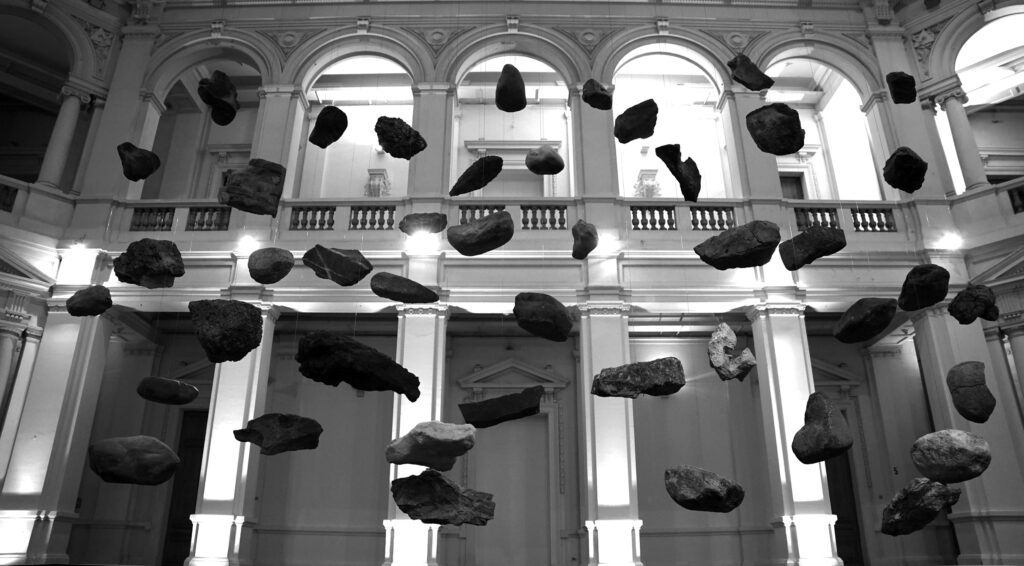
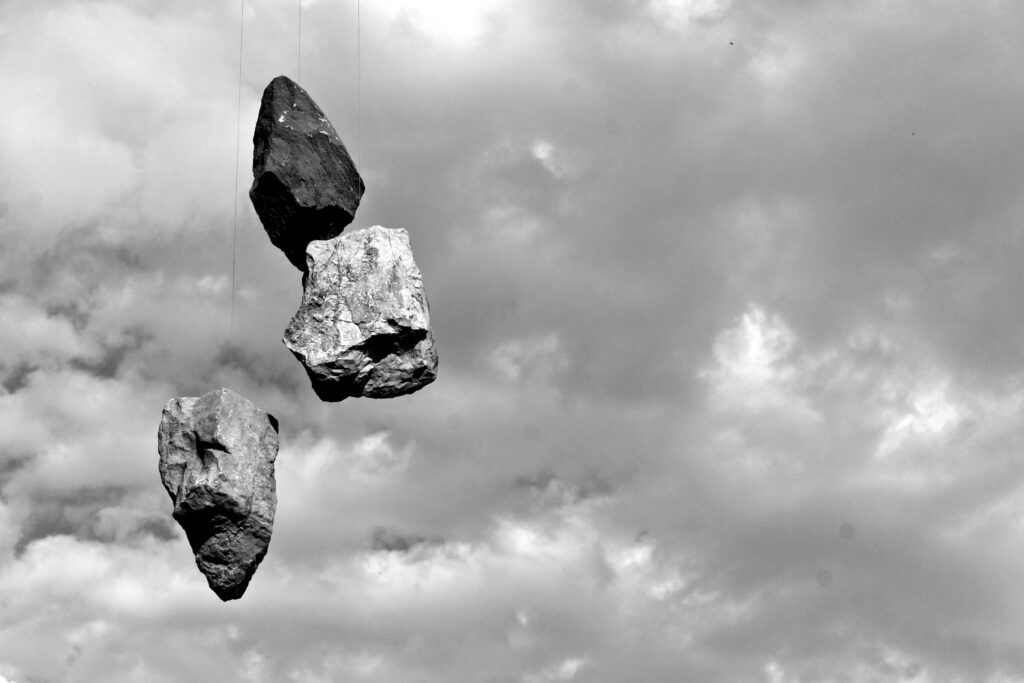
A sound installation by Nicolás Spencer made up of 44 stones in suspension – all collected from Fiordo Témpano north of Puerto Edén to Cabo de Hornos and about to be returned to the place where they were found. In addition to being considered part of the living heritage of the southern territory, the rocks are conceived as lithic witnesses of geological, historical or present-day events.

Oscillators

Oscillators

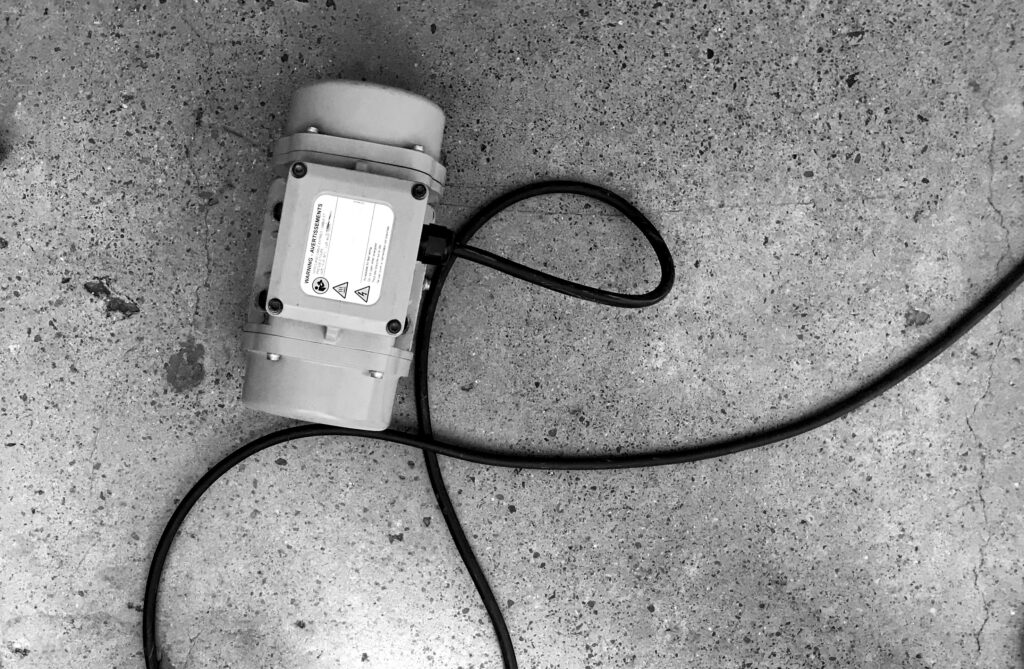
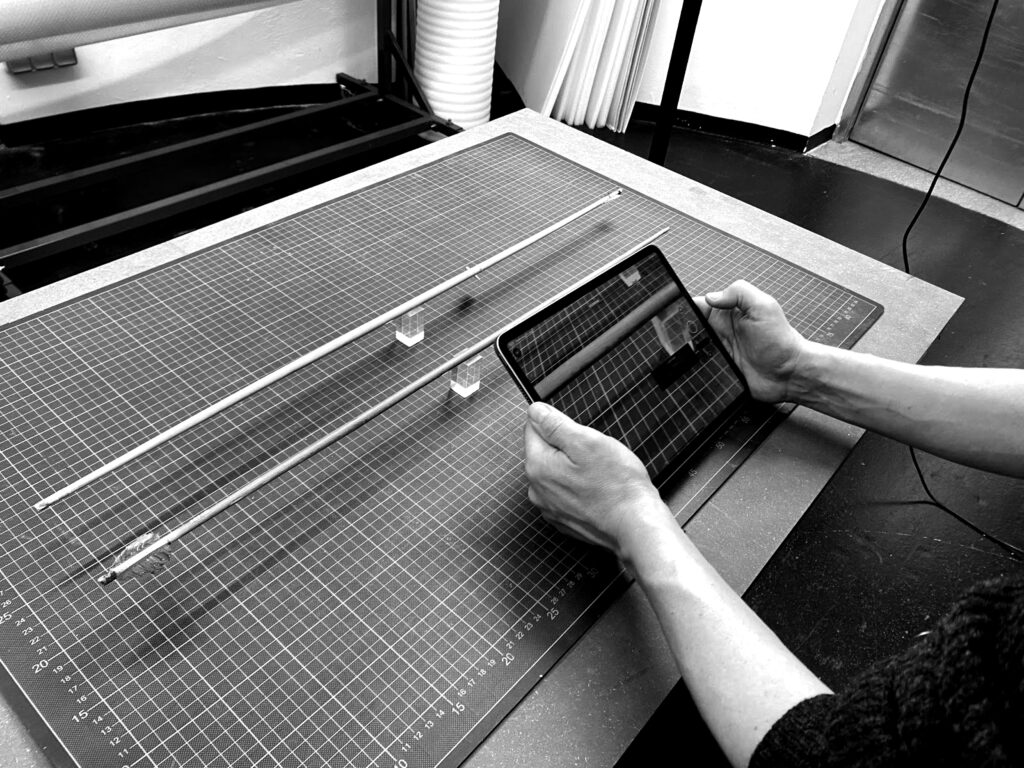
Archaeology is a scientific discipline that studies human behavior through the recovery, analysis, and interpretation of past and present material and cultural remains. The wind oscillator is a tool that considers this natural force as a cultural object, providing clues about human activity where it resonates.

Cerro Otten 2024

Cerro Otten 2024

This project is an archaeological prospection in Cerro Otten, Última Esperanza, Magallanes, Chile – following the discovery of rock-paintings by Alfredo Prieto in 2022. Despite being located in an easily accessible territory close to inhabited places, the area features numerous unexplored valleys and favorable conditions for discovering rich archaeological sites. The study is aiming to document Prieto's findings and to establish and discuss protocols for archaeological prospecting of this area in the future.

Preliminary Visit (Bahia Wulaia) 2024

Preliminary Visit (Bahia Wulaia) 2024

In preparation for the Radiales project (2025) we did an initial field trip in March 2024 in order to familiarize ourselves with the territory, to meet with the local community, partners and friends, to discuss some first ideas and frameworks and to get an idea about the place, logistics (transportation, access routes, etc.).

Environmental Linguistics

Environmental Linguistics

This project grew out of a commitment to those entanglements and attempts to trace exchanges between cultural features and material properties of the location. In particular language-landscape links that go beyond mere vocabulary encapsulations of topography, seeking instead elemental imprints of terrain and climate on the sonority of spoken words.

exhibition UMAG 2024

exhibition UMAG 2024

The exhibition at UMAG documents results and different methodologies developed around the discovery of the Intercultural Contact Zone (ICZ) in the Yendegaia National Park. The expedition(s) carried out by the Terra Ignota team (2021 and 2023) confirmed the existence of a transit zone between the Beagle Channel (Yendegaia Bay) and Almirantazgo Sound (Bahía Blanca) through the Darwin Range, suggesting a point of contact between three ancestral ethnic groups (Selk'nam, Kawésqar and Yagán).

conference UMAG 2024

conference UMAG 2024

3 day conference as part of Terra Ignota Forum hosted by the Universidad de Magallanes in Punta Arenas.

TIF UACh 2023

TIF UACh 2023

The Terra Ignota Forum (TIF) is a knowledge transfer and training program with the communities of the Magallanes Region and Chilean Antarctica. The project was developed around the discovery of the Intercultural Contact Zone (ICZ) found in 2021 in Yendegaia National Park by the Terra Ignota team. The discovery confirmed the existence of a passage between between the Beagle Channel (Yendegaia bay) and the Admiralty Sound  across the Darwin Range, a point of contact between three ancestral ethnic groups that used to pass through this area: the Selk'nam, Kawésqar and Yagán communities.

presentation @ liebig12 2023

presentation @ liebig12 2023

On September 19th, we presented the process, documentations and some preliminary results of the project Sonic Islands in an open studio format at Liebig 12, Berlin. You can find some impressions from that day below.

Resonace FM – Sonic Darts # Terra Ignota

Resonace FM – Sonic Darts # Terra Ignota

Resonance Extra – Sonic Darts with Gwaith Swn is presenting Terra Ignota  Monday 6th November 2023 22:00 - 23:00 GMT. Edited by Victor Mazon.

Journey in the great archipelago

Journey in the great archipelago

Journey in the Great Archipelago is a map by Dr. Alfredo Prieto, Cristian Espinoza, and the production of Nicolás Spencer, based on John Bartholomew’s Atlantic map tracing a journey of early humanity from the centre of Africa to Tierra del Fuego during the Würm glaciation.

Batimientos – Schwebungen

Batimientos – Schwebungen

Preparing the walk through the Lapataia valley with maps and through the cartographic gaze from afar we strongly felt our foreignness and the valley's negative space. Its resonance space was an external void. Its prevailing elements seemed to be water and wind.

Lärm

Lärm

The noise emanating from the sea serves as a wake-up call, a mechanism or device, an artifice that heralds an emergency with nymphs' cries from a place, be it a utopian or dystopian topos. This is how a narrative emerges, originating from the depths of the sea, carried by air currents and surface waves, creating turbulence as it interacts with the seabed and crashes against the coastal breakers. The mythological noise, or "Lärm," undergoes a transformation and dissolves, taking on premonitory forms or dystopographies.

Piped Overtones

Piped Overtones

Gaseous vibrations in pipes display distinctive overtone patterns, linking the lengths of pipes with the propagation speeds of the gasses through which energies travel. Accelerating reconfigurations in piped energies across national borders along Germany’s northern coastline, sustain overtones of global geopolitics, reverberating throughout the local milieu.

Cultural marks & treeprints

Cultural marks & treeprints

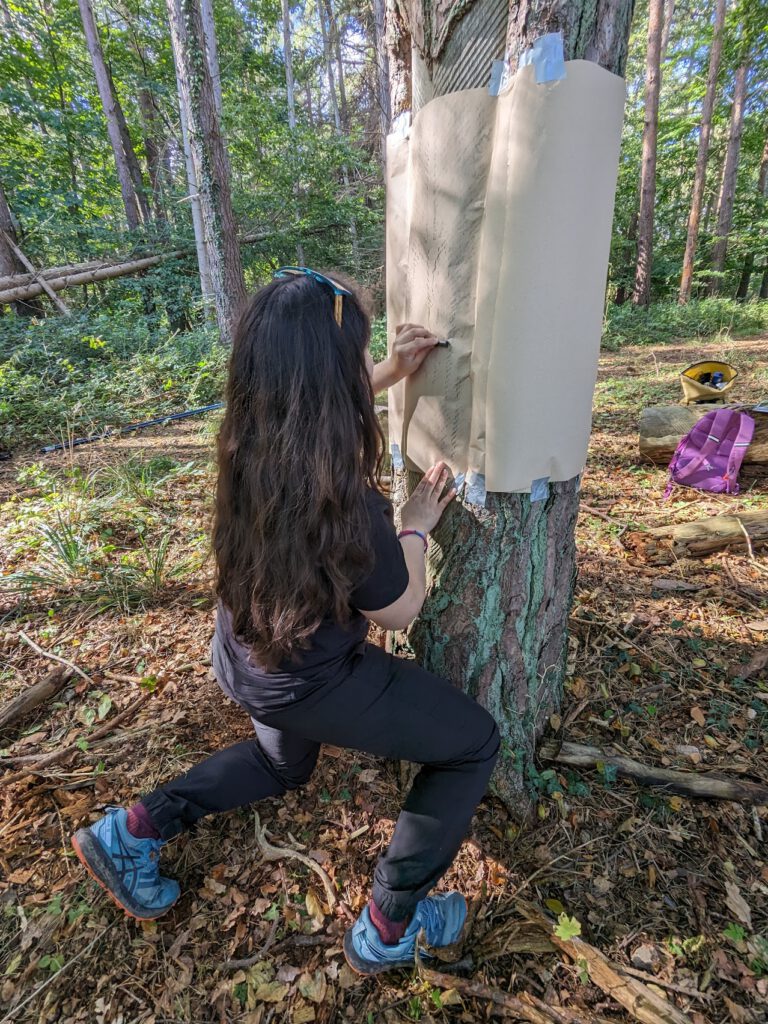
Walking trough the woods around Ralswiek, in Rügen, a new type of marks on the trees began to emerge in the landscape.

While pine trees in Germany used to be rarely treated with resin, the war quickly aroused interest in resin extraction and led to extensive experiments with this tree in particular.

Kites: Soaring Through myths, history, science, and art research

Kites: Soaring Through myths, history, science, and art research

This essay embarks on a journey through time and disciplines, exploring the multifaceted role of kites in shaping our world.

Holobionte –  Harnesing the wispers of wind: windmills, windengines and energy harvesting tools

Holobionte – Harnesing the wispers of wind: windmills, windengines and energy harvesting tools

The utilization of wind energy represents an ancient relationship between humanity and the natural world. Windmills, wind engines and wind generators embody this enduring connection and stand as both scientific marvels and artistic expressions. We will delve into the historical chronology of these remarkable devices to celebrate their scientific and artistic significance.

A Mysterious Hum – comparable snippets

A Mysterious Hum – comparable snippets

Here you can listen to 30 secs edits of field recordings from different locations on the island of Rügen. Starting on the mainland at Lubmin industrial port with an ‘as close as we could get’ perspective of the FSRU (Floating Storage Regasification Unit) currently stationed there.

radio earth @ sonic islands

radio earth @ sonic islands

For the sonic islands project we took one of the Radio Earth mobilemics with us and placed it along the trajectory of our activities on the island. On this page we'll document the locations, provide a bit of context and share some thoughts and discussions with the radio earth community.

Radio)))noosphere

Radio)))noosphere

Long term reflection and refraction on matter at 250kms: An Ode to the hum

Conversation between Fernanda Olivares, Nicolás Spencer, Nora Haas, and Claudia Augustat

Conversation between Fernanda Olivares, Nicolás Spencer, Nora Haas, and Claudia Augustat

In September and October 2022, Fernanda Olivares, an activist, and Nicolás Spencer,an artist, both from Chile, came to Vienna for two weeks to conduct research at theWeltmuseum Wien. The aim of their visit was to develop work for Extinctions!?, anexperimental exhibition, which opened at Weltmuseum Wien in February 2023, aspart of the TAKING CARE project.

Environment as a legal entity

Environment as a legal entity

We arrived without really knowing what we were going for. We received the invitation to participate, and we embarked on the Terra Ignota adventure. We let ourselves be carried along a new, unknown path. 
In the immensity of the landscape, we could perceive our smallness, the tiny fragment we represent on this Earth. 
We knew that we had to merge with that landscape, to feel part of it, to understand. In that sense, it was fundamental to internalize, to understand the perception of the other members of the group. What unites us, what connects such a diverse group of people in terms of culture, trades, languages, ways of seeing life. In this extreme area of light, sea, wind, the movement of knowledge and experiences was fundamental.

Geological observations

Geological observations

The region of fjords, channels, and archipelagos south of Tierra del Fuego is characterized by rugged terrain, with high and steep mountains bordered by deep incised valleys that even govern the underwater landscape. Its origin ingeniously links tectonic and climatic processes, embracing persistent uplift as a result of endogenous folding and faulting, as well as depressions and exhumations caused by the weight and carving of glaciations.

Archaeological report

Archaeological report

The campaign developed by Terra Ignota in 2021 had already documented evidence of archaeological material in the area near the "Death" or "Kent" Pass. This lithic material was in the Alero, momentarily called El Paso. The fact of making this finding motivated the development of an investigation that would allow documenting both the route of the pass and the possible archaeological findings that could be found.

Transfers

Transfers

The origin of this work dates back to 2015, following a visit to the Gusinde-Hagenbeck collection consisting of cultural objects originally belonging to the Kawesqar, Selk’nam, Yagán and and Aonikenk peoples, which are now housed in the Weltmuseum, Vienna (formerly the anthropological museum).

LDR timeline

LDR timeline

For the Lapataia Valley crossing (TIF 2023) we experimented with different methods of 'registering' the way, time, movement, progress, rhythm, structure, topography, climate, social interaction...
One attempt was a long duration recording (LDR) of the whole process. In total 416 hours of constant audio recording.
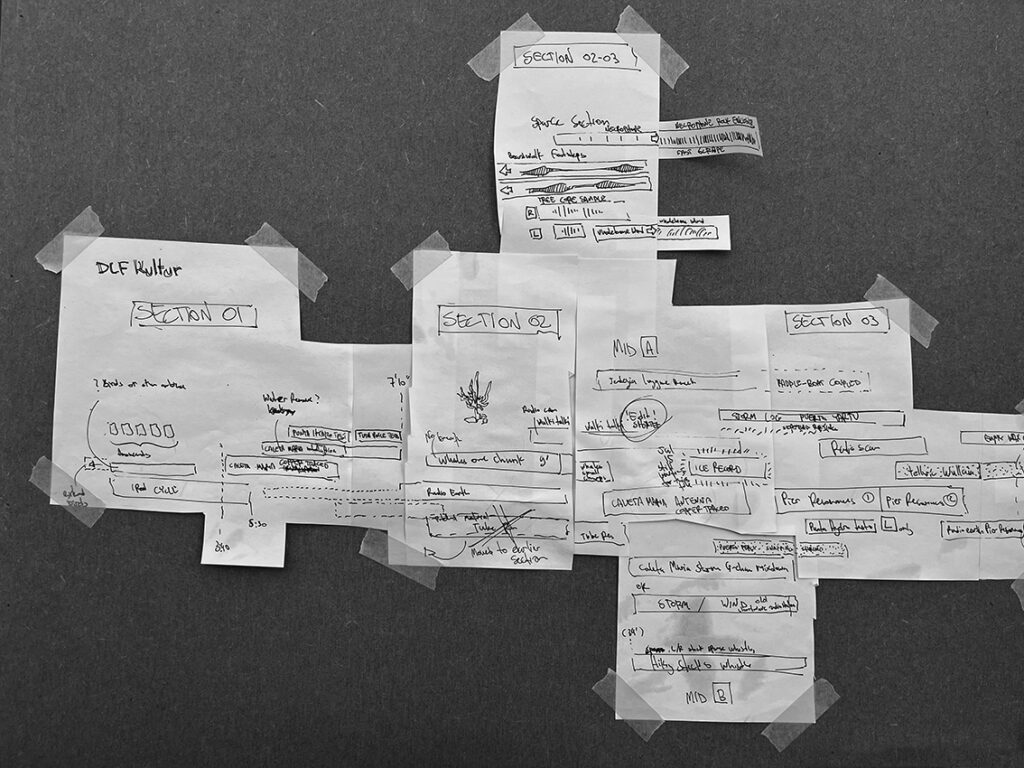
Sketch 28.4.’23 – videoessay

Sketch 28.4.’23 – videoessay

Reality progressively begins to transfer its own identity (what it says about itself) and its corporeality (scopic) to a synthetic panoptic device. An orbital paranoid eye that sees everything, and from its vision gives governance, ordering of the world and synchronized reorientation of the micro-politics in each subject and each survivor tends to a unique geometry of government, exploitation and reformatting (an ocular geometry).

The pan-american and Antarctic corridor

The pan-american and Antarctic corridor

With these map sketches we try to review a Pan-American route that origins ca. 26,000 years ago in Beringia and will end in approximately 100 years in Antarctica.

TERRA IGNOTA Radio Forum

TERRA IGNOTA Radio Forum

During the month of May, through a series of simultaneous radio meetings in the studios of Radio CASo and Radio UACh, some results of the most recent journey of the project will be presented, which included three days of forums with artists, geologists, philosophers, archaeologists, local entrepreneurs, women of the selk’nam and yagán people, with

Sonic Islands 2023

Sonic Islands 2023

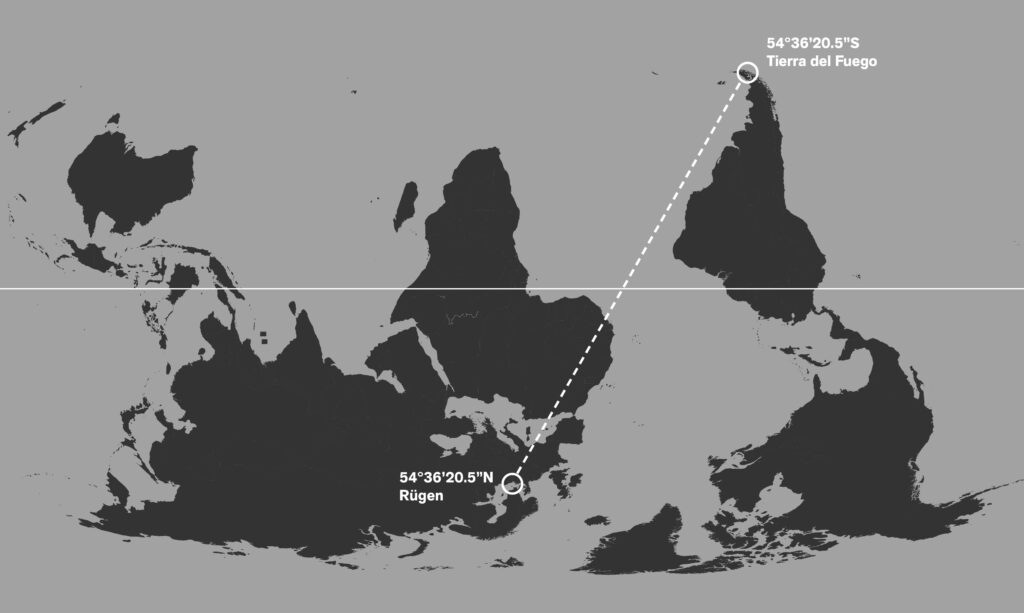
If you mirror the globe, you will find Germany's largest island, Rügen, at almost exactly the opposite position of Tierra del Fuego. Both lie at precisely the same latitude. (54°36'20.5 "S Tierra del Fuego / 54°36'20.5 "N Rügen). A closer look reveals many similarities in geography and landscape, climate, flora and fauna, history and archaeology, culture and even recent social and demographic dynamics.

Terra Ignota Forum 2023

Terra Ignota Forum 2023

Terra Ignota Forum (TIF) is a field laboratory that seeks to develop and implement a contemporary archive on the so-called “intercultural contact zone” (Selk’nam, Kawesqar and Yagán) located in Yendegaia National Park (YNP). The project is deployed in two stages, the first is the continuation of our interdisciplinary research in the territory and field forum (2023). The process and research will be documented and published in different media, individual artistic projects developed further and presented in the second stage to the public beginning of 2024 at the Universidad de Magallanes, Punta Arenas.

2022 – TERRA IGNOTA @ UMAG

2022 – TERRA IGNOTA @ UMAG

Edmundo Mansilla, Vice Rector(s) of Outreach of the Universidad de Magallanes and Verena Lehmkuhl, Director of Goethe Institut – Chile, are pleased to invite you to the Conversatory “Terra Ignota” to be held on Thursday, June 2 at 16.30 hrs in the Ernesto Livacic Auditorium of the Universidad de Magallanes. Presentations will be made by
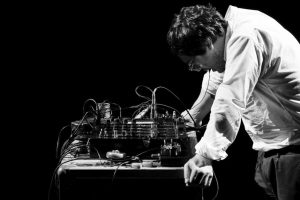
Extinction!? 2022

Extinction!? 2022

In 2022, Fernanda Olivares and Nicolás Spencer were invited to participate in a residency at Weltmuseum to be part of the exhibition “Extinction!?” as part of the TAKING CARE project. The idea of this residency was to work with the objects belonging to the collections obtained by Martin Gusinde and Carl Hagenbeck and explore new museographic forms based on perception, feelings, the discussion around extinction, and the recognition of the Selk’nam community in Chile as a living community.

2022 – TI exhibition @ MAC

2022 – TI exhibition @ MAC

From May 3rd to July 26th, 2022 we will show the results of the last years of work at Museo de Arte Contemporáneo (MAC) Santiago.

Magallanes Iron Cycle

Magallanes Iron Cycle

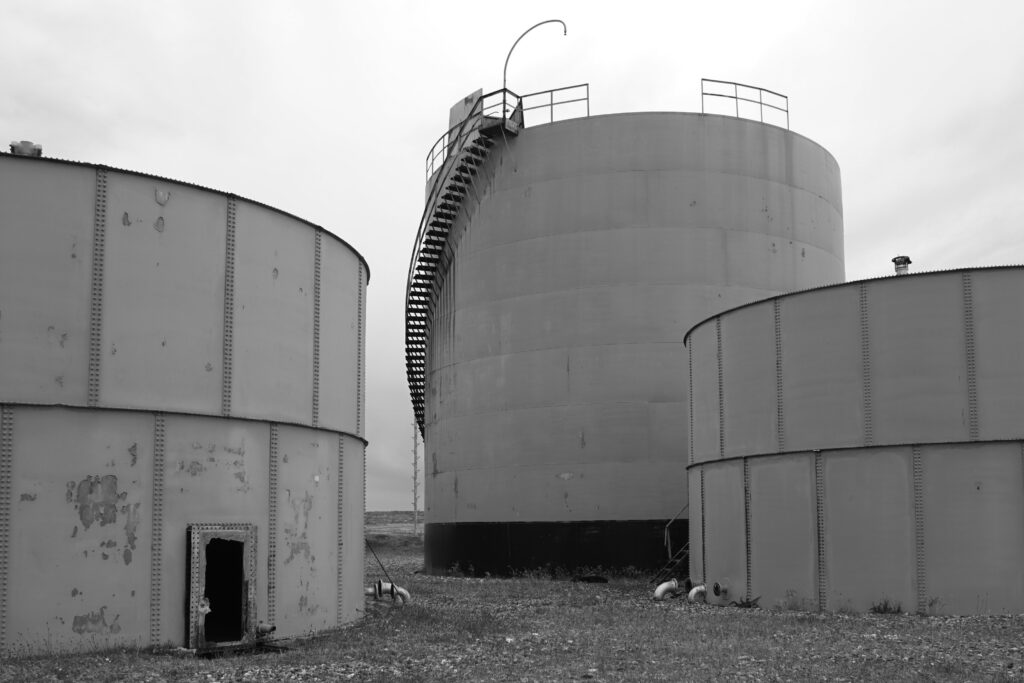
Recording of a swing-gate on lighthouse access road, route 257, played back in an abandoned petroleum tank, Puerto Percy, during the onset of a windstorm.

field trip #03 2021

field trip #03 2021

Almost 100 years ago the artist and explorer Rockwell Kent crossed the Baldivia Chain between Seno Almirantazgo and the Beagle Channel via the Lapataia Valley. His documentation* of the landscape and climate is one of the first descriptions of this passage and serves as an important historic reference. Especially interesting in our context is his perspective as an artist becoming an explorer – sensing, registering, translating and documenting in an unconventional way.

HORN

HORN

Achæoscillator_Towards incorporeal forms of sensing listening and gaze is a Collection of short essays published by Ars Electronica in the frame of the project In Keppler's Garden (2020)

2020 – Terra Australis Ignota Research Group @ Ars Electronica

2020 – Terra Australis Ignota Research Group @ Ars Electronica

In 2018, Terra Australis Ignota Research Group (TARIG) – Alessandra Burotto (CL), Paula Lopez Wood (CL), Víctor Mazón Gardoqui (ES/DE), Alfredo Prieto (CL), Gerd Sielfeld (CL) and Nicolas Spencer (CL/AT) – traveled to Cape Horn, the southernmost continental island in the world before Antarctica. Ars Electronica 2020 - In Kepler's Gardens platform will present a translation of that trip under the title Achæoscillator_Towards incorporeal forms of sensing listening and gaze.

field trip #02 2019

field trip #02 2019

From 7 to 22 December 2019, a second trip is going further south to sharpen possible research directions. On suggestion of the archaeologist Alfredo Prieto the group is intending to search for a possible prehistoric meeting place of the ancient tribes in the Bahia Blanca Valley.

field trip #01 2019

field trip #01 2019

This field trip in the frame of the actual Terra Ignota project was carried out from 2 until 18 March 2019. Starting from Punta Arenas, the group traveled as far south as possible by car to the end point of the road constructions in the Cardon Central.

Polar 2018

Polar 2018

Artistic vision  The Antarctic continent is the one continent that is still seemingly secluded from the rest of the world. It was the last great land mass discovered by humans and uninhabited until the beginning of its colonization in the early 1820s. For decennia, it has served as a collaborative research territory, governed and safeguarded

Terra Australis Ignota 2017

Terra Australis Ignota 2017

This stage of the project aimed to expand the team by including other invited artists and to begin a deeper journey through Tierra del Fuego, by land and by sea, reaching Cape Horn Island.

Wind 2016

Wind 2016

This trip aimed to expand the experience of working with wind by involving a larger team. To this end, work was carried out on the installation anemOSC, which would later be called Wind Oscillator.

Cape Horn 2015

Cape Horn 2015

In early 2015, the first exploratory trip was made to the commune of Cape Horn, south of the Beagle Channel. The work revolves around the notion of distance—both cultural and geographical—and the materiality of wind, approached as a cultural object for interpreting the territory.

team

all artists and researchers of previous projects, actual and planned activities

participants radiales

> projects / 2025 / radiales / Preliminary Visit / Emerging Archive / Historic Background / Forum / Documentation / Participants

All participants and contributors of the project Radiales 2025:

Extinction!? – participants

> projects / 2022 / Extinction!? / background / documentation / participants

Claudia Augustat (Weltmuseum Wien, Terra Ignota), Florencia Curci, Nora Haas (Weltmuseum Wien), Jonas Hammerer (Universität für Musik und darstellende Kunst Wien), Fr. Franz Helm (Missionshaus St. Gabriel), Christiane Jordan (Weltmuseum Wien), Susanne Neuburger (Mumok, Museo de Arte Moderno), Fernanda Olivares (Fundación Selk’nam Hach Saye), Paula Urdangarin, Alfredo Prieto, Constanze Schattke (Naturhistorisches Museum Wien), Nicolás Spencer, Carsten Stabenow 

participants

> projects / 2024 / contact zones / conference / exhibition / participants

All participants and contributors of the project Contact Zones @ UMAG 2024:

participants TIF Valdivia

> projects / 2023 / TIF UACh 2023 / documentation / participants

All participants of TIF Valdivia 2023:

Protected: Rügen

This content is password protected. To view it please enter your password below: